Centre for Host-Microbiome Interactions, Faculty of Dentistry, Oral & Craniofacial Sciences, King's College London, London, UK.
Forsyth Institute, Cambridge, MA, USA.
J Dent Res. 2020 Jun;99(6):621-629. doi: 10.1177/0022034520914594. Epub 2020 Apr 14.
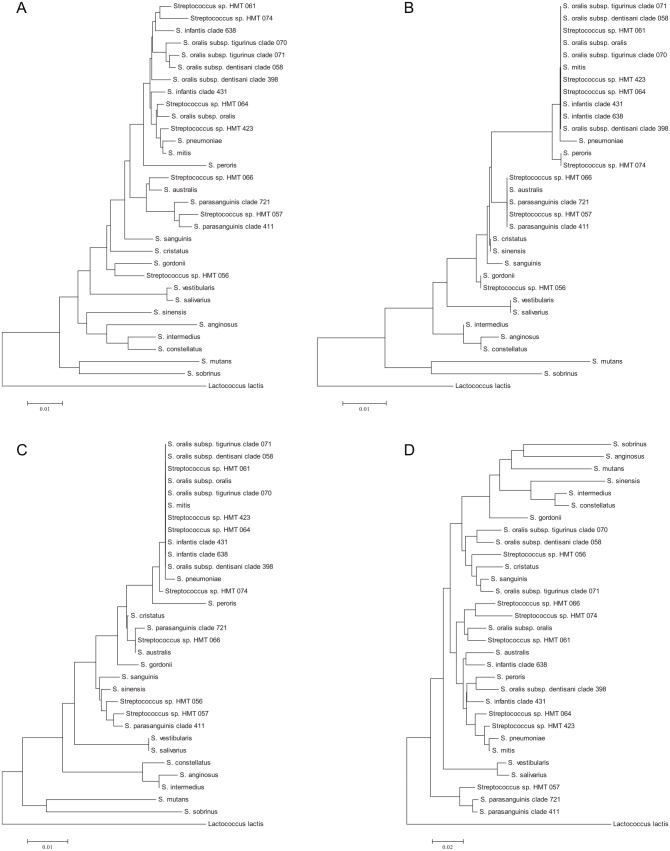
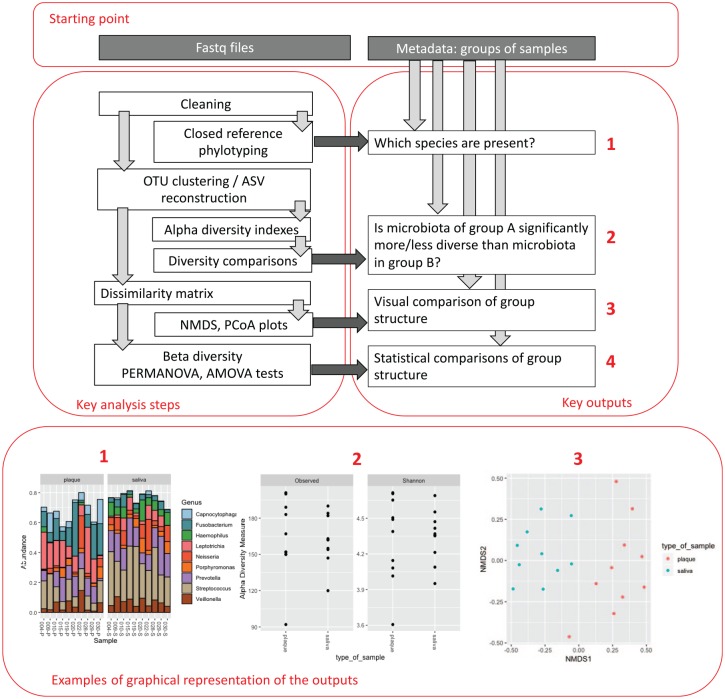
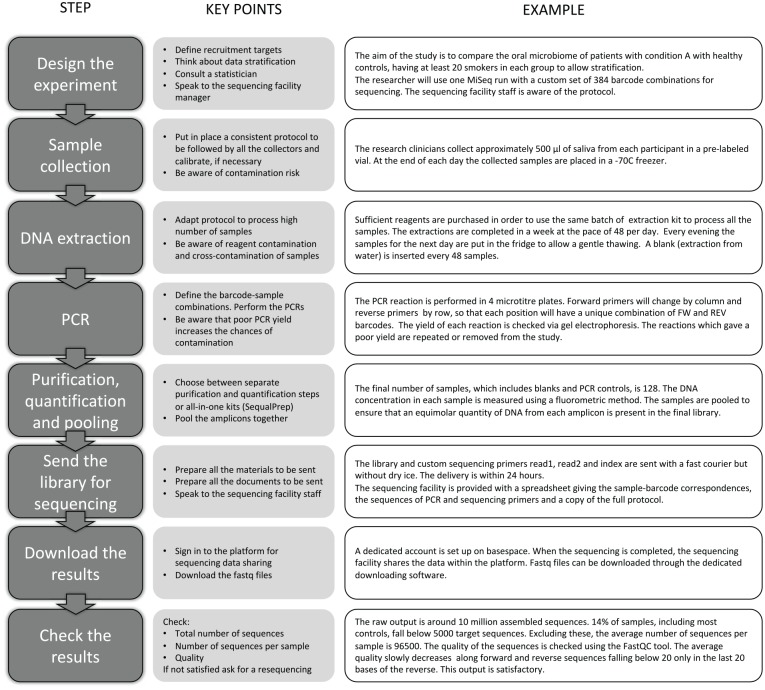
The profiling of bacterial communities by the sequencing of housekeeping genes such as that encoding the small subunit ribosomal RNA has revealed the extensive diversity of bacterial life on earth. Standard protocols have been developed and are widely used for this application, but individual habitats may require modification of methods. This review discusses the sequencing and analysis methods most appropriate for the study of the bacterial component of the human oral microbiota. If possible, DNA should be extracted from samples soon after collection. If samples have to be stored for practical reasons, precautions to avoid DNA degradation on freezing should be taken. A critical aspect of profiling oral bacterial communities is the choice of region of the 16S rRNA gene for sequencing. The V1-V2 region provides the best discrimination between species of the genus , the most common genus in the mouth and important in health and disease. The MiSeq platform is most commonly used for sequencing, but long-read technologies are now becoming available that should improve the resolution of analyses. There are a variety of well-established data analysis pipelines available, including mothur and QIIME, which identify sequence reads as phylotypes by comparing them to reference data sets or grouping them into operational taxonomic units. DADA2 has improved sequence error correction capabilities and resolves reads to unique variants. Two curated oral 16S rRNA databases are available: HOMD and CORE. Expert interpretation of community profiles is required, both to detect the presence of contaminating DNA, which is commonly present in the reagents used in analysis, and to differentiate oral and nonoral bacteria and determine the significance of findings. Despite advances in shotgun whole-genome metagenomic methods, oral bacterial community profiling via 16S rRNA sequence analysis remains a valuable technique for the characterization of oral bacterial populations.
通过测序如编码小亚基核糖体 RNA 的管家基因对细菌群落进行分析,揭示了地球上细菌生命的广泛多样性。已经开发出标准协议,并广泛用于此应用,但个别栖息地可能需要修改方法。这篇综述讨论了最适合研究人类口腔微生物群细菌组成部分的测序和分析方法。如果可能,应在采集后尽快从样品中提取 DNA。如果出于实际原因必须存储样品,则应采取避免 DNA 在冷冻时降解的预防措施。分析口腔细菌群落的一个关键方面是选择用于测序的 16S rRNA 基因区域。V1-V2 区域为属间物种提供了最佳区分度,属是口腔中最常见的属,在健康和疾病中都很重要。MiSeq 平台最常用于测序,但现在也可以使用长读长技术,这应该可以提高分析的分辨率。有各种成熟的数据分析管道可供选择,包括 mothur 和 QIIME,它们通过将序列读取与参考数据集进行比较或将其分组为操作分类单元来识别分类群。DADA2 提高了序列纠错能力,并将读取解析为唯一变体。有两个经过精心编辑的口腔 16S rRNA 数据库:HOMD 和 CORE。需要专家对群落图谱进行解释,不仅要检测到通常存在于分析试剂中的污染 DNA 的存在,还要区分口腔和非口腔细菌,并确定发现的意义。尽管在高通量全基因组宏基因组方法方面取得了进展,但通过 16S rRNA 序列分析对口腔细菌群落进行分析仍然是一种有价值的技术,可用于描述口腔细菌种群。