Department of Life Sciences, Ben-Gurion University, Beer-Sheva, Israel.
PLoS One. 2020 Apr 14;15(4):e0231323. doi: 10.1371/journal.pone.0231323. eCollection 2020.
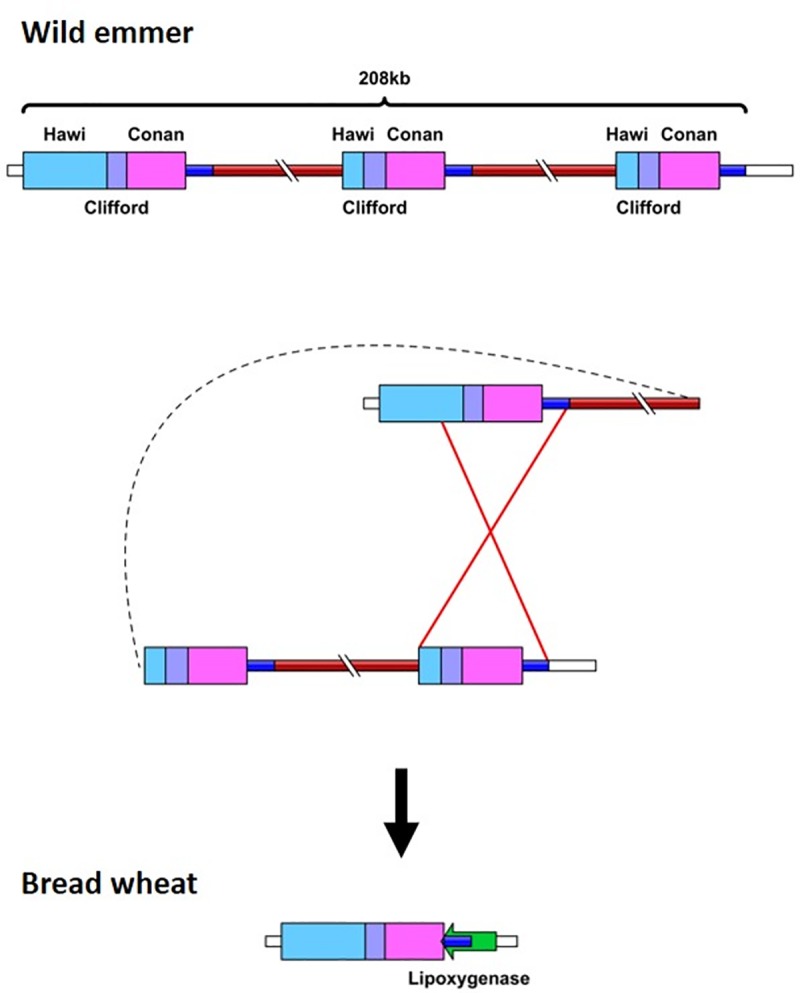
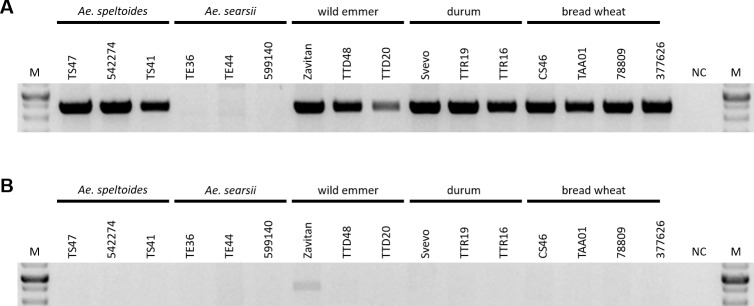
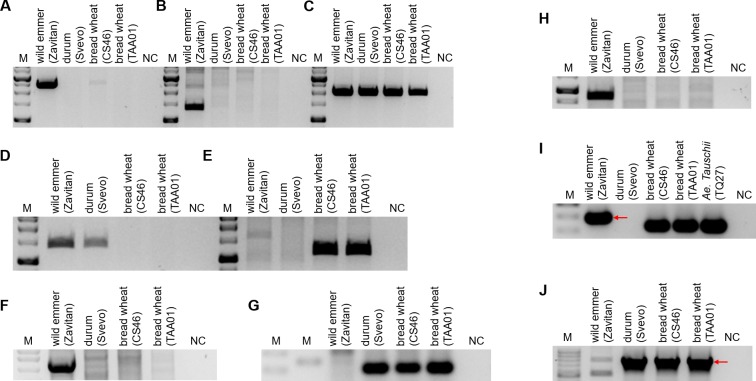
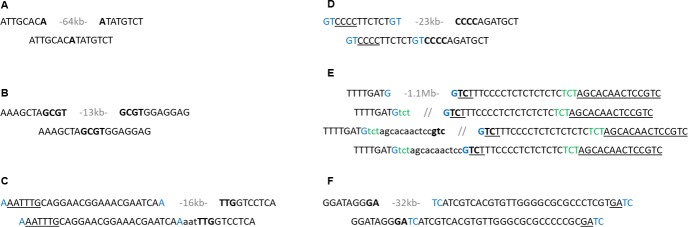
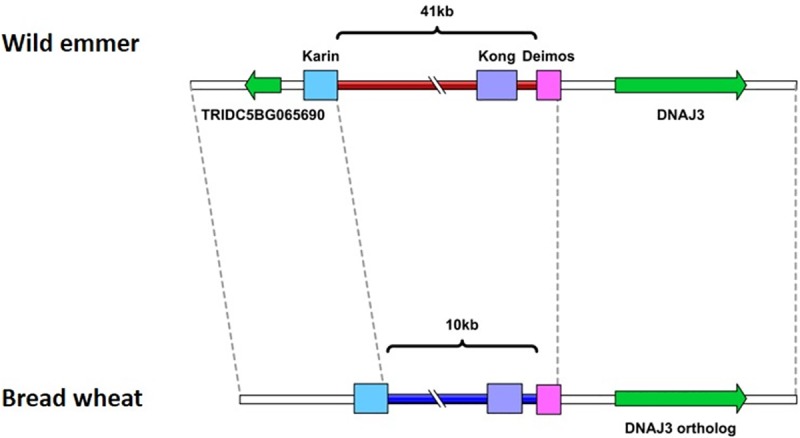
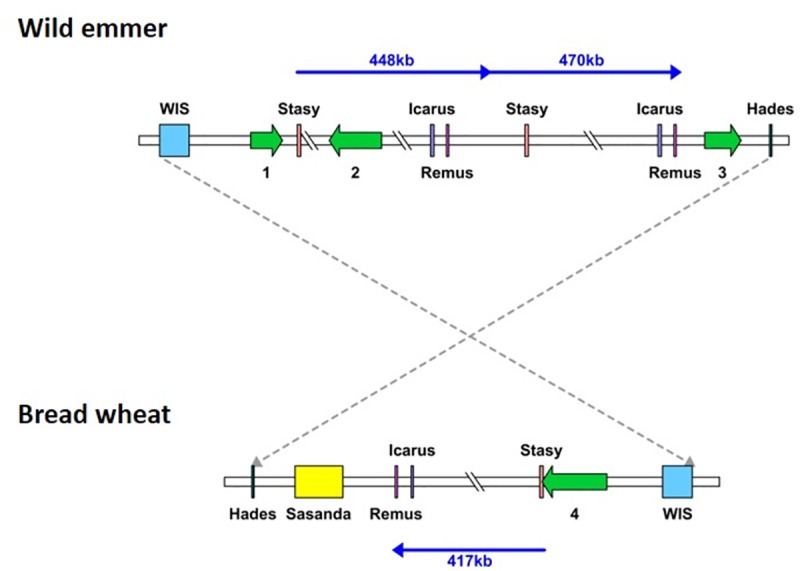
Following allopolyploidization, nascent polyploid wheat species react with massive genomic rearrangements, including deletion of transposable element-containing sequences. While such massive rearrangements are considered to be a prominent process in wheat genome evolution and speciation, their structure, extent, and underlying mechanisms remain poorly understood. In this study, we retrieved ~3500 insertions of a specific variant of Fatima, one of the most dynamic gypsy long-terminal repeat retrotransposons in wheat from the recently available high-quality genome drafts of Triticum aestivum (bread wheat) and Triticum turgidum ssp. dicoccoides or wild emmer, the allotetraploid mother of all modern wheats. The dynamic nature of Fatima facilitated the identification of large (i.e., up to ~ 1 million bases) Fatima-containing insertions/deletions (indels) upon comparison of bread wheat and wild emmer genomes. We characterized 11 such indels using computer-assisted analysis followed by PCR validation, and found that they might have occurred via unequal intra-strand recombination or double-strand break (DSB) events. Additionally, we observed one case of introgression of novel DNA fragments from an unknown source into the wheat genome. Our data thus indicate that massive large-scale DNA rearrangements might play a prominent role in wheat speciation.
在异源多倍化之后,新生的多倍体小麦物种会发生大规模的基因组重排,包括转座元件序列的缺失。尽管这种大规模的重排被认为是小麦基因组进化和物种形成的一个突出过程,但它们的结构、程度和潜在机制仍知之甚少。在这项研究中,我们从最近可用的高质量小麦属(普通小麦)和硬粒小麦(野生二粒小麦,所有现代小麦的四倍体母本)基因组草案中,检索到 Fatima 的一个特定变体的约 3500 个插入,Fatima 是小麦中最活跃的 gypsy 长末端重复反转座子之一。Fatima 的动态特性使得我们能够在比较普通小麦和野生二粒小麦基因组时,鉴定出大型的 Fatima 插入/缺失(indels),即长达约 100 万碱基的插入/缺失。我们使用计算机辅助分析和 PCR 验证对 11 个这样的 indels 进行了特征描述,发现它们可能是通过不等交换或双链断裂(DSB)事件发生的。此外,我们观察到一个来自未知来源的新 DNA 片段渗入小麦基因组的情况。因此,我们的数据表明,大规模的大规模 DNA 重排可能在小麦物种形成中发挥突出作用。