Park Miri, Son Ahjeong, Chua Beelee
Department of Environmental Science and Engineering, Ewha Womans University, 52 Ewhayeodae-gil, Seodaemun-gu, Seoul, 03760, Republic of Korea.
School of Electrical Engineering, Korea University, 145 Anam-ro, Seongbuk-gu, Seoul, 02841, Republic of Korea.
Sens Actuators B Chem. 2018 Dec 10;276:437-446. doi: 10.1016/j.snb.2018.08.133. Epub 2018 Aug 29.
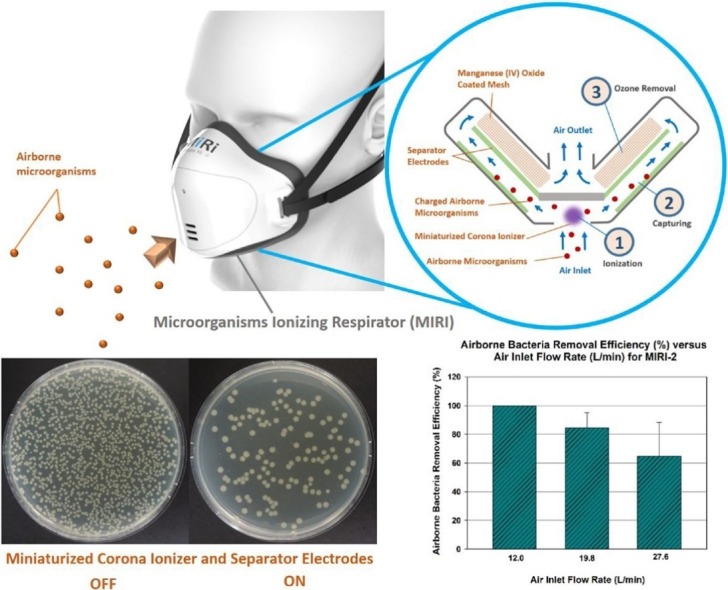
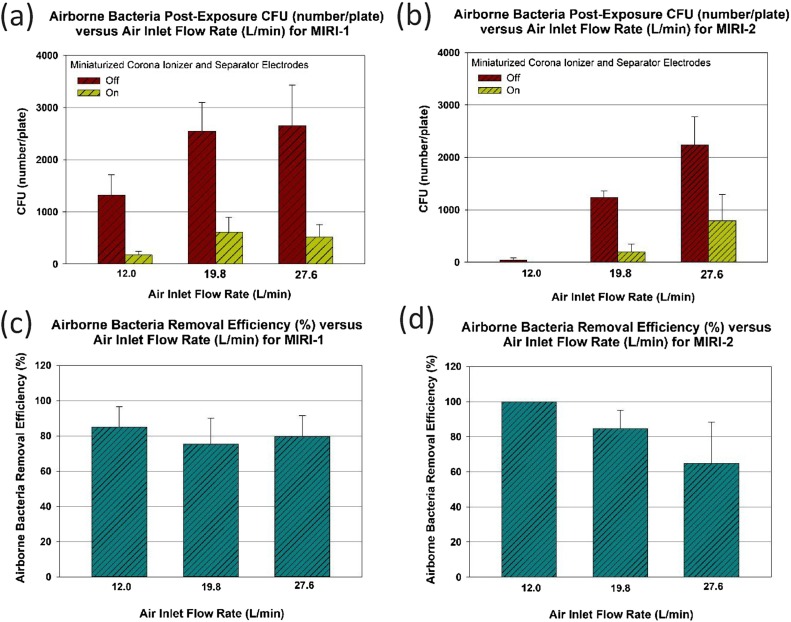
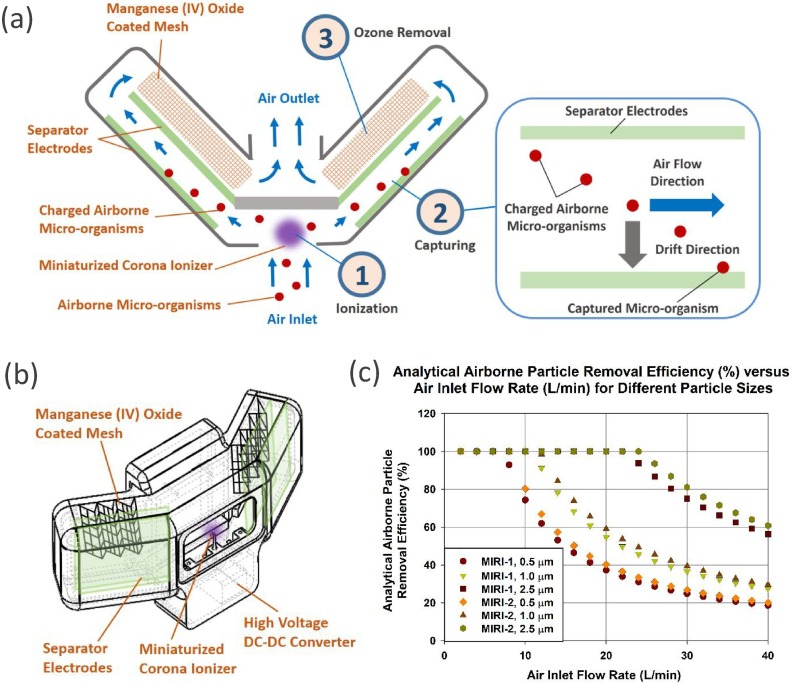
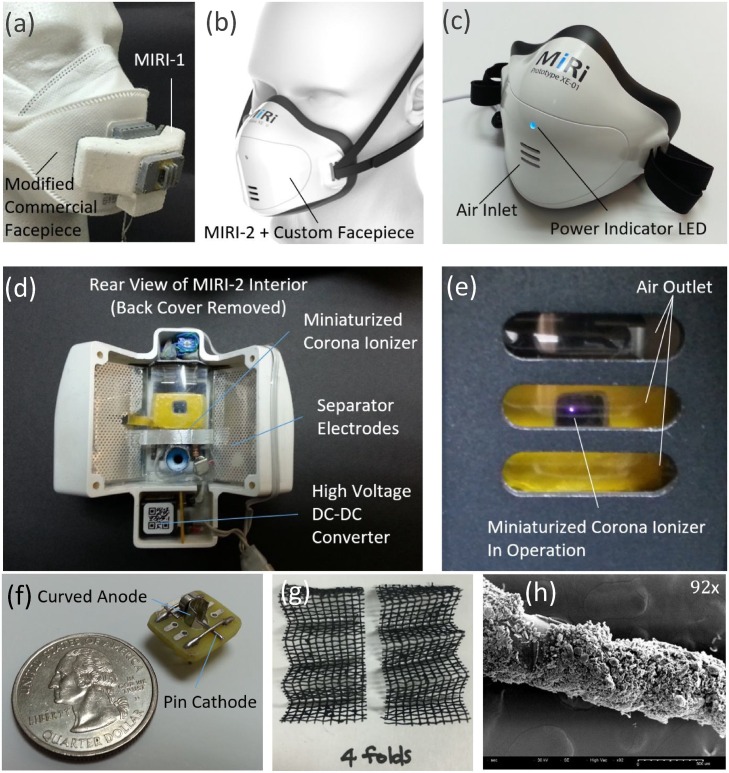
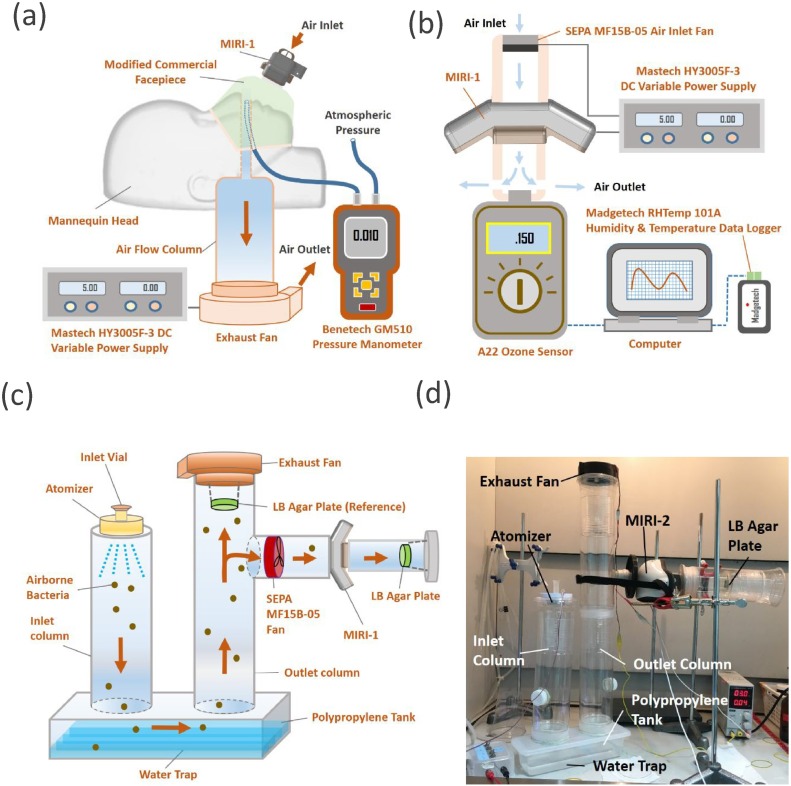
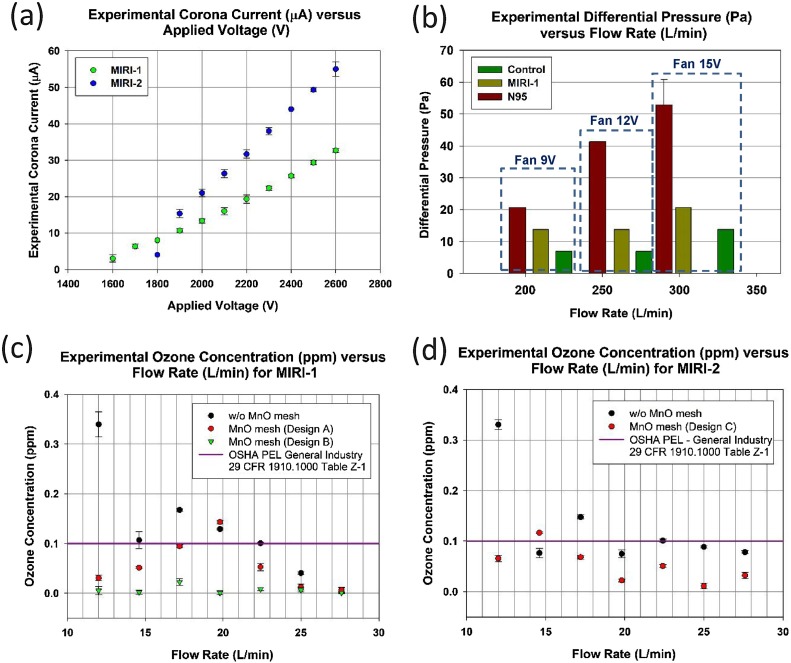
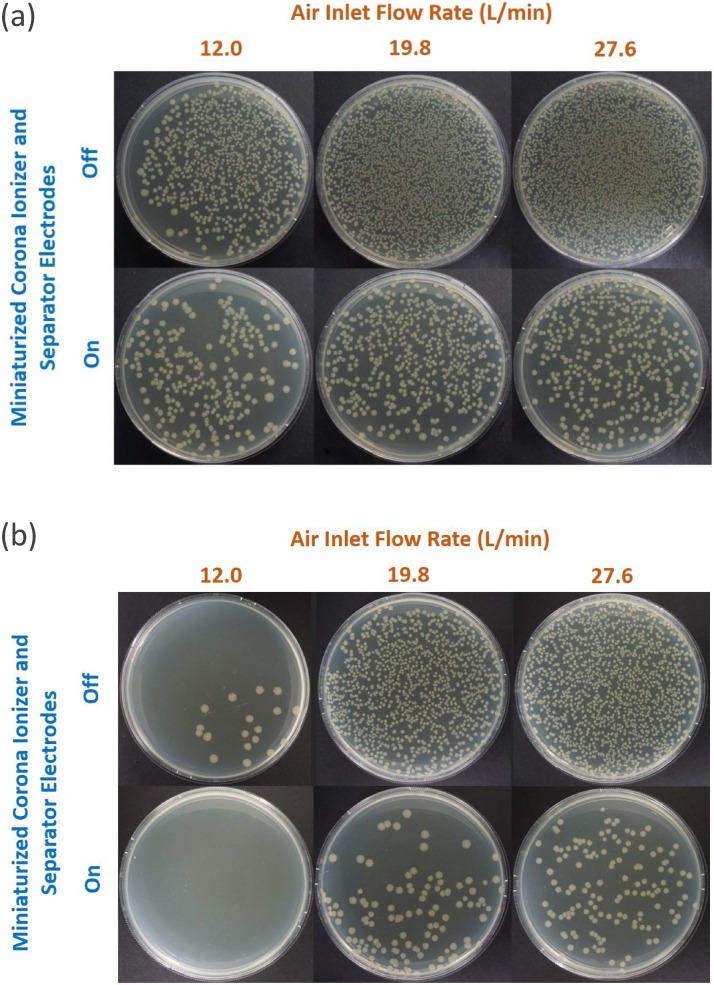
In this paper, we have demonstrated the feasibility of using microorganism-ionizing respirators with reduced breathing resistance to remove airborne bacteria. Using a miniaturized corona ionizer and two pairs of separator electrodes, airborne bacteria were ionized and removed from the airflow. Two microorganism-ionizing respirator designs were experimentally evaluated with flow rates ranging from ∼10 to 20 L/min and yielded airborne bacterial removal efficiencies of ∼75%-100%. Further, they were in close agreement with the analytical airborne particle removal efficiencies, at a similar range of flow rates. These flow rates also correspond to the breathing rates of standing and walking adults. More importantly, the breathing resistance could be reduced by more than 50% for flow rates of ∼200 L/min. Using manganese (IV) oxide coated mesh, the ozone concentration in the air outflow was reduced to less than 0.1 ppm, at a flow rate of ∼20 L/min, thus enabling safe use. The power consumption was less than 1 W.
在本文中,我们展示了使用呼吸阻力降低的微生物电离呼吸器去除空气中细菌的可行性。通过使用小型电晕离子发生器和两对分离电极,空气中的细菌被电离并从气流中去除。对两种微生物电离呼吸器设计进行了实验评估,流速范围为10至20 L/min,空气中细菌去除效率约为75%-100%。此外,在相似的流速范围内,它们与分析得出的空气中颗粒物去除效率密切一致。这些流速也对应于站立和行走成年人的呼吸速率。更重要的是,对于200 L/min的流速,呼吸阻力可降低50%以上。使用涂有二氧化锰的滤网,在流速约为20 L/min时,空气流出物中的臭氧浓度降低至低于0.1 ppm,从而实现安全使用。功耗小于1 W。