Pogwizd Steven M, Bers Donald M
Departments of Medicine, Physiology, and Biophysics & Bioengineering, University of Alabama at Birmingham, Birmingham, AL, United States.
Department of Pharmacology, University of California Davis, Genome Building 3513, Davis, CA 95616-8636, United States.
Drug Discov Today Dis Models. 2008 Fall;5(3):185-193. doi: 10.1016/j.ddmod.2009.02.001. Epub 2009 Mar 17.
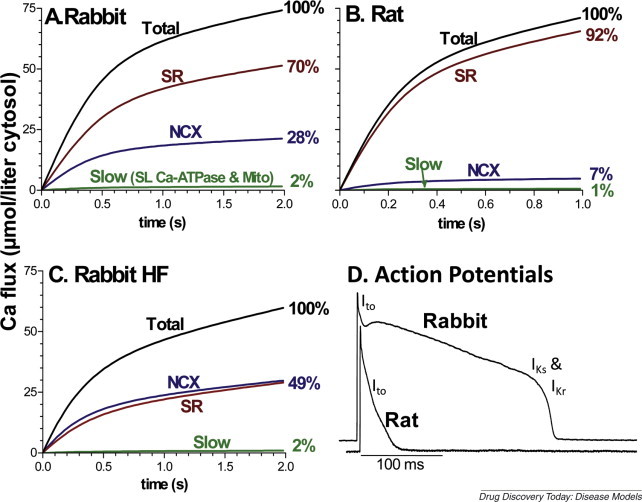
Human heart disease is a major cause of death and disability. A variety of animal models of cardiac disease have been developed to better understand the etiology, cellular and molecular mechanisms of cardiac dysfunction and novel therapeutic strategies. The animal models have included large animals (e.g. pig and dog) and small rodents (e.g. mouse and rat) and the advantages of genetic manipulation in mice have appropriately encouraged the development of novel mouse models of cardiac disease. However, there are major differences between rodent and human hearts that raise cautions about the extrapolation of results from mouse to human. The rabbit is a medium-sized animal that has many cellular and molecular characteristics very much like human, and is a practical alternative to larger mammals. Numerous rabbit models of cardiac disease are discussed, including pressure or volume overload, ischemia, rapid-pacing, doxorubicin, drug-induced arrhythmias, transgenesis and infection. These models also lead to the assessment of therapeutic strategies which may become beneficial in human cardiac disease.
人类心脏病是死亡和残疾的主要原因。为了更好地理解心脏功能障碍的病因、细胞和分子机制以及新的治疗策略,已经开发了多种心脏病动物模型。这些动物模型包括大型动物(如猪和狗)和小型啮齿动物(如小鼠和大鼠),并且小鼠基因操作的优势适当地促进了新型心脏病小鼠模型的开发。然而,啮齿动物和人类心脏之间存在重大差异,这对从小鼠到人类的结果推断提出了警示。兔子是一种中型动物,具有许多与人类非常相似的细胞和分子特征,是大型哺乳动物的一种实用替代动物。本文讨论了多种兔子心脏病模型,包括压力或容量过载、缺血、快速起搏、阿霉素、药物性心律失常、转基因和感染。这些模型也有助于评估可能对人类心脏病有益的治疗策略。