Innovation Center for Holistic Health, Nutraceuticals, and Cosmeceuticals, Faculty of Pharmacy, Chiang Mai University, Chiang Mai 50200, Thailand.
Department of Nanoscience and Technology, Alagappa University, Karaikudi 630003, India.
Int J Environ Res Public Health. 2020 Apr 12;17(8):2647. doi: 10.3390/ijerph17082647.
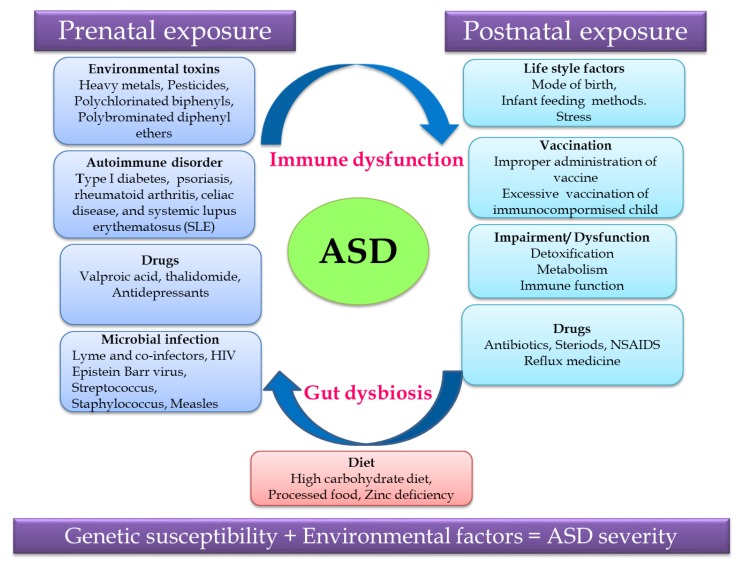
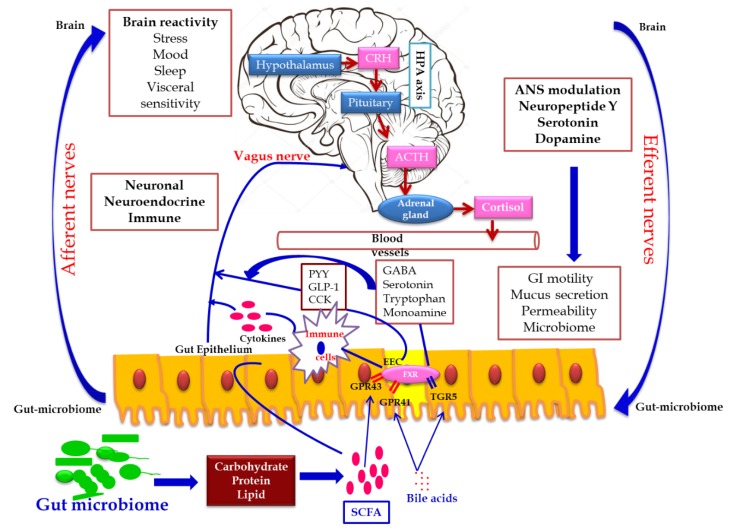
Autism spectrum disorder (ASD) is a serious neurodevelopmental disorder characterized by the impairment of the cognitive function of a child. Studies suggested that the intestinal microbiota has a critical role in the function and regulation of the central nervous system, neuroimmune system and neuroendocrine system. Any adverse changes in the gut-brain axis may cause serious disease. Food preferences and dietary patterns are considered as key in influencing the factors of ASD development. Several recent reviews narrated the importance of dietary composition on controlling or reducing the ASD symptoms. It has been known that the consumption of probiotics confers several health benefits by positive amendment of gut microbiota. The influence of probiotic intervention in children with ASD has also been reported and it has been considered as an alternative and complementary therapeutic supplement for ASD. The present manuscript discusses the role of microbiota and diet in the development of ASD. It also summarizes the recent updates on the influence of dietary supplements and the beneficial effect of probiotics on ASD symptoms. An in-depth literature survey suggested that the maternal diet and lifestyle are greatly associated with the development of ASD and other neurodevelopmental disorders. Mounting evidences have confirmed the alteration in the gut microbial composition in children suffering from ASD. However, the unique profile of microbiome has not yet been fully characterized due to the heterogeneity of patients. The supplementation of probiotics amended the symptoms associated with ASD but the results are inconclusive. The current study recommends further detailed research considering the role of microbiome, diet and probiotics in the development and control of ASD.
自闭症谱系障碍 (ASD) 是一种严重的神经发育障碍,其特征是儿童认知功能受损。研究表明,肠道微生物群在中枢神经系统、神经免疫系统和神经内分泌系统的功能和调节中起着关键作用。肠道-大脑轴的任何不良变化都可能导致严重的疾病。食物偏好和饮食模式被认为是影响 ASD 发展因素的关键。最近的几项综述阐述了饮食成分对控制或减轻 ASD 症状的重要性。人们已经知道,益生菌的摄入通过对肠道微生物群的积极修正,可以带来多种健康益处。益生菌干预对 ASD 儿童的影响也有报道,并被认为是 ASD 的一种替代和补充治疗补充。本文讨论了微生物群和饮食在 ASD 发展中的作用。它还总结了最近关于膳食补充剂的影响以及益生菌对 ASD 症状的有益作用的更新。深入的文献调查表明,母亲的饮食和生活方式与 ASD 和其他神经发育障碍的发展密切相关。越来越多的证据证实了自闭症儿童肠道微生物组成的改变。然而,由于患者的异质性,尚未充分描述微生物组的独特特征。益生菌的补充改善了与 ASD 相关的症状,但结果尚无定论。本研究建议进一步详细研究考虑微生物群、饮食和益生菌在 ASD 的发展和控制中的作用。