Xu Mingyu, Xu Xuefeng, Li Jijun, Li Fei
Developmental and Behavioral Pediatric & Child Primary Care Department, Ministry of Education-Shanghai Key Laboratory of Children's Environmental Health, Xinhua Hospital, Shanghai Jiao Tong University School of Medicine, Shanghai, China.
Department of Pulmonology, Children's Hospital, Zhejiang University School of Medicine, Hangzhou, China.
Front Psychiatry. 2019 Jul 17;10:473. doi: 10.3389/fpsyt.2019.00473. eCollection 2019.
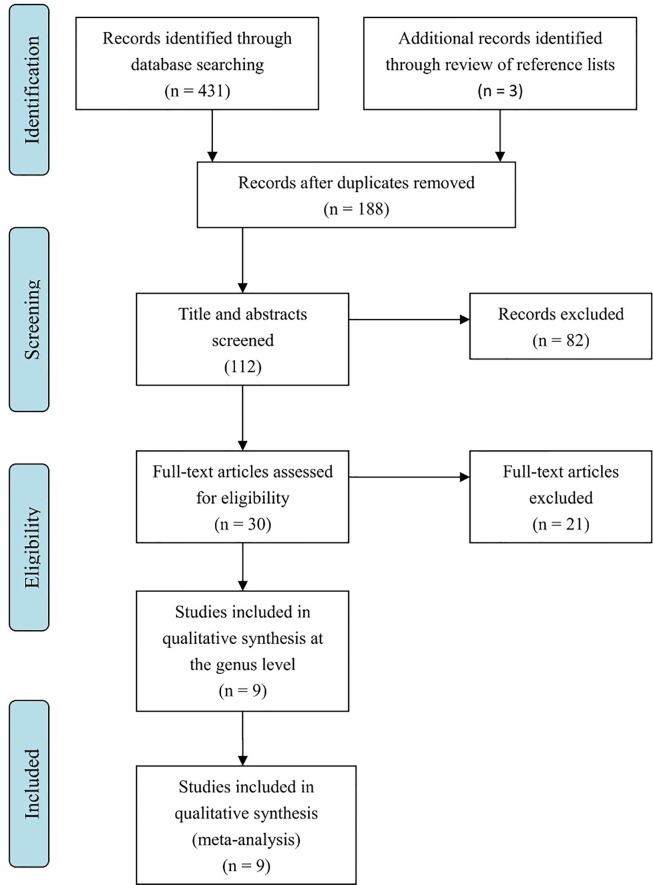
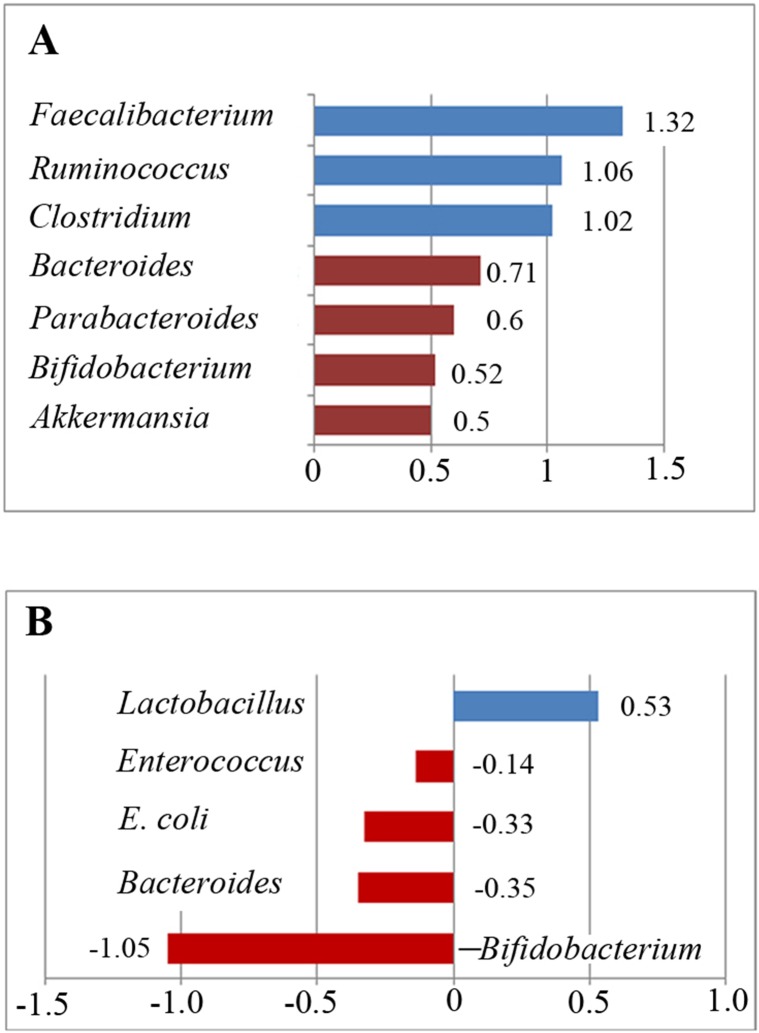
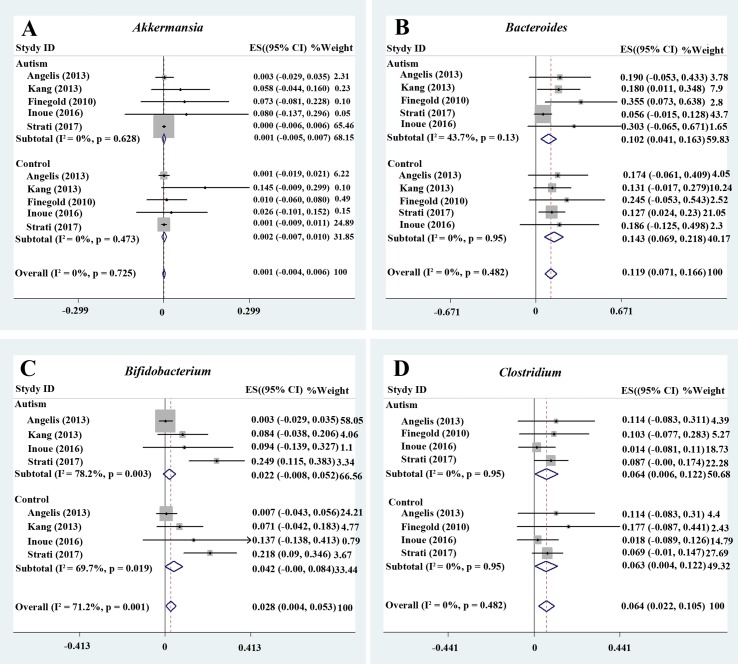
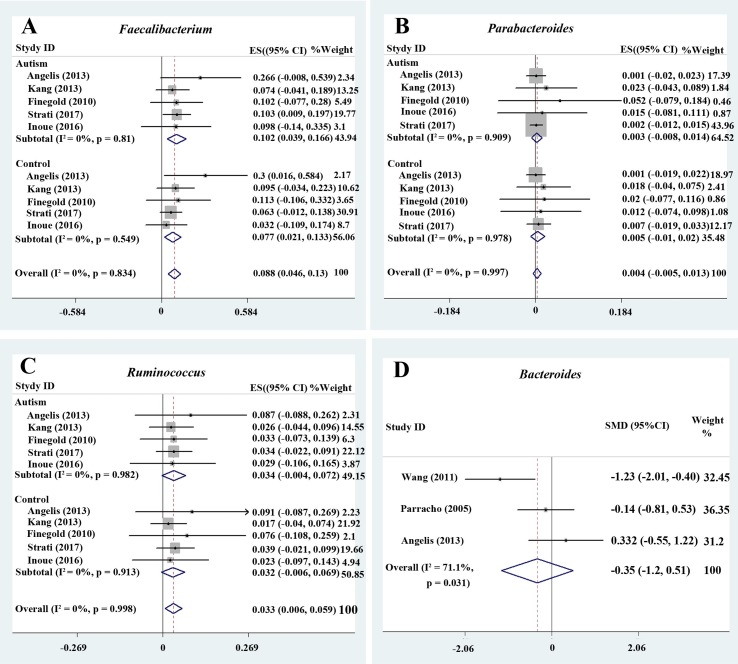
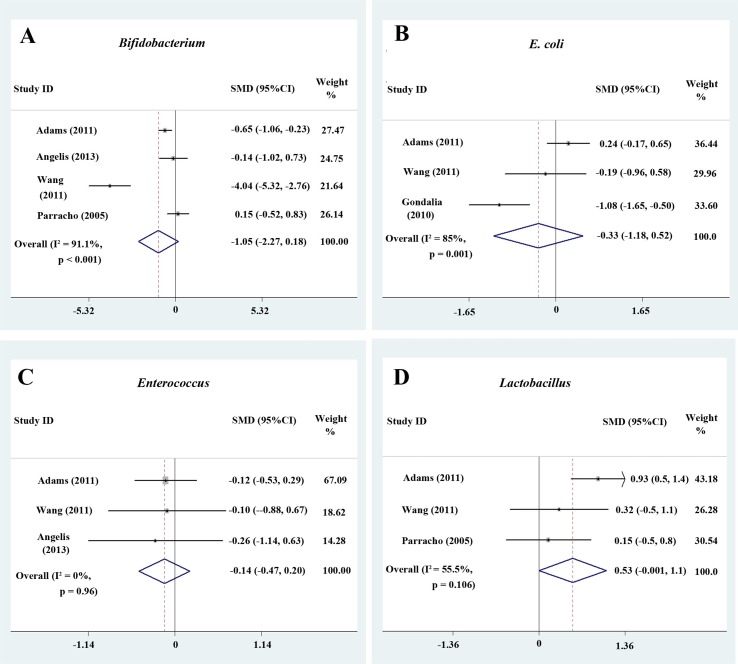
Autism spectrum disorder (ASD) is characterized by stereotyped behavior and deficits in communication and social interactions. Gastrointestinal (GI) dysfunction is an ASD-associated comorbidity, implying a potential role of the gut microbiota in ASD GI pathophysiology. Several recent studies found that autistic individuals harbor an altered bacterial gut microbiota. In some cases, remodeling the gut microbiota by antibiotic administration and microbiota transfer therapy reportedly alleviated the symptoms of ASD. However, there is little consensus on specific bacterial species that are similarly altered across individual studies. The aim of this study is to summarize previously published data and analyze the alteration of the relative abundance of bacterial genera in the gut microbiota in controls and individuals with ASD using meta-analysis. We analyzed nine studies, including 254 patients with ASD, and found that children with ASD had lower percentages of , , , and and a higher percentage of in the total detected microflora compared to controls. In contrast, children with ASD had lower abundance of , , , and and higher abundance of . This meta-analysis suggests an association between ASD and alteration of microbiota composition and warrants additional prospective cohort studies to evaluate the association of bacterial changes with ASD symptoms, which would provide further evidence for the precise microbiological treatment of ASD.
自闭症谱系障碍(ASD)的特征是存在刻板行为以及沟通和社交互动方面的缺陷。胃肠道(GI)功能障碍是一种与ASD相关的合并症,这意味着肠道微生物群在ASD胃肠道病理生理学中可能发挥作用。最近的几项研究发现,自闭症个体的肠道细菌微生物群发生了改变。在某些情况下,据报道通过抗生素给药和微生物群转移疗法重塑肠道微生物群可缓解ASD症状。然而,对于不同个体研究中类似改变的特定细菌种类,目前几乎没有共识。本研究的目的是总结先前发表的数据,并使用荟萃分析来分析对照组和ASD个体肠道微生物群中细菌属相对丰度的变化。我们分析了9项研究,包括254例ASD患者,发现与对照组相比,ASD儿童在总检测微生物群中的 、 、 和 的百分比更低,而 的百分比更高。相比之下,ASD儿童的 、 、 和 的丰度较低,而 的丰度较高。这项荟萃分析表明ASD与微生物群组成的改变之间存在关联,并且有必要进行额外的前瞻性队列研究,以评估细菌变化与ASD症状之间的关联,这将为ASD的精确微生物治疗提供进一步的证据。