Department of Population Health and Disease Prevention and the Chao Family Comprehensive Cancer Center, University of California, Irvine, 653 E Peltason Drive, Irvine, CA, 95697-3957, USA.
Department of Psychology, Soochow University, Shinlin, Taiwan.
Trials. 2020 Apr 14;21(1):325. doi: 10.1186/s13063-020-04242-0.
Testicular cancer diagnosis and treatment, especially given its threat to sexuality and reproductive health, can be distressing in the formative period of young adulthood and the majority of young survivors experience impairing, distressing, and modifiable adverse outcomes that can persist long after medical treatment. These include psychological distress, impairment in pursuit of life goals, persistent physical side effects, elevated risk of secondary malignancies and chronic illness, and biobehavioral burden (e.g., enhanced inflammation, dysregulated diurnal stress hormones). However, few targeted interventions exist to assist young survivors in renegotiating life goals and regulating cancer-related emotions, and none focus on reducing the burden of morbidity via biobehavioral mechanisms. This paper describes the methodology of a randomized controlled biobehavioral trial designed to investigate the feasibility and preliminary impact of a novel intervention, Goal-focused Emotion-Regulation Therapy (GET), aimed at improving distress symptoms, emotion regulation, goal navigation skills, and stress-sensitive biomarkers in young adult testicular cancer patients.
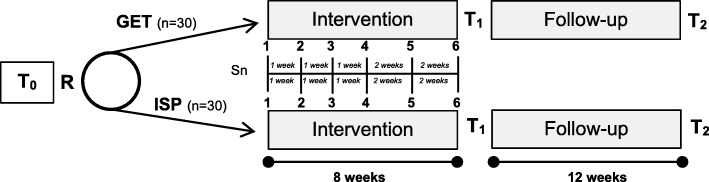
Participants will be randomized to receive six sessions of GET or Individual Supportive Therapy (ISP) delivered over 8 weeks. In addition to indicators of intervention feasibility, we will measure primary (depressive and anxiety symptoms) and secondary (emotion regulation and goal navigation skills, career confusion) psychological outcomes prior to (T), immediately after (T), and 12 weeks after (T) intervention. Additionally, identified biomarkers will be measured at baseline and at T.
GET may have the potential to improve self-regulation across biobehavioral domains, improve overall cancer adjustment, and address the need for targeted supportive care interventions for young adult cancer survivors.
Clinicaltrials.gov, NCT04150848. Registered on 28 October 2019.
睾丸癌的诊断和治疗,尤其是考虑到它对性健康和生殖健康的威胁,可能会在年轻人的成长期带来困扰,大多数年轻的幸存者会经历痛苦、困扰和可改变的不良后果,这些后果在医疗治疗后很长时间内都可能持续存在。这些后果包括心理困扰、追求生活目标的能力受损、持续的身体副作用、继发性恶性肿瘤和慢性疾病风险增加,以及生物行为负担(例如,炎症增强、昼夜应激激素失调)。然而,很少有针对性的干预措施来帮助年轻幸存者重新协商生活目标和调节与癌症相关的情绪,也没有干预措施专注于通过生物行为机制来减轻发病率负担。本文介绍了一项随机对照生物行为试验的方法学,该试验旨在研究一种新的干预措施——目标导向情绪调节治疗(GET)的可行性和初步影响,该干预措施旨在改善年轻睾丸癌患者的痛苦症状、情绪调节、目标导航技能和应激敏感生物标志物。
参与者将被随机分配接受 6 次 GET 或个体支持性治疗(ISP),共 8 周。除了干预可行性的指标外,我们还将在干预前(T)、干预后即刻(T)和干预后 12 周(T)测量主要(抑郁和焦虑症状)和次要(情绪调节和目标导航技能、职业困惑)心理结果。此外,将在基线和 T 时测量鉴定的生物标志物。
GET 可能具有改善生物行为领域自我调节的潜力,改善整体癌症适应,并满足年轻癌症幸存者对有针对性的支持性护理干预措施的需求。
Clinicaltrials.gov,NCT04150848。于 2019 年 10 月 28 日注册。