Elfiky Abdo A
Biophysics Department, Faculty of Sciences, Cairo University, Giza, Egypt.
College of Applied Medical Sciences, University of Al-Jouf, Sakaka, Saudi Arabia.
Cell Stress Chaperones. 2020 May;25(3):541-548. doi: 10.1007/s12192-020-01106-z. Epub 2020 Apr 14.
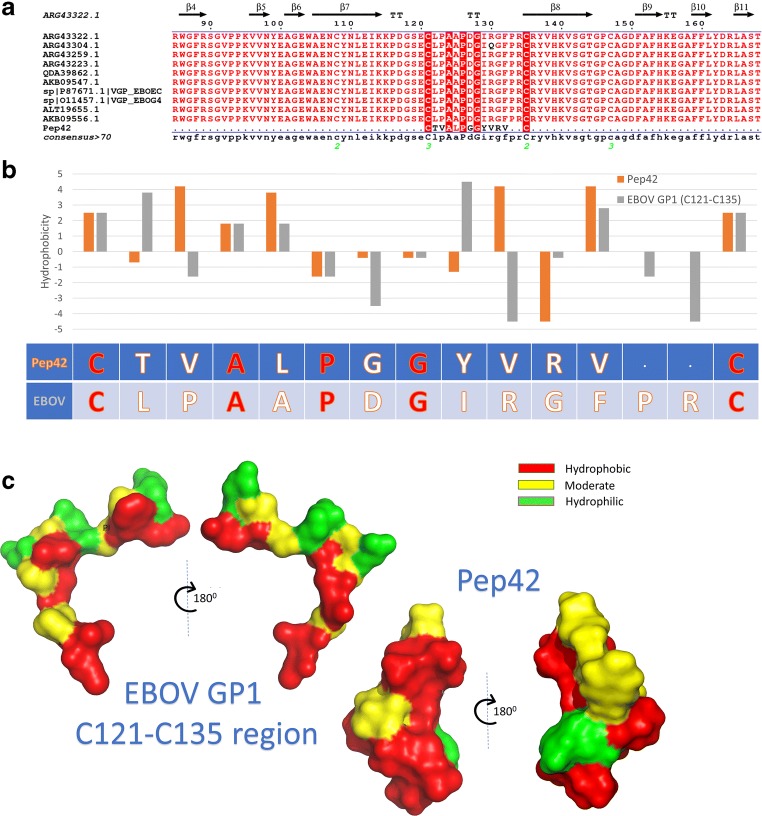
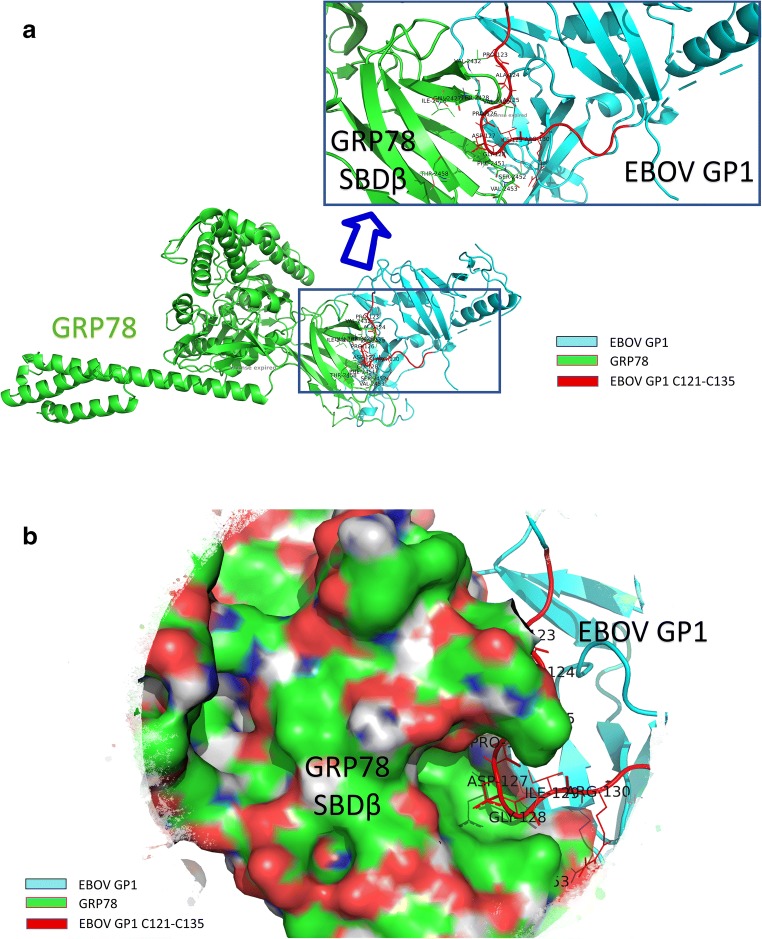
Ebola virus (EBOV) infection is a widespread infection that has created a bad memory in Africa. In the 2014 and 2015 outbreak, more than 28,000 infections were reported by the World Health Organization, with about 11,300 deaths in Guinea, Liberia, and Sierra Leone. Heat shock protein A5 (HSPA5), termed also GRP78, is a host cell chaperone protein responsible for the unfolded protein response in the endoplasmic reticulum. Under stress, HSPA5 is upregulated and becomes cell-surface exposed. Recent studies report the association of cell-surface HSPA5 with EBOV glycoproteins GP1 and GP2. In this study, structural and sequence analysis and molecular docking are used to predict the possible binding site between the cell-surface HSPA5 and EBOV GP1. The results show a promising binding site that supports the hypothesis of HSPA5 selectivity for binding to a specific peptide sequence (pep42). This study paves the way to suggest possible inhibitors to stop viral association with cell-surface receptors and subsequently reduce viral infection.
埃博拉病毒(EBOV)感染是一种广泛传播的感染,在非洲留下了不好的记忆。在2014年和2015年的疫情中,世界卫生组织报告了超过28000例感染病例,在几内亚、利比里亚和塞拉利昂约有11300人死亡。热休克蛋白A5(HSPA5),也称为GRP78,是一种宿主细胞伴侣蛋白,负责内质网中的未折叠蛋白反应。在应激状态下,HSPA5上调并暴露于细胞表面。最近的研究报道了细胞表面HSPA5与埃博拉病毒糖蛋白GP1和GP2的关联。在本研究中,通过结构和序列分析以及分子对接来预测细胞表面HSPA5与埃博拉病毒GP1之间可能的结合位点。结果显示了一个有前景的结合位点,支持HSPA5对特定肽序列(pep42)结合具有选择性的假设。本研究为提出可能的抑制剂以阻止病毒与细胞表面受体结合并随后减少病毒感染铺平了道路。