Yan Baoyu, Xu Xiaopan, Liu Mengwan, Zheng Kaizhong, Liu Jian, Li Jianming, Wei Lei, Zhang Binjie, Lu Hongbing, Li Baojuan
School of Biomedical Engineering, Air Force Medical University, Xi'an, China.
Network Center, Air Force Medical University, Xi'an, China.
Front Neurosci. 2020 Mar 27;14:191. doi: 10.3389/fnins.2020.00191. eCollection 2020.
Developing a machine learning-based approach which could provide quantitative identification of major depressive disorder (MDD) is essential for the diagnosis and intervention of this disorder. However, the performances of traditional algorithms using static functional connectivity (SFC) measures were unsatisfactory. In the present work, we exploit the hidden information embedded in dynamic functional connectivity (DFC) and developed an accurate and objective image-based diagnosis system for MDD.
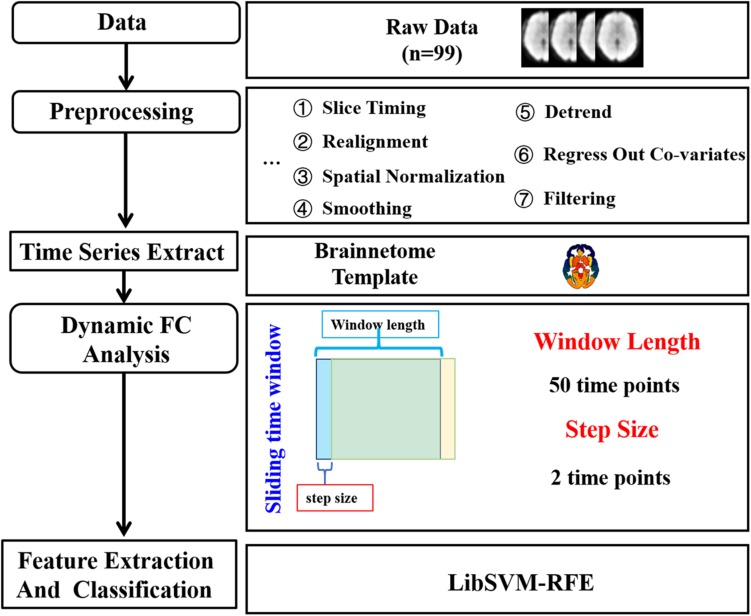
MRI images were collected from 99 participants including 56 healthy controls and 43 MDD patients. DFC was calculated using a sliding-window algorithm. A non-linear support vector machine (SVM) approach was then used with the DFC matrices as features to distinguish MDD patients from healthy controls. The spatiotemporal characteristics of the most discriminative features were then investigated.
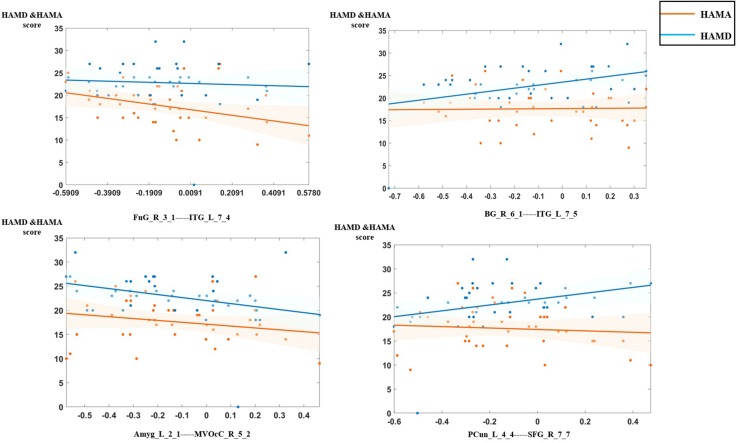
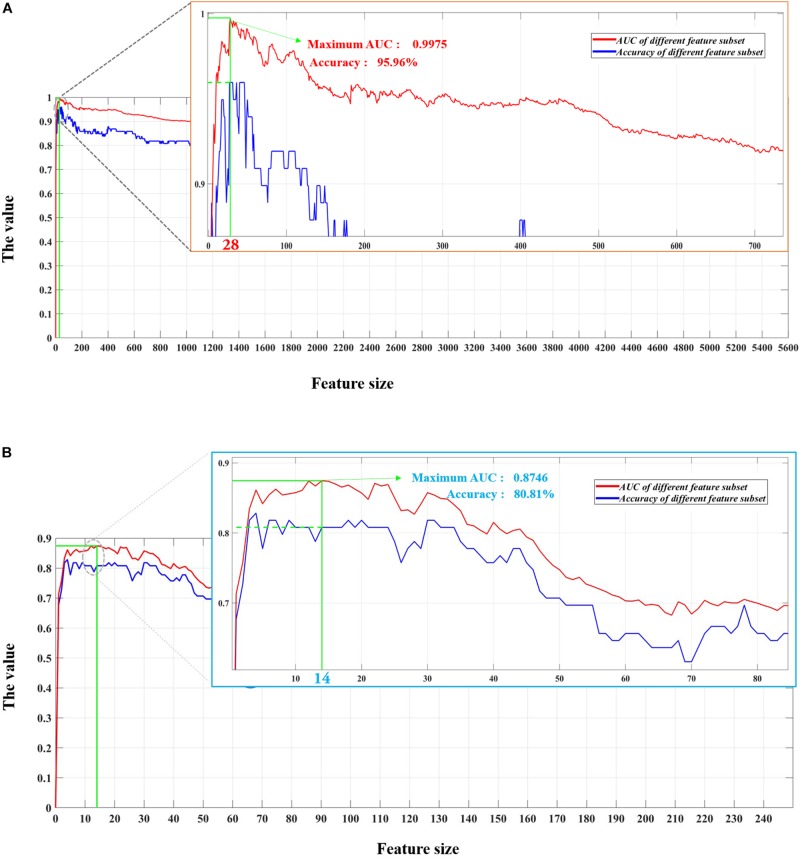
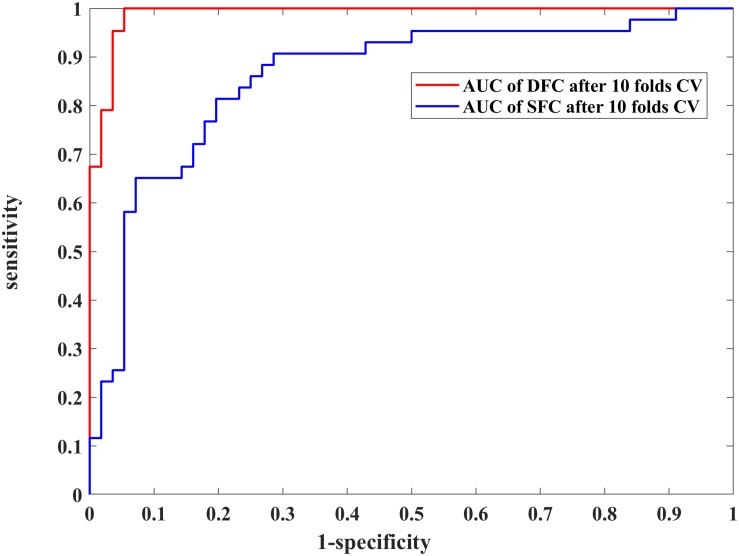
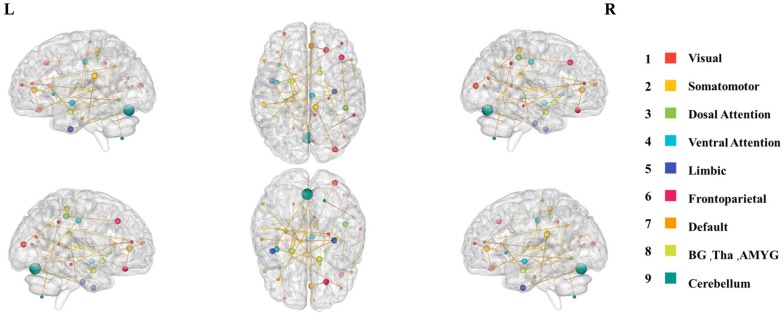
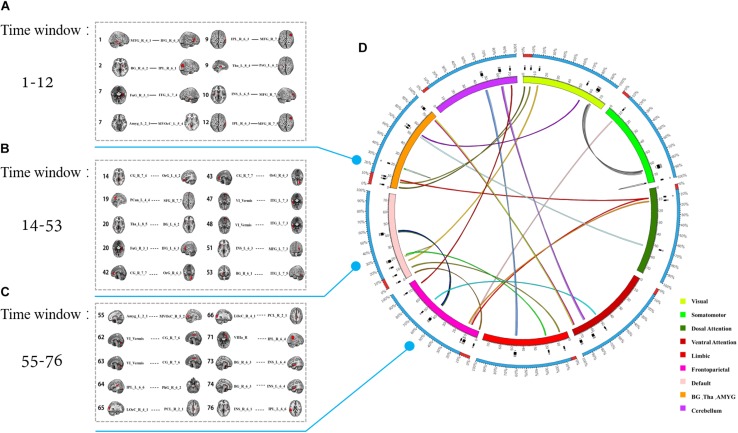
The area under the curve (AUC) of the SVM classifier with DFC measures reached 0.9913, while this value is only 0.8685 for the algorithm using SFC measures. Spatially, the most discriminative 28 connections distributed in the visual network (VN), somatomotor network (SMN), dorsal attention network (DAN), ventral attention network (VAN), limbic network (LN), frontoparietal network (FPN), and default mode network (DMN), etc. Notably, a large portion of these connections were associated with the FPN, DMN, and VN. Temporally, the most discriminative connections transited from the cortex to deeper regions.
The results clearly suggested that DFC is superior to SFC and provide a reliable quantitative identification method for MDD. Our findings may furnish a better understanding of the neural mechanisms of MDD as well as improve accurate diagnosis and early intervention of this disorder.
开发一种基于机器学习的方法以对重度抑郁症(MDD)进行定量识别,对于该疾病的诊断和干预至关重要。然而,使用静态功能连接(SFC)测量的传统算法的性能并不理想。在本研究中,我们挖掘了动态功能连接(DFC)中嵌入的隐藏信息,并开发了一种准确、客观的基于图像的MDD诊断系统。
收集了99名参与者的MRI图像,其中包括56名健康对照者和43名MDD患者。使用滑动窗口算法计算DFC。然后使用非线性支持向量机(SVM)方法,以DFC矩阵作为特征来区分MDD患者和健康对照者。随后研究了最具区分性特征的时空特性。
使用DFC测量的SVM分类器的曲线下面积(AUC)达到0.9913,而使用SFC测量的算法该值仅为0.8685。在空间上,最具区分性的28条连接分布在视觉网络(VN)、躯体运动网络(SMN)、背侧注意网络(DAN)、腹侧注意网络(VAN)、边缘网络(LN)、额顶网络(FPN)和默认模式网络(DMN)等中。值得注意的是,这些连接中的很大一部分与FPN、DMN和VN相关。在时间上,最具区分性的连接从皮层过渡到更深的区域。
结果清楚地表明DFC优于SFC,并为MDD提供了一种可靠的定量识别方法。我们的发现可能有助于更好地理解MDD的神经机制,并改善该疾病的准确诊断和早期干预。