van der Weiden Anouk, Benjamins Jeroen, Gillebaart Marleen, Ybema Jan Fekke, de Ridder Denise
Department of Social Health and Organizational Psychology, Utrecht University, Utrecht, Netherlands.
Department of Social Economic and Organizational Psychology, Leiden University, Leiden, Netherlands.
Front Psychol. 2020 Mar 27;11:560. doi: 10.3389/fpsyg.2020.00560. eCollection 2020.
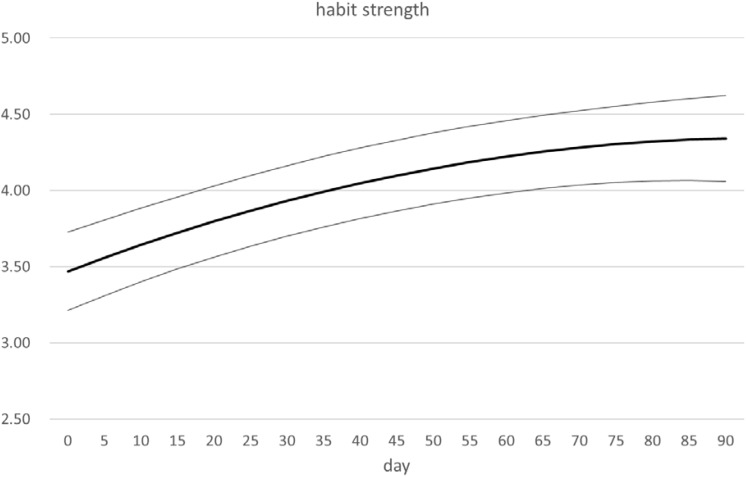
When striving for long-term goals (e.g., healthy eating, saving money, reducing energy consumption, or maintaining interpersonal relationships), people often get in conflict with their short-term goals (e.g., enjoying tempting snacks, purchasing must-haves, getting warm, or watching YouTube video's). Previous research suggests that people who are successful in controlling their behavior in line with their long-term goals rely on effortless strategies, such as good habits. In the present study, we aimed to track how self-control capacity affects the development of good habits in real life over a period of 90 days. Results indicated that habit formation increased substantially over the course of three months, especially for participants who consistently performed the desired behavior during this time. Contrary to our expectations, however, self-control capacity did not seem to affect the habit formation process. Directions for future research on self-control and other potential moderators in the formation of good habits are discussed.
在追求长期目标(如健康饮食、存钱、减少能源消耗或维持人际关系)时,人们常常会与自己的短期目标发生冲突(如享用诱人的零食、购买必需品、取暖或观看YouTube视频)。先前的研究表明,成功按照长期目标控制自身行为的人依赖于轻松的策略,比如良好的习惯。在本研究中,我们旨在追踪自我控制能力如何在90天的时间里影响现实生活中良好习惯的养成。结果表明,在三个月的时间里,习惯养成大幅增加,尤其是在此期间持续做出期望行为的参与者。然而,与我们的预期相反,自我控制能力似乎并未影响习惯养成过程。我们讨论了未来关于自我控制及其他在良好习惯形成中潜在调节因素的研究方向。