Department of Sports Science and Clinical Biomechanics, Research Unit for Exercise Epidemiology, Centre of Research in Childhood Health, University of Southern Denmark, 5230, Odense, Denmark.
MRC Epidemiology Unit, Cambridge School of Clinical Medicine, Institute of Metabolic Science, University of Cambridge, Box 285, Cambridge Biomedical Campus, Cambridge, CB2 0QQ, UK.
BMC Public Health. 2020 Mar 23;20(1):380. doi: 10.1186/s12889-020-8458-6.
During the recent decade presence of digital media, especially handheld devices, in everyday life, has been increasing. Survey data suggests that children and adults spend much of their leisure on screen media, including use of social media and video services. Despite much public debate on possible harmful effects of such behavioral shifts, evidence from rigorously conducted randomized controlled trials in free-living settings, investigating the efficacy of reducing screen media use on physical activity, sleep, and physiological stress, is still lacking. Therefore, a family and home-based randomized controlled trial - the SCREENS trial - is being conducted. Here we describe in detail the rationale and protocol of this study.
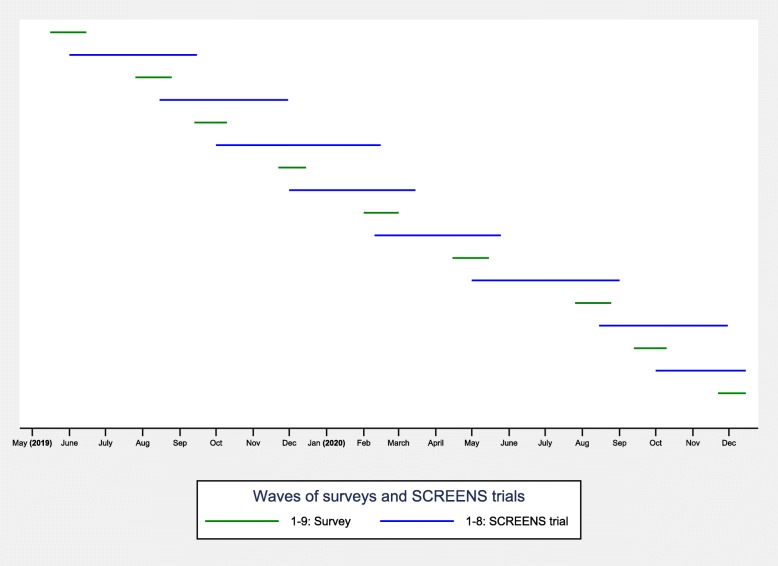
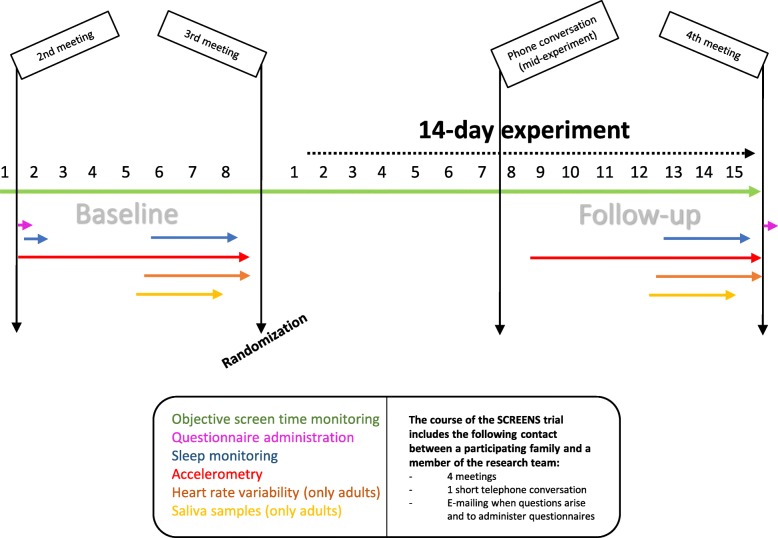
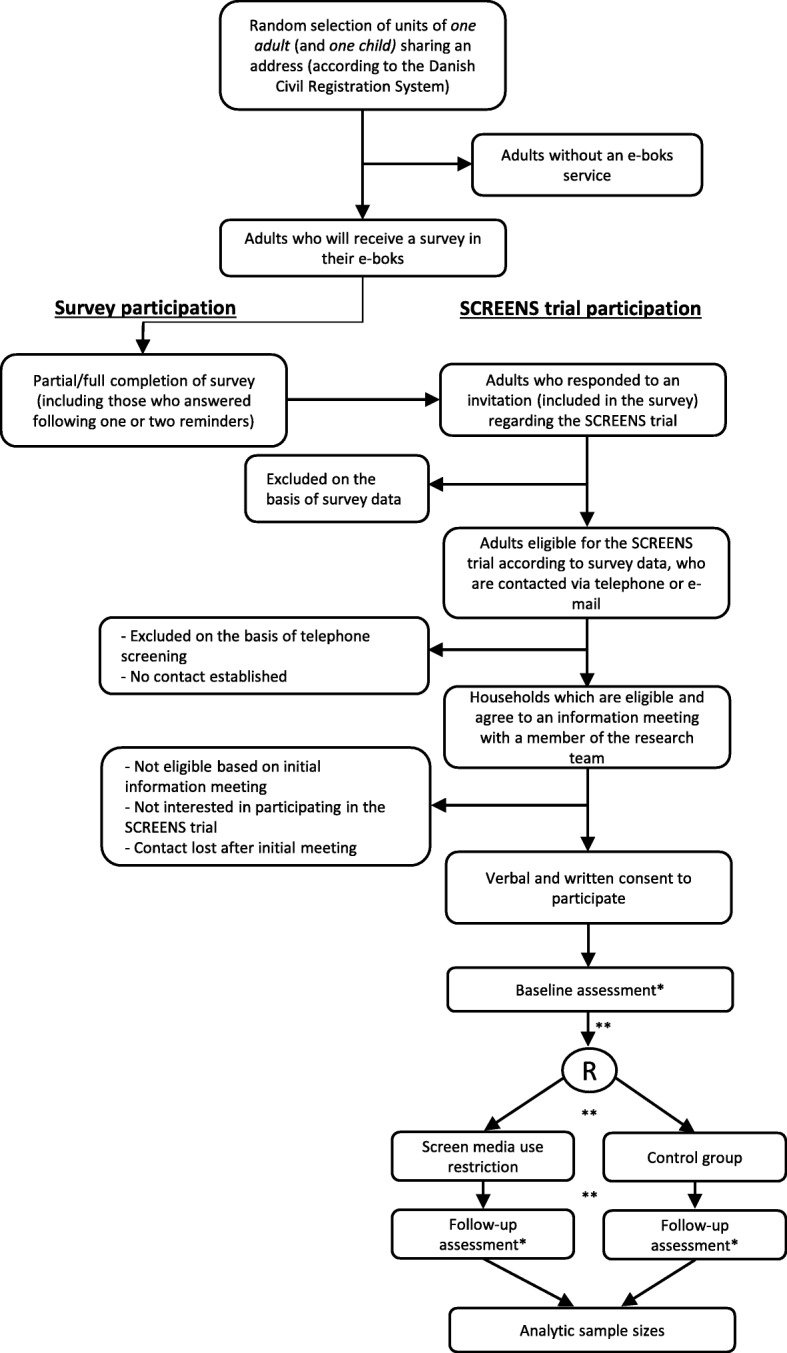
The SCREENS pilot trial was conducted during the fall of 2018 and spring of 2019. Based on experiences from the pilot study, we developed a protocol for a parallel group randomized controlled trial. The trial is being conducted from May 2019 to ultimo 2020 in 95 families with children 4-14 years recruited from a population-based survey. As part of the intervention family members must handover most portable devices for a 2-week time frame, in exchange for classic mobile phones (not smartphones). Also, entertainment-based screen media use during leisure must be limited to no more than 3 hours/week/person. At baseline and follow-up, 7-day 24-h physical activity will be assessed using two triaxial accelerometers; one at the right hip and one the middle of the right thigh. Sleep duration will be assessed using a single channel EEG-based sleep monitor system. Also, to assess physiological stress (only assessed in adults), parameters of 24-h heart rate variability, the cortisol awakening response and diurnal cortisol slope will be quantified using data sampled over three consecutive days. During the study we will objectively monitor the families' screen media use via different software and hardware monitoring systems.
Using a rigorous study design with state-of-the-art methodology to assess outcomes and intervention compliance, analyses of data from the SCREENS trial will help answer important causal questions of leisure screen media habits and its short-term influence on physical activity, sleep, and other health related outcomes among children and adults.
NCT04098913 at https://clinicaltrials.gov [20-09-2019, retrospectively registered].
在最近十年中,数字媒体的出现,尤其是手持设备,在日常生活中越来越普遍。调查数据表明,儿童和成年人在闲暇时间花费大量时间在屏幕媒体上,包括使用社交媒体和视频服务。尽管公众对这种行为转变可能产生的有害影响进行了大量辩论,但在自由生活环境中进行的严格随机对照试验仍缺乏关于减少屏幕媒体使用对身体活动、睡眠和生理应激影响的证据。因此,一项基于家庭的随机对照试验——SCREENS 试验正在进行。在这里,我们详细描述了这项研究的基本原理和方案。
SCREENS 试验的初步试验于 2018 年秋季和 2019 年春季进行。根据初步试验的经验,我们制定了一项平行组随机对照试验的方案。该试验于 2019 年 5 月至 2020 年 12 月期间在一项基于人群的调查中招募的 95 个有 4-14 岁儿童的家庭中进行。作为干预的一部分,家庭成员必须在两周的时间内交出大多数便携式设备,以换取经典手机(非智能手机)。此外,休闲时的娱乐性屏幕媒体使用必须限制在每周每人不超过 3 小时。在基线和随访时,将使用两个三轴加速度计评估 7 天 24 小时的身体活动;一个在右臀部,一个在右大腿中部。使用单通道基于 EEG 的睡眠监测系统评估睡眠时间。此外,为了评估生理应激(仅在成年人中评估),将使用连续三天采集的数据量化 24 小时心率变异性、皮质醇觉醒反应和日间皮质醇斜率的参数。在研究过程中,我们将使用不同的软件和硬件监测系统客观地监测家庭的屏幕媒体使用情况。
使用严格的研究设计和最先进的方法学来评估结果和干预措施的依从性,对 SCREENS 试验数据的分析将有助于回答关于闲暇屏幕媒体习惯及其对儿童和成年人身体活动、睡眠和其他健康相关结果的短期影响的重要因果问题。
NCT04098913 在 https://clinicaltrials.gov [2019 年 9 月 20 日,回溯注册]。