Fairy Lake Botanical Garden, Shenzhen & Chinese Academy of Sciences, Shenzhen, China.
Xi'an Botanical Garden, Xian, China.
PLoS One. 2020 Apr 15;15(4):e0231020. doi: 10.1371/journal.pone.0231020. eCollection 2020.
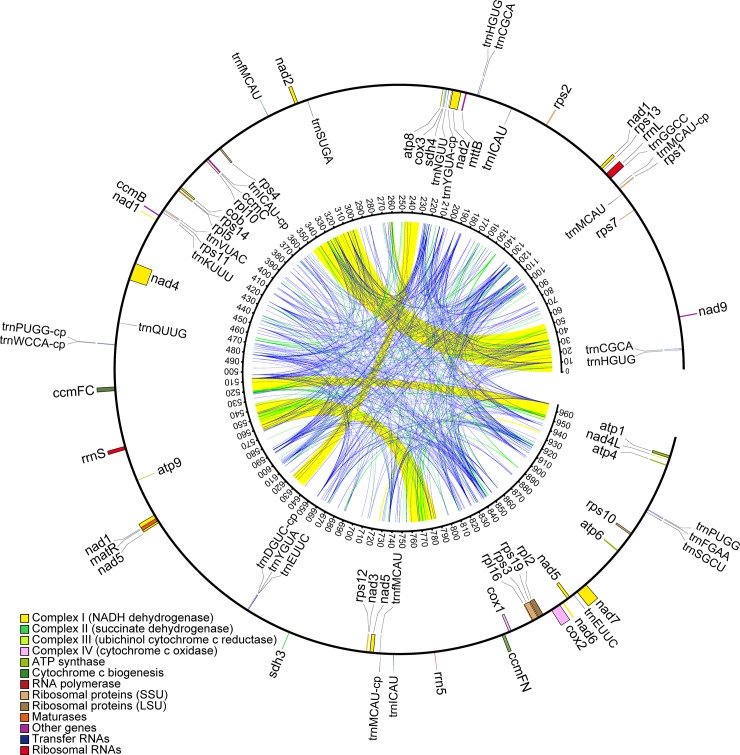
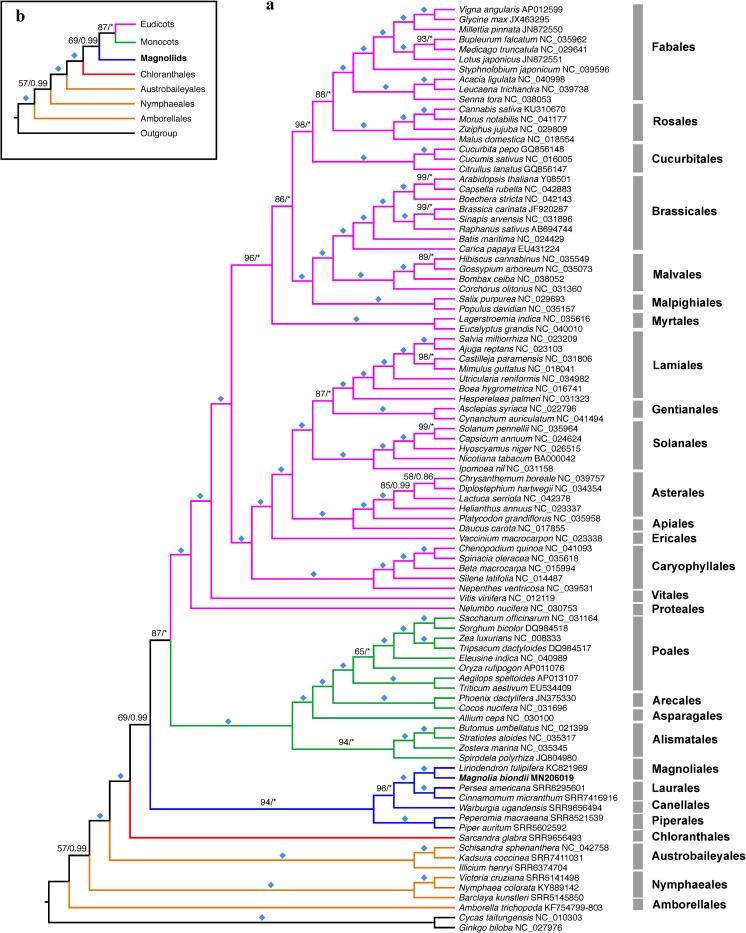
The mitochondrial genomes of flowering plants are well known for their large size, variable coding-gene set and fluid genome structure. The available mitochondrial genomes of the early angiosperms show extreme genetic diversity in genome size, structure, and sequences, such as rampant HGTs in Amborella mt genome, numerous repeated sequences in Nymphaea mt genome, and conserved gene evolution in Liriodendron mt genome. However, currently available early angiosperm mt genomes are still limited, hampering us from obtaining an overall picture of the mitogenomic evolution in angiosperms. Here we sequenced and assembled the draft mitochondrial genome of Magnolia biondii Pamp. from Magnoliaceae (magnoliids) using Oxford Nanopore sequencing technology. We recovered a single linear mitochondrial contig of 967,100 bp with an average read coverage of 122 × and a GC content of 46.6%. This draft mitochondrial genome contains a rich 64-gene set, similar to those of Liriodendron and Nymphaea, including 41 protein-coding genes, 20 tRNAs, and 3 rRNAs. Twenty cis-spliced and five trans-spliced introns break ten protein-coding genes in the Magnolia mt genome. Repeated sequences account for 27% of the draft genome, with 17 out of the 1,145 repeats showing recombination evidence. Although partially assembled, the approximately 1-Mb mt genome of Magnolia is still among the largest in angiosperms, which is possibly due to the expansion of repeated sequences, retention of ancestral mtDNAs, and the incorporation of nuclear genome sequences. Mitochondrial phylogenomic analysis of the concatenated datasets of 38 conserved protein-coding genes from 91 representatives of angiosperm species supports the sister relationship of magnoliids with monocots and eudicots, which is congruent with plastid evidence.
开花植物的线粒体基因组以其较大的大小、可变的编码基因集和流动的基因组结构而闻名。早期被子植物的可用线粒体基因组在基因组大小、结构和序列方面表现出极端的遗传多样性,例如 Amborella mt 基因组中的猖獗 HGT、Nymphaea mt 基因组中的大量重复序列以及 Liriodendron mt 基因组中保守的基因进化。然而,目前可用的早期被子植物 mt 基因组仍然有限,这阻碍了我们从整体上了解被子植物的线粒体基因组进化。在这里,我们使用牛津纳米孔测序技术对木兰科(木兰类)Magnolia biondii Pamp. 的线粒体基因组进行了测序和组装。我们回收了一个 967,100 bp 的单一线性线粒体连续体,平均读取覆盖率为 122×,GC 含量为 46.6%。这个草案线粒体基因组包含一个丰富的 64 基因集,类似于 Liriodendron 和 Nymphaea,包括 41 个蛋白质编码基因、20 个 tRNA 和 3 个 rRNA。20 个顺式剪接和 5 个反式剪接内含子打断了 Magnolia mt 基因组中的 10 个蛋白质编码基因。重复序列占草案基因组的 27%,其中 17 个重复序列显示出重组证据。尽管部分组装,Magnolia 的大约 1-Mb mt 基因组仍然是被子植物中最大的基因组之一,这可能是由于重复序列的扩张、祖先 mtDNA 的保留以及核基因组序列的掺入。来自 91 个被子植物代表的 38 个保守蛋白质编码基因的串联数据集的线粒体系统发育分析支持木兰类与单子叶植物和真双子叶植物的姐妹关系,这与质体证据一致。