Fesler Melissa C, Shah Jyotsna S, Middelveen Marianne J, Du Cruz Iris, Burrascano Joseph J, Stricker Raphael B
Union Square Medical Associates, 450 Sutter Street, Suite 1504, San Francisco, CA 94108, USA.
IGeneX Reference Laboratory, Milpitas, CA 95035, USA.
Healthcare (Basel). 2020 Apr 14;8(2):97. doi: 10.3390/healthcare8020097.
With more than 300,000 new cases reported each year in the United States of America (USA), Lyme disease is a major public health concern. sensu stricto (Bbss) is considered the primary agent of Lyme disease in North America. However, multiple genetically diverse species encompassing the sensu lato (Bbsl) complex and the Relapsing Fever (RFB) group are capable of causing tickborne disease. We report preliminary results of a serological survey of previously undetected species of Bbsl and RFB in California and Mexico using a novel immunoblot technique.
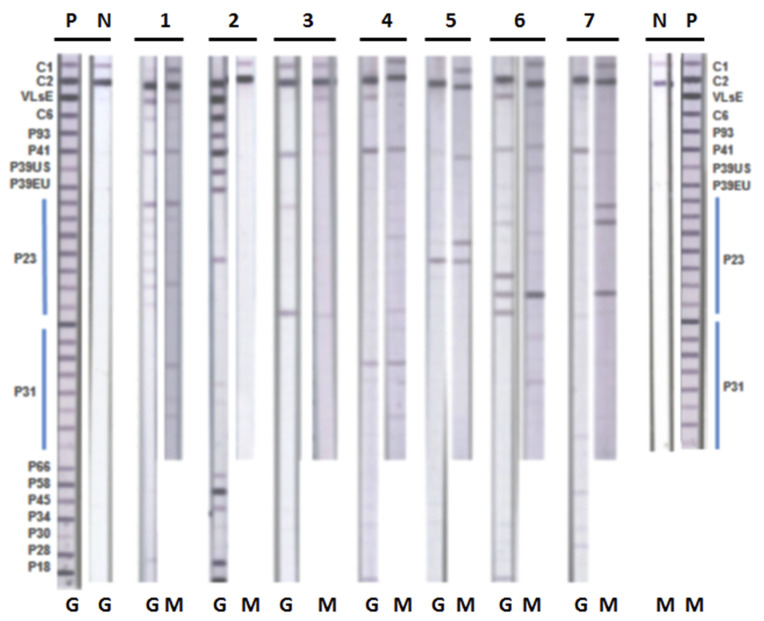
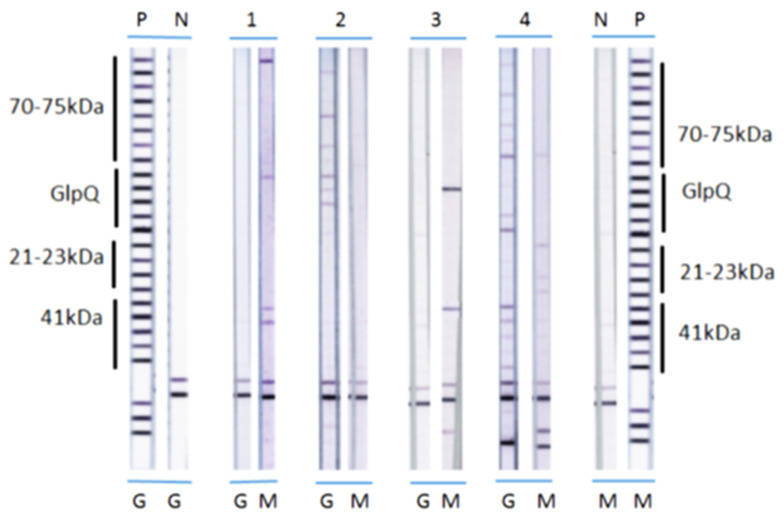
Serum samples were tested for seroreactivity to specific species of Bbsl and RFB using an immunoblot method based on recombinant membrane proteins, as previously described. A sample was recorded as seropositive if it showed immunoglobulin M (IgM) and/or IgG reactivity with at least two proteins from a specific species.
The patient cohort consisted of 90 patients residing in California or Mexico who met the clinical case definition of chronic Lyme disease. Immunoblot testing revealed that 42 patients were seropositive for Bbsl (Group 1), while 56 patients were seropositive for RFB (Group 2). Eight patients were seropositive for both Bbsl and RFB species. Group 1 included patients who were seropositive for Bbss (14), (eight), (10), (10), and mixed infections that included (three). Group 2 included patients who were seropositive for (nine), (seven), (nine), and (two). In the remaining Group 1 and Group 2 patients, the exact species could not be identified using the immunoblot technique.
Lyme disease is associated with a diverse group of species in California and Mexico. Current testing for Lyme disease focuses on detection of Bbss, possibly resulting in missed diagnoses and failure to administer appropriate antibiotic therapy in a timely manner. The genetic diversity of spirochetes must be considered in future Lyme disease test development.
在美国,每年报告的莱姆病新病例超过30万例,是一个主要的公共卫生问题。狭义伯氏疏螺旋体(Bbss)被认为是北美莱姆病的主要病原体。然而,包括广义伯氏疏螺旋体(Bbsl)复合体和回归热(RFB)群在内的多个基因多样的物种能够引起蜱传疾病。我们报告了一项使用新型免疫印迹技术对加利福尼亚州和墨西哥以前未检测到的Bbsl和RFB物种进行血清学调查的初步结果。
如前所述,使用基于重组膜蛋白的免疫印迹方法检测血清样本对特定Bbsl和RFB物种的血清反应性。如果样本与特定物种的至少两种蛋白显示免疫球蛋白M(IgM)和/或IgG反应性,则记录为血清阳性。
患者队列由90名居住在加利福尼亚州或墨西哥且符合慢性莱姆病临床病例定义的患者组成。免疫印迹检测显示,42名患者对Bbsl血清阳性(第1组),而56名患者对RFB血清阳性(第2组)。8名患者对Bbsl和RFB物种均血清阳性。第1组包括对Bbss血清阳性(第14例)、(第8例)、(第10例)、(第10例)以及包括(第3例)在内的混合感染患者。第2组包括对(第9例)、(第7例)血清阳性的患者。在其余的第1组和第2组患者中,使用免疫印迹技术无法确定确切的物种。
在加利福尼亚州和墨西哥,莱姆病与多种不同的物种有关。目前的莱姆病检测主要集中在Bbss的检测上,这可能导致漏诊以及未能及时给予适当的抗生素治疗。在未来莱姆病检测方法的开发中,必须考虑疏螺旋体的基因多样性。