Obesity Research Group, Department of Clinical and Molecular Medicine, Faculty of Medicine, Norwegian University of Science and Technology (NTNU), Trondheim, Norway.
Nord-Trøndelag Hospital Trust, Clinic of Surgery, Namsos Hospital, Norway.
J Clin Endocrinol Metab. 2020 Jul 1;105(7):e2538-46. doi: 10.1210/clinem/dgaa202.
To compare appetite markers in reduced-obese individuals with a nonobese control group.
A total of 34 adults with obesity who lost 17% body weight at week 13 and maintained this weight loss (WL) at 1 year were compared with 33 nonobese controls matched for body composition. Basal and postprandial subjective appetite ratings and appetite-related hormone concentrations (ghrelin, total peptide YY, peptide YY3-36, total and active glucagon-like peptide 1, and cholecystokinin) were measured in all participants and repeated at week 13 and 1 year in the weight-reduced group.
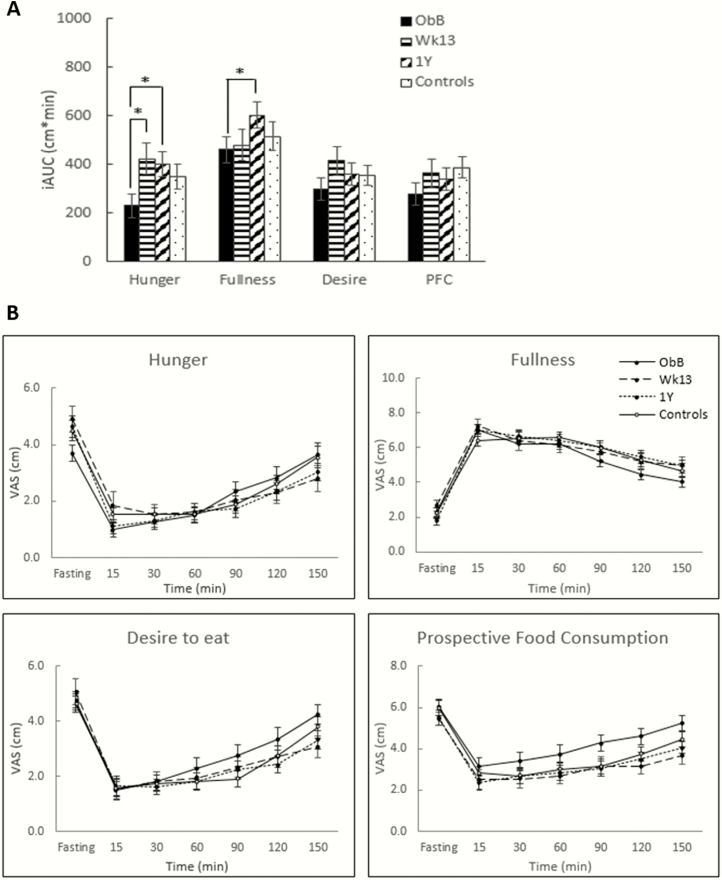
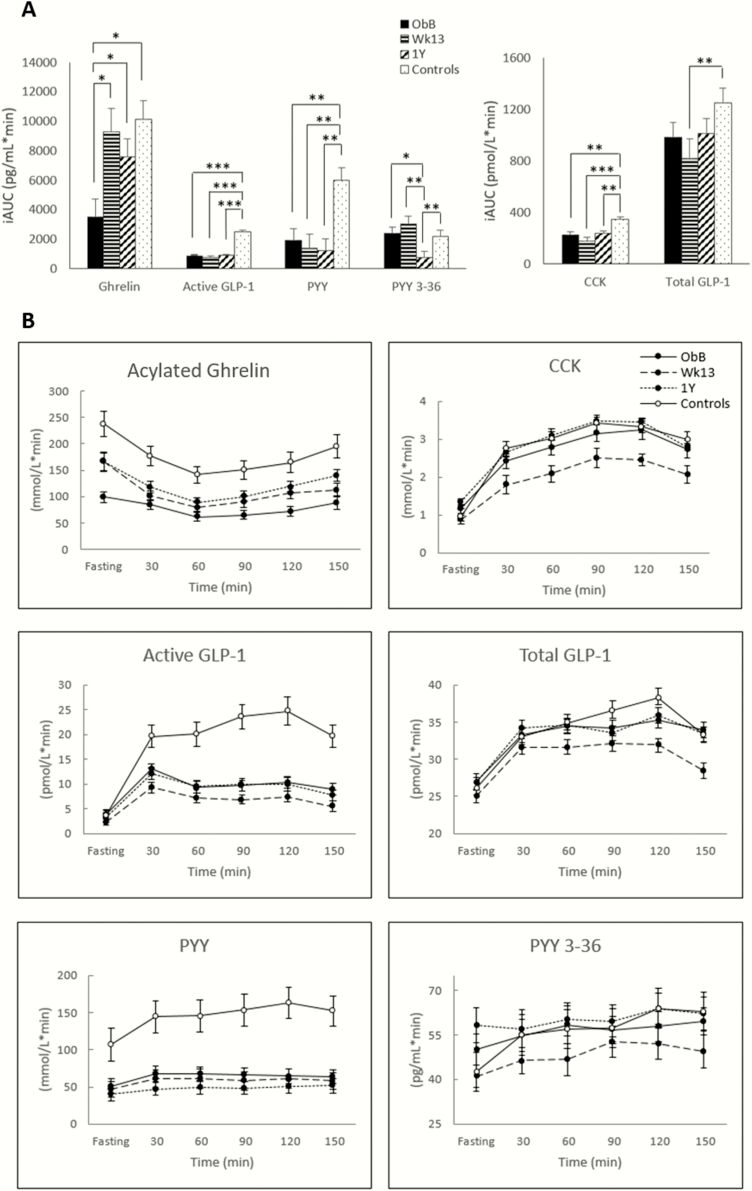
WL led to a reduction in prospective food consumption and an increase in feelings of hunger, fullness, and ghrelin secretion (basal and postprandial), but these new ratings were no different from those seen in controls. Postprandial concentrations of active glucagon-like peptide 1, total peptide YY, and cholecystokinin were lower in individuals with obesity at all time points compared with controls.
The increased drive to eat (both subjective feelings of hunger and ghrelin concentrations) seen in reduced-obese individuals, both after acute and sustained WL, reflects a normalization toward a lower body weight. Overall, WL does not have a sustained negative impact on satiety peptide secretion, despite a blunted secretion in individuals with obesity compared with nonobese controls.
比较体重减轻的个体与非肥胖对照组的食欲标志物。
将 34 名肥胖成年人在第 13 周时体重减轻 17%,并在 1 年内保持体重减轻(WL),与 33 名非肥胖对照组进行比较,这些对照组的身体成分相匹配。在所有参与者中测量基础和餐后主观食欲评分以及与食欲相关的激素浓度(ghrelin、总肽 YY、肽 YY3-36、总和活性胰高血糖素样肽 1、胆囊收缩素),并在体重减轻组的第 13 周和第 1 年重复测量。
WL 导致预期食物摄入量减少和饥饿感、饱腹感和 ghrelin 分泌增加(基础和餐后),但这些新的评分与对照组没有区别。与对照组相比,肥胖个体在所有时间点的餐后活性胰高血糖素样肽 1、总肽 YY 和胆囊收缩素浓度均较低。
体重减轻的个体在急性和持续 WL 后,无论是主观饥饿感还是 ghrelin 浓度都增加了进食的动力,这反映了体重向较低水平的正常化。总体而言,尽管与非肥胖对照组相比,肥胖个体的分泌减弱,但 WL 对饱腹感肽的分泌并没有持续的负面影响。