Villette Remy, Kc Pukar, Beliard Sophie, Salas Tapia Maria Fernanda, Rainteau Dominique, Guerin Maryse, Lesnik Philippe
INSERM, UMRS U1166, "Integrative Biology of Atherosclerosis" and Sorbonne Université, Paris, France.
Aix-Marseille Université, INSERM U1263, INRA, C2VN, Marseille, France.
Front Pharmacol. 2020 Apr 3;11:278. doi: 10.3389/fphar.2020.00278. eCollection 2020.
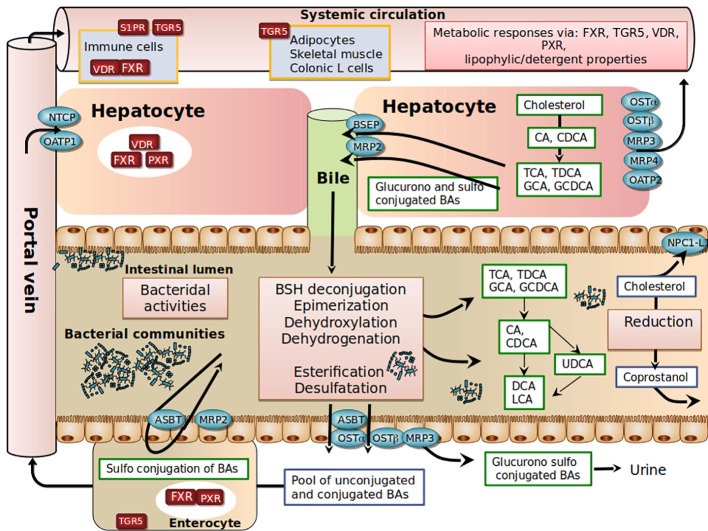
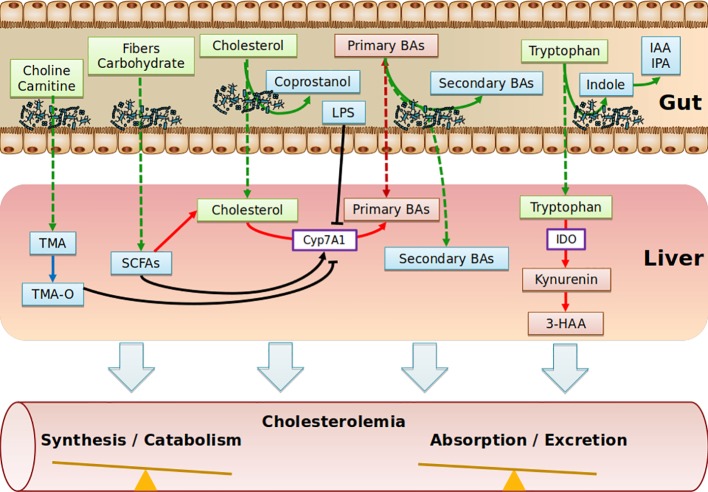
Disruption in cholesterol metabolism, particularly hypercholesterolemia, is a significant cause of atherosclerotic cardiovascular disease. Large interindividual variations in plasma cholesterol levels are traditionally related to genetic factors, and the remaining portion of their variance is accredited to environmental factors. In recent years, the essential role played by intestinal microbiota in human health and diseases has emerged. The gut microbiota is currently viewed as a fundamental regulator of host metabolism and of innate and adaptive immunity. Its bacterial composition but also the synthesis of multiple molecules resulting from bacterial metabolism vary according to diet, antibiotics, drugs used, and exposure to pollutants and infectious agents. Microbiota modifications induced by recent changes in the human environment thus seem to be a major factor in the current epidemic of metabolic/inflammatory diseases (diabetes mellitus, liver diseases, inflammatory bowel disease, obesity, and dyslipidemia). Epidemiological and preclinical studies report associations between bacterial communities and cholesterolemia. However, such an association remains poorly investigated and characterized. The objectives of this review are to present the current knowledge on and potential mechanisms underlying the host-microbiota dialogue for a better understanding of the contribution of microbial communities to the regulation of cholesterol homeostasis.
胆固醇代谢紊乱,尤其是高胆固醇血症,是动脉粥样硬化性心血管疾病的重要病因。传统上,血浆胆固醇水平的个体间巨大差异与遗传因素有关,其剩余的变异部分归因于环境因素。近年来,肠道微生物群在人类健康和疾病中所起的重要作用逐渐显现。目前,肠道微生物群被视为宿主代谢以及先天和适应性免疫的基本调节因子。其细菌组成以及细菌代谢产生的多种分子的合成会因饮食、抗生素、所用药物以及接触污染物和感染因子而有所不同。因此,人类环境近期变化所引起的微生物群改变似乎是当前代谢/炎症性疾病(糖尿病、肝病、炎症性肠病、肥胖症和血脂异常)流行的一个主要因素。流行病学和临床前研究报告了细菌群落与胆固醇血症之间的关联。然而,这种关联仍未得到充分研究和描述。本综述的目的是介绍关于宿主-微生物群对话的现有知识及其潜在机制,以便更好地理解微生物群落对胆固醇稳态调节的贡献。