Department of Molecular Genetics and Microbiology, Duke University Medical Center, Durham, United States.
Elife. 2020 Apr 20;9:e56026. doi: 10.7554/eLife.56026.
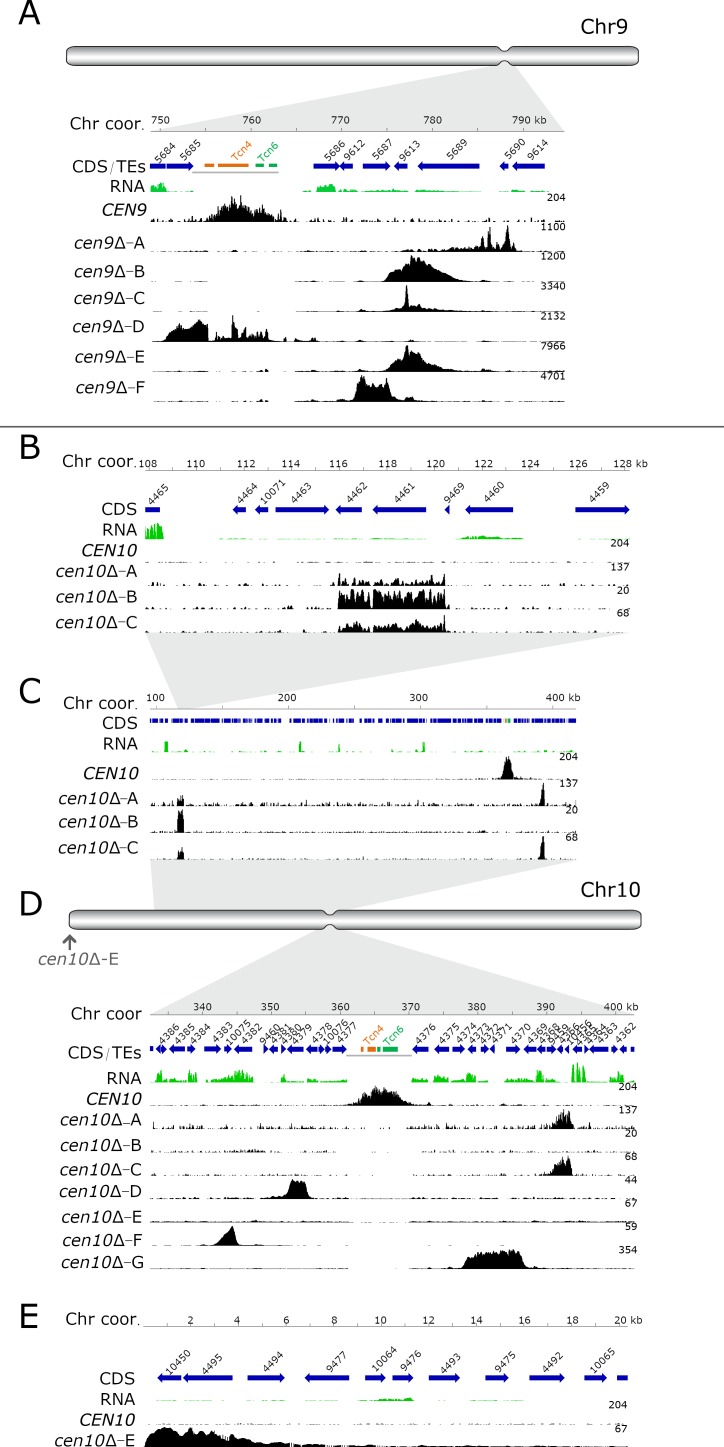
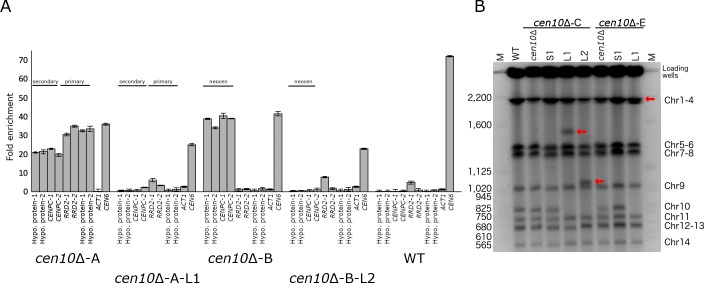
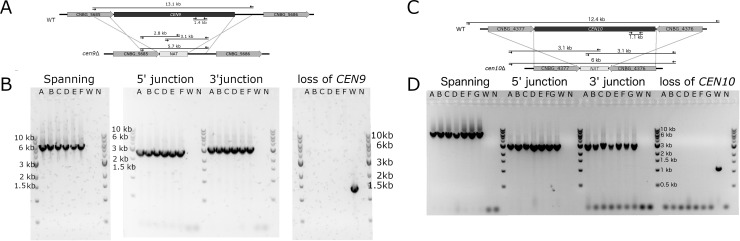
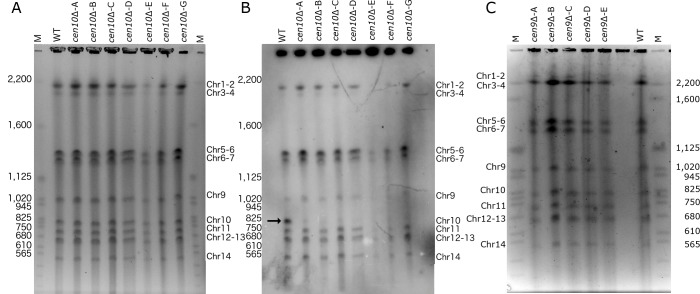
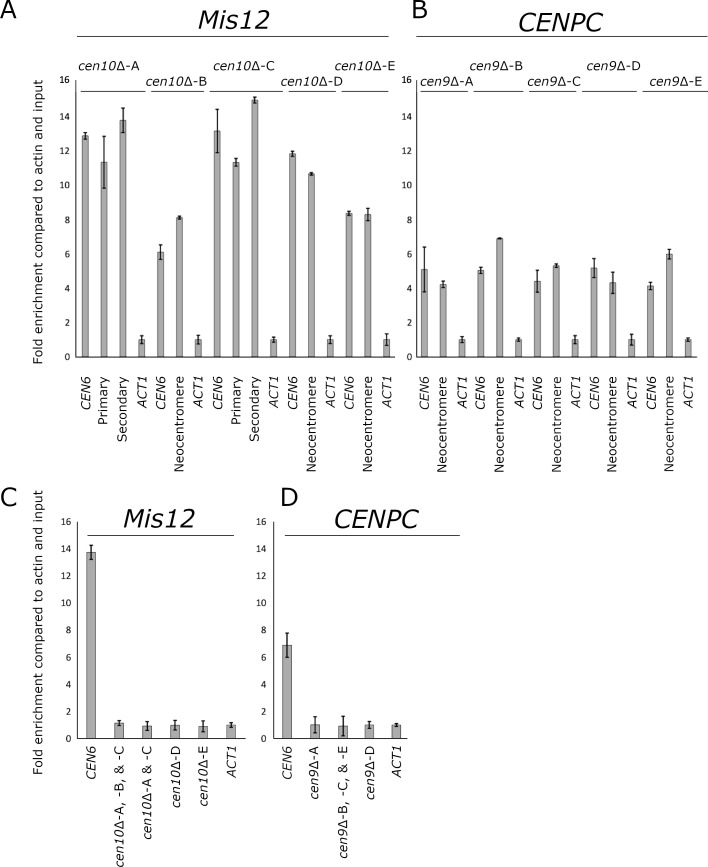
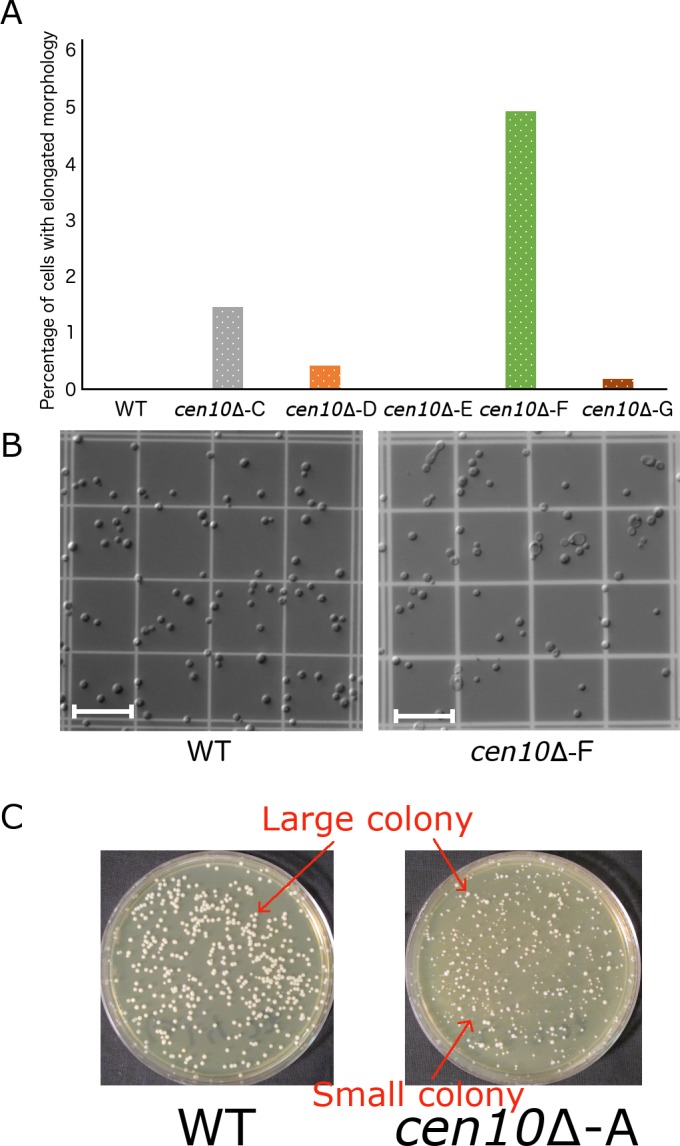
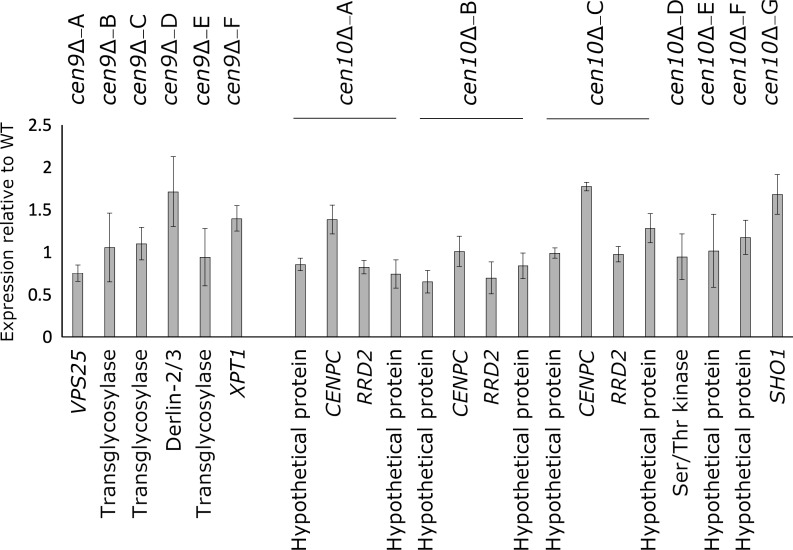
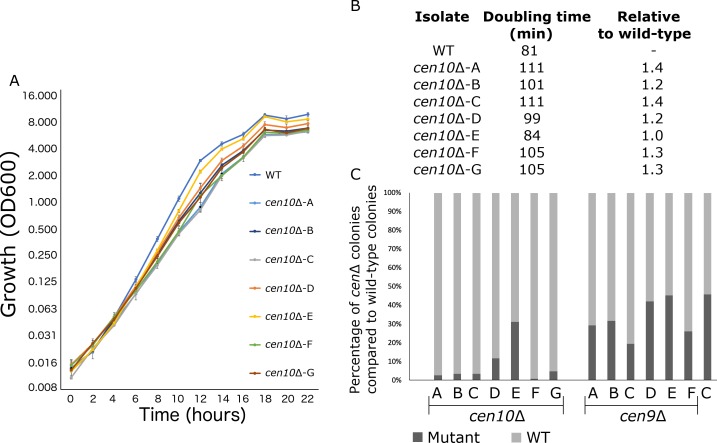
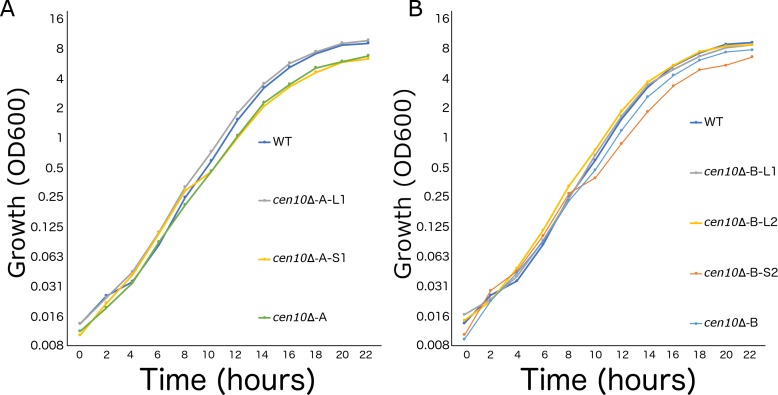
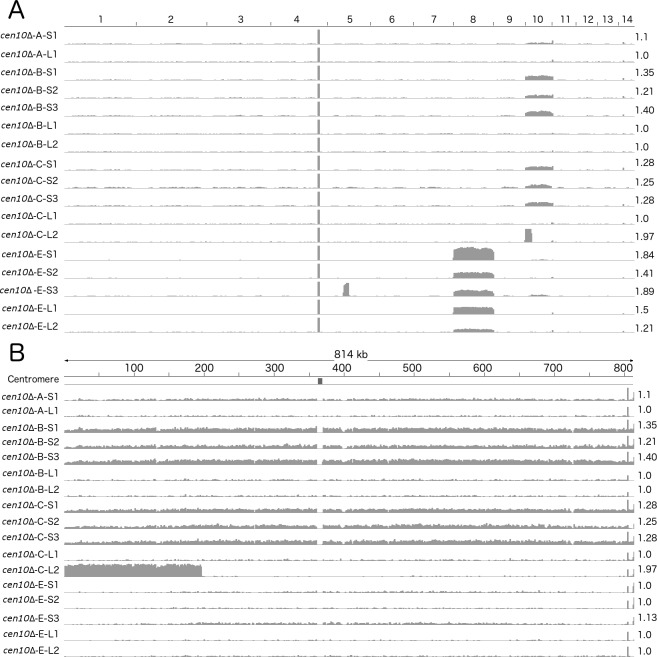
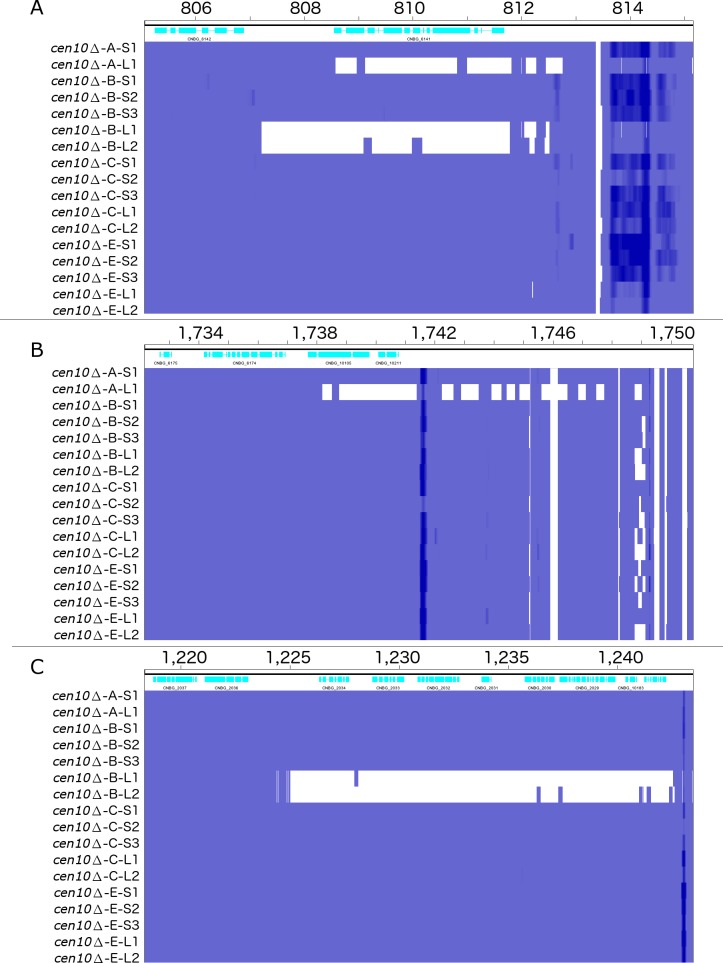
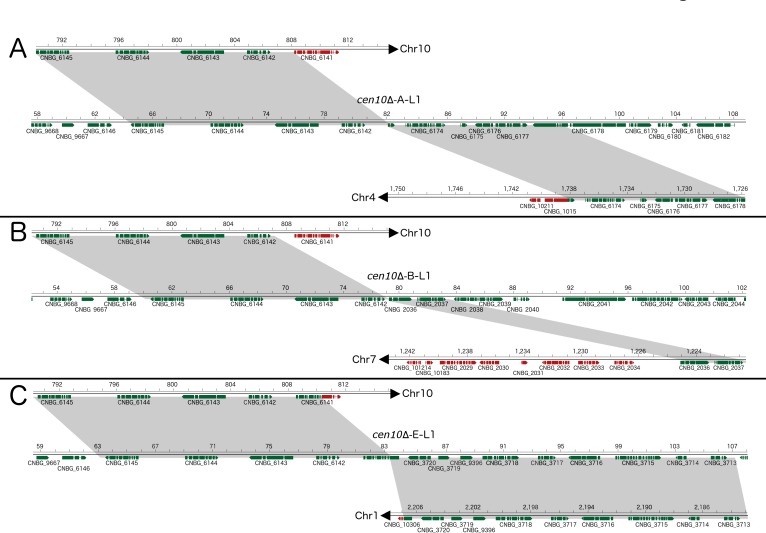
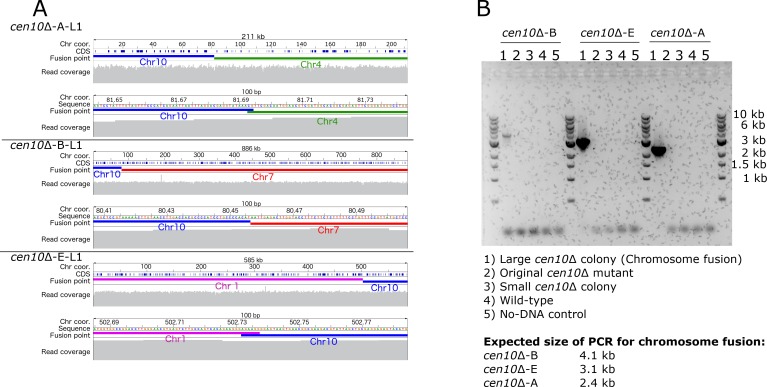
The human fungal pathogen is RNAi-deficient and lacks active transposons in its genome. has regional centromeres that contain only transposon relics. To investigate the impact of centromere loss on the genome, either centromere 9 or 10 was deleted. Deletion of either centromere resulted in neocentromere formation and interestingly, the genes covered by these neocentromeres maintained wild-type expression levels. In contrast to ∆ mutants, ∆ mutant strains exhibited growth defects and were aneuploid for chromosome 10. At an elevated growth temperature (37°C), the ∆ chromosome was found to have undergone fusion with another native chromosome in some isolates and this fusion restored wild-type growth. Following chromosomal fusion, the neocentromere was inactivated, and the native centromere of the fused chromosome served as the active centromere. The neocentromere formation and chromosomal fusion events observed in this study in may be similar to events that triggered genomic changes within the / species complex and may contribute to speciation throughout the eukaryotic domain.
人源真菌病原体缺乏 RNAi 功能,其基因组中也没有活性转座子。该病原体具有区域着丝粒,其中仅包含转座子遗迹。为了研究着丝粒缺失对基因组的影响,我们删除了着丝粒 9 或 10。删除任一个着丝粒都会导致新着丝粒的形成,有趣的是,这些新着丝粒覆盖的基因保持了野生型的表达水平。与 ∆ 突变体不同,∆ 突变株表现出生长缺陷,并且第 10 号染色体非整倍体。在较高的生长温度(37°C)下,发现 ∆ 染色体在一些分离株中与另一个天然染色体发生融合,这种融合恢复了野生型生长。融合后,新着丝粒失活,融合染色体的天然着丝粒成为活性着丝粒。在本研究中观察到的新着丝粒形成和染色体融合事件可能类似于在 / 种复合体中引发基因组变化的事件,并可能有助于真核域内的物种形成。