Tajima Kazuki, Ikeda Kenji, Chang Hsin-Yi, Chang Chih-Hsiang, Yoneshiro Takeshi, Oguri Yasuo, Jun Heejin, Wu Jun, Ishihama Yasushi, Kajimura Shingo
University of California, San Francisco Diabetes Center, San Francisco, CA, USA.
Eli and Edythe Broad Center of Regeneration Medicine and Stem Cell Research, San Francisco, CA, USA.
Nat Metab. 2019 Sep;1(9):886-898. doi: 10.1038/s42255-019-0106-z. Epub 2019 Sep 16.
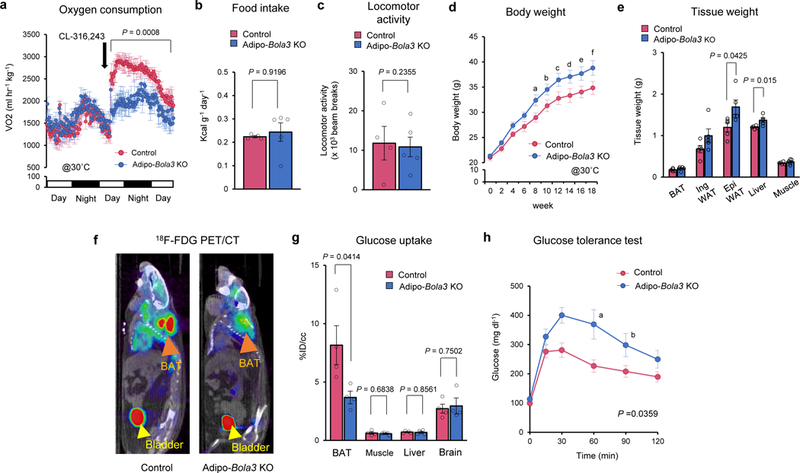
Thermogenesis in brown adipose tissue (BAT) declines with age; however, what regulates this process remains poorly understood. Here, we identify mitochondria lipoylation as a previously unappreciated molecular hallmark of aged BAT in mice. Using mitochondrial proteomics, we show that mitochondrial lipoylation is disproportionally reduced in aged BAT through a post-transcriptional decrease in the iron-sulfur (Fe-S) cluster formation pathway. A defect in the Fe-S cluster formation by the fat-specific deletion of significantly reduces mitochondrial lipoylation and fuel oxidation in BAT, leading to glucose intolerance and obesity. In turn, enhanced mitochondrial lipoylation by α-lipoic acid supplementation effectively restores BAT function in old mice, thereby preventing age-associated obesity and glucose intolerance. The effect of α-lipoic acids requires mitochondrial lipoylation the Bola3 pathway and does not depend on the anti-oxidant activity of α-lipoic acid. These results open up the possibility to alleviate the age-associated decline in energy expenditure by enhancing the mitochondrial lipoylation pathway.
棕色脂肪组织(BAT)中的产热随年龄增长而下降;然而,调节这一过程的机制仍知之甚少。在这里,我们确定线粒体脂酰化是小鼠衰老BAT中一个此前未被认识到的分子标志。通过线粒体蛋白质组学,我们发现衰老BAT中的线粒体脂酰化通过铁硫(Fe-S)簇形成途径的转录后减少而不成比例地降低。脂肪特异性缺失导致Fe-S簇形成缺陷,显著降低BAT中的线粒体脂酰化和燃料氧化,导致葡萄糖不耐受和肥胖。反过来,通过补充α-硫辛酸增强线粒体脂酰化可有效恢复老年小鼠的BAT功能,从而预防与年龄相关的肥胖和葡萄糖不耐受。α-硫辛酸的作用需要线粒体脂酰化的Bola3途径,且不依赖于α-硫辛酸的抗氧化活性。这些结果为通过增强线粒体脂酰化途径缓解与年龄相关的能量消耗下降开辟了可能性。