Jiang Yuyu, Liu Fenglan, Guo Jianlan, Sun Pingping, Chen Zhongyi, Li Jinping, Cai Liming, Zhao Hongqing, Gao Ping, Ding Zhaosheng, Wu Xiaoliang
Research Office of Chronic Disease Management and Rehabilitation, Wuxi School of Medicine, Jiangnan University, Wuxi, China.
Wuxi School of Medicine, Jiangnan University, Wuxi, China.
J Med Internet Res. 2020 Apr 21;22(4):e17089. doi: 10.2196/17089.
The application of telemedicine in home pulmonary rehabilitation interventions for the management of patients with chronic obstructive pulmonary disease (COPD) has achieved promising results.
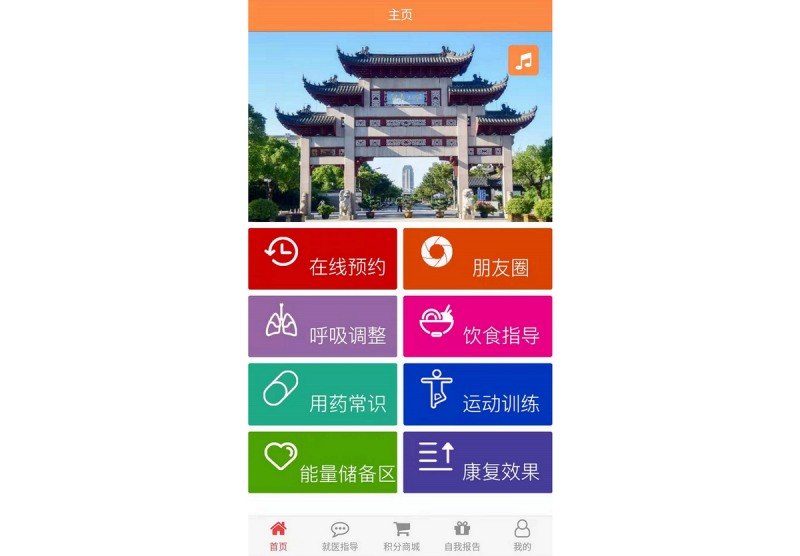
This study aimed to develop a WeChat official account (Pulmonary Internet Explorer Rehabilitation [PeR]) based on social media. It further evaluated the effect of PeR on the quality of life, symptoms, and exercise self-efficacy of patients with COPD.
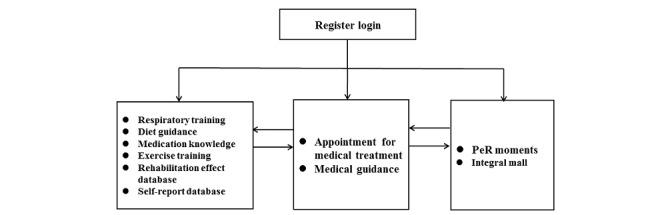
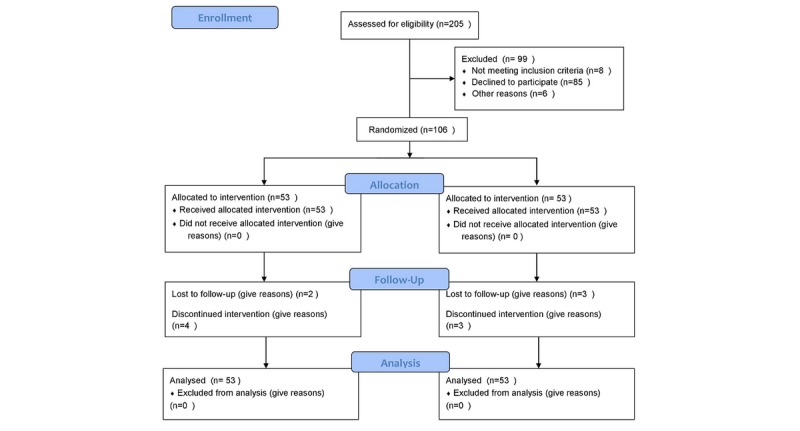
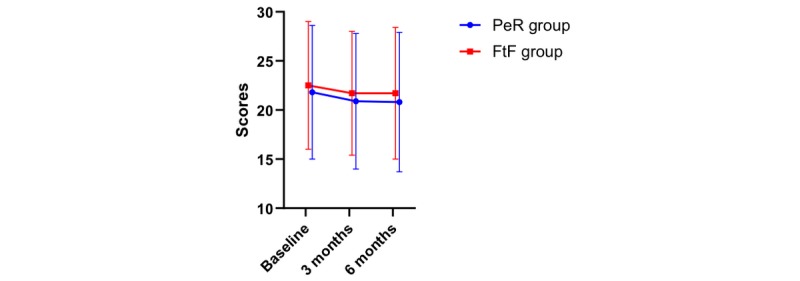
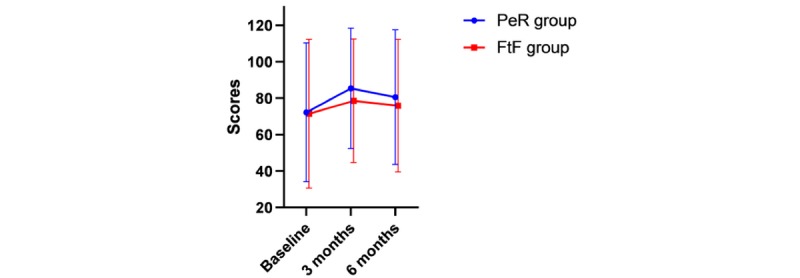
The functional modules of PeR were developed by a multidisciplinary team according to the electronic health-enhanced chronic care model (eCCM) components. A total of 106 patients were randomly selected (53 in the PeR group and 53 in the outpatient face-to-face group [FtF]). Pulmonary rehabilitation intervention was conducted for 3 months, and the outcome was observed for 3 months. The primary outcome was patient quality of life measured with the COPD assessment test (CAT). The secondary outcomes were evaluated using the modified Medical Research Council scale (mMRC), exercise self-regulatory efficacy scale (Ex-SRES), and St George's Respiratory Questionnaire (SGRQ).
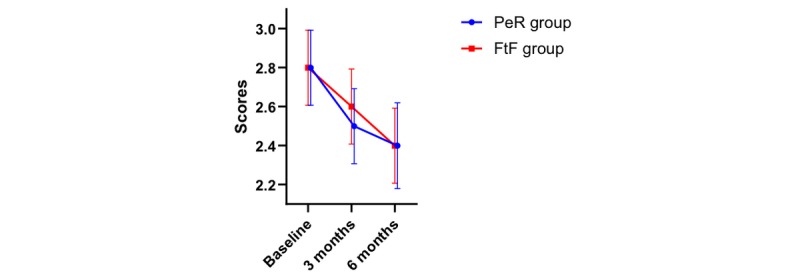
The intention-to-treat analysis was used in the study. A total of 94 participants completed the 6-month pulmonary rehabilitation program. No statistically significant differences were observed in CAT (F=7.78, P=.001), Ex-SRES (F=21.91, P<.001), and mMRC scores (F=29.64, P<.001) between the two groups with the variation in time tendency. The Ex-SRES score had a significant effect on the CAT score (P=.03). The partial regression coefficient of Ex-SRES to CAT was 0.81, and Exp (B) was 2.24.
The telemedicine technology was effective using the eCCM combined with a behavioral intervention strategy centering on self-efficacy. Pulmonary rehabilitation at home through PeR and FtF could improve the sense of self-efficacy and quality of life and alleviate symptoms in patients with COPD.
Chinese Clinical Trial Registry ChiCTR1900022770; https://tinyurl.com/tmmvpq3.
远程医疗在慢性阻塞性肺疾病(COPD)患者管理的家庭肺康复干预中的应用已取得了喜人的成果。
本研究旨在基于社交媒体开发一个微信公众号(肺康复互联网探索者 [PeR])。它进一步评估了PeR对COPD患者生活质量、症状及运动自我效能的影响。
PeR的功能模块由一个多学科团队根据电子健康强化慢性病照护模式(eCCM)组件开发。总共随机选取了106例患者(PeR组53例,门诊面对面组 [FtF] 53例)。进行了3个月的肺康复干预,并观察3个月的结果。主要结局是用慢性阻塞性肺疾病评估测试(CAT)测量的患者生活质量。次要结局使用改良的医学研究委员会量表(mMRC)、运动自我调节效能量表(Ex-SRES)和圣乔治呼吸问卷(SGRQ)进行评估。
本研究采用意向性分析。共有94名参与者完成了为期6个月的肺康复计划。两组之间在CAT(F = 7.78,P = .001)、Ex-SRES(F = 21.91,P < .001)和mMRC评分(F = 29.64,P < .001)方面,随时间趋势变化未观察到统计学上的显著差异。Ex-SRES评分对CAT评分有显著影响(P = .03)。Ex-SRES对CAT的偏回归系数为0.81,Exp (B) 为2.24。
远程医疗技术结合以自我效能为中心的行为干预策略是有效的。通过PeR和FtF进行的家庭肺康复可以提高COPD患者的自我效能感和生活质量,并减轻症状。
中国临床试验注册中心ChiCTR1900022770;https://tinyurl.com/tmmvpq3 。