Centro de Investigaciones Biológicas Margarita Salas, Consejo Superior de Investigaciones Científicas (CSIC), 28040 Madrid, Spain.
Centro de Investigación Biomédica en Red de Enfermedades Raras (CIBERER), 28040 Madrid, Spain.
Cells. 2020 Apr 16;9(4):988. doi: 10.3390/cells9040988.
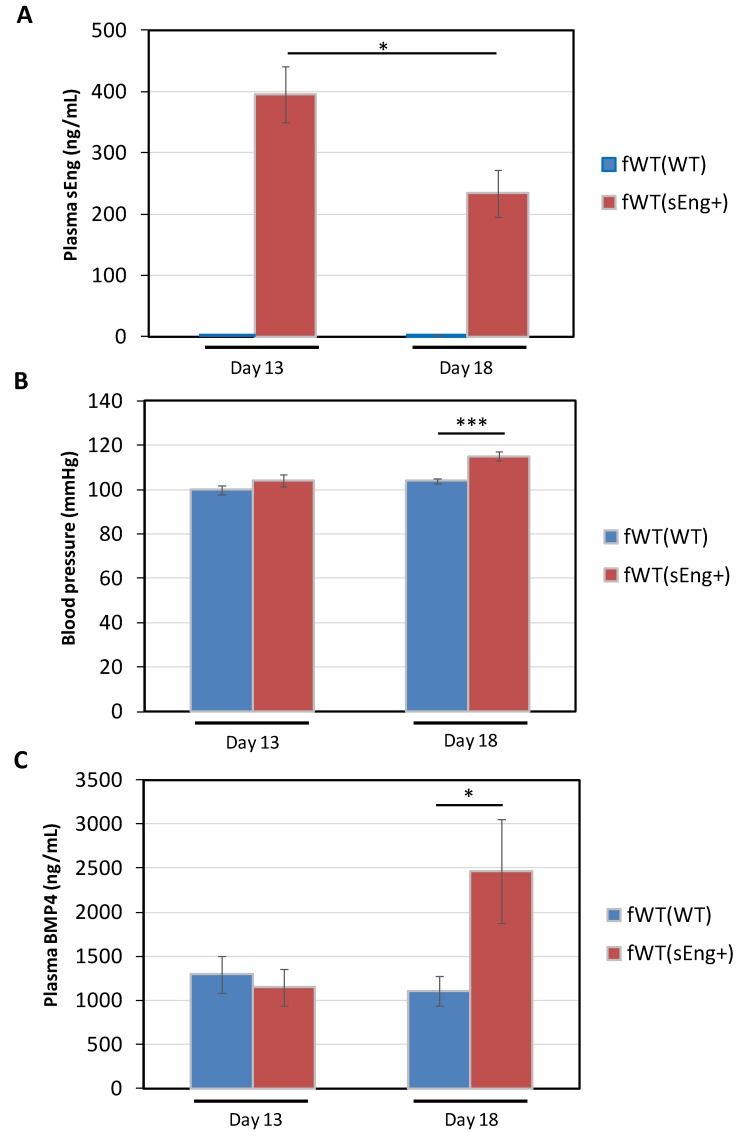
Endoglin is a membrane glycoprotein primarily expressed by the vascular endothelium and involved in cardiovascular diseases. Upon the proteolytic processing of the membrane-bound protein, a circulating form of endoglin (soluble endoglin, sEng) can be released, and high levels of sEng have been observed in several endothelial-related pathological conditions, where it appears to contribute to endothelial dysfunction. Preeclampsia is a multisystem disorder of high prevalence in pregnant women characterized by the onset of high blood pressure and associated with increased levels of sEng. Although a pathogenic role for sEng involving hypertension has been reported in several animal models of preeclampsia, the exact molecular mechanisms implicated remain to be identified. To search for sEng-induced mediators of hypertension, we analyzed the protein secretome of human endothelial cells in the presence of sEng. We found that sEng induces the expression of BMP4 in endothelial cells, as evidenced by their proteomic signature, gene transcript levels, and BMP4 promoter activity. A mouse model of preeclampsia with high sEng plasma levels () showed increased transcript levels of BMP4 in lungs, stomach, and duodenum, and increased circulating levels of BMP4, compared to those of control animals. In addition, after crossing female wild type with male mice, hypertension appeared 18 days after mating, coinciding with the appearance of high plasma levels of BMP4. Also, serum levels of sEng and BMP4 were positively correlated in pregnant women with and without preeclampsia. Interestingly, sEng-induced arterial pressure elevation in mice was abolished in the presence of the BMP4 inhibitor noggin, suggesting that BMP4 is a downstream mediator of sEng. These results provide a better understanding on the role of sEng in the physiopathology of preeclampsia and other cardiovascular diseases, where sEng levels are increased.
内皮糖蛋白(endoglin)是一种主要在血管内皮细胞中表达的膜糖蛋白,参与心血管疾病的发生。在内皮糖蛋白的膜结合蛋白发生蛋白水解加工后,可释放出一种循环形式的内皮糖蛋白(可溶性内皮糖蛋白,sEng),在几种与内皮相关的病理条件下,均可观察到 sEng 水平升高,而 sEng 似乎与内皮功能障碍有关。子痫前期是一种在孕妇中高发的多系统疾病,其特征是高血压的发生,并伴有 sEng 水平升高。虽然已有报道称,sEng 在几种子痫前期动物模型中与高血压的发病机制有关,但确切的分子机制仍有待确定。为了寻找与 sEng 诱导的高血压相关的介质,我们在存在 sEng 的情况下分析了人内皮细胞的蛋白质分泌组。结果发现,sEng 可诱导内皮细胞中 BMP4 的表达,这可从其蛋白质组学特征、基因转录水平和 BMP4 启动子活性得到证明。在 sEng 血浆水平升高的子痫前期小鼠模型中(),与对照组相比,肺部、胃和十二指肠中 BMP4 的转录水平升高,循环中 BMP4 的水平也升高。此外,在雌性野生型与雄性 杂合后,高血压在交配后 18 天出现,与 BMP4 血浆水平升高的出现时间一致。此外,在患有和未患有子痫前期的孕妇中,sEng 和 BMP4 的血清水平呈正相关。有趣的是,在 小鼠中,sEng 诱导的动脉血压升高在 BMP4 抑制剂 noggin 的存在下被消除,这表明 BMP4 是 sEng 的下游介质。这些结果为 sEng 在子痫前期和其他心血管疾病的病理生理学中的作用提供了更好的理解,在这些疾病中,sEng 水平升高。