Tytgat Institute for Intestinal and Liver Research, Amsterdam Gastroenterology Endocrinology and Metabolism, Amsterdam UMC, Location AMC, University of Amsterdam, 1105 AZ Amsterdam, The Netherlands.
Comparative Pediatrics & Nutrition, University of Copenhagen, DK-1870 Copenhagen, Denmark.
Nutrients. 2020 Apr 17;12(4):1125. doi: 10.3390/nu12041125.
The human digestive tract is structurally mature at birth, yet maturation of gut functions such as digestion and mucosal barrier continues for the next 1-2 years. Human milk and infant milk formulas (IMF) seem to impact maturation of these gut functions differently, which is at least partially related to high temperature processing of IMF causing loss of bioactive proteins and formation of advanced glycation end products (AGEs). Both loss of protein bioactivity and formation of AGEs depend on heating temperature and time. The aim of this study was to investigate the impact of mildly pasteurized whey protein concentrate (MP-WPC) compared to extensively heated WPC (EH-WPC) on gut maturation in a piglet model hypersensitive to enteral nutrition.
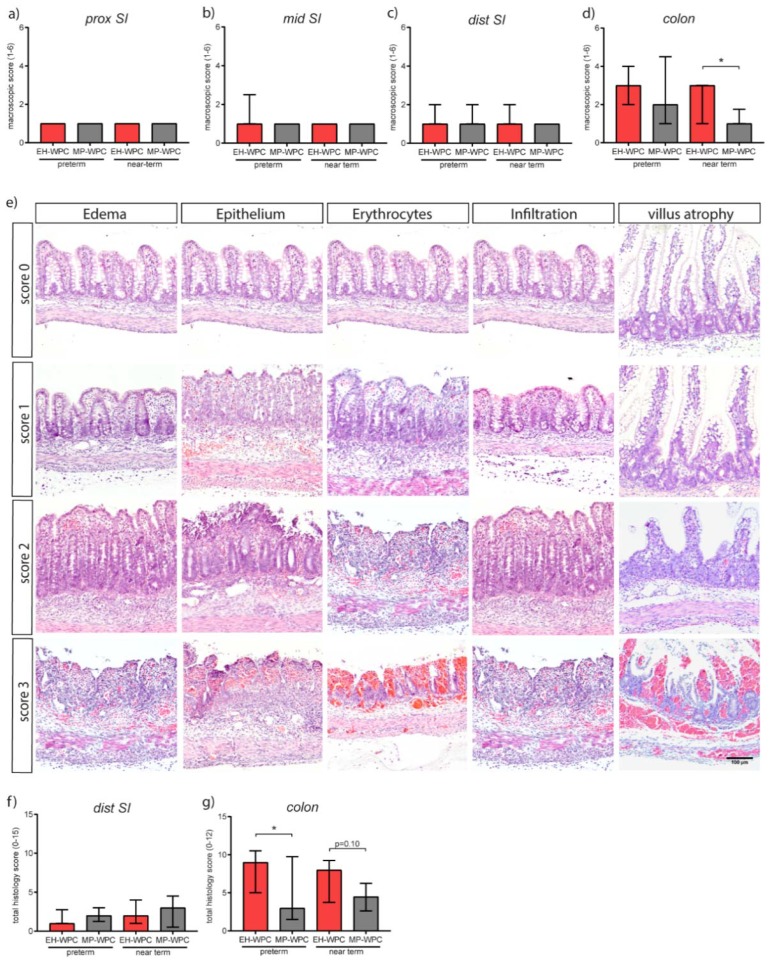
WPC was obtained by cold filtration and mildly pasteurized (73 °C, 30 s) or extensively heat treated (73 °C, 30 s + 80 °C, 6 min). Preterm (90% gestation) and near-term piglets (96% gestation) received enteral nutrition based on MP-WPC or EH-WPC for five days. Macroscopic and histologic lesions in the gastro-intestinal tract were evaluated and intestinal responses were further assessed by RT-qPCR, immunohistochemistry and enzyme activity analysis.
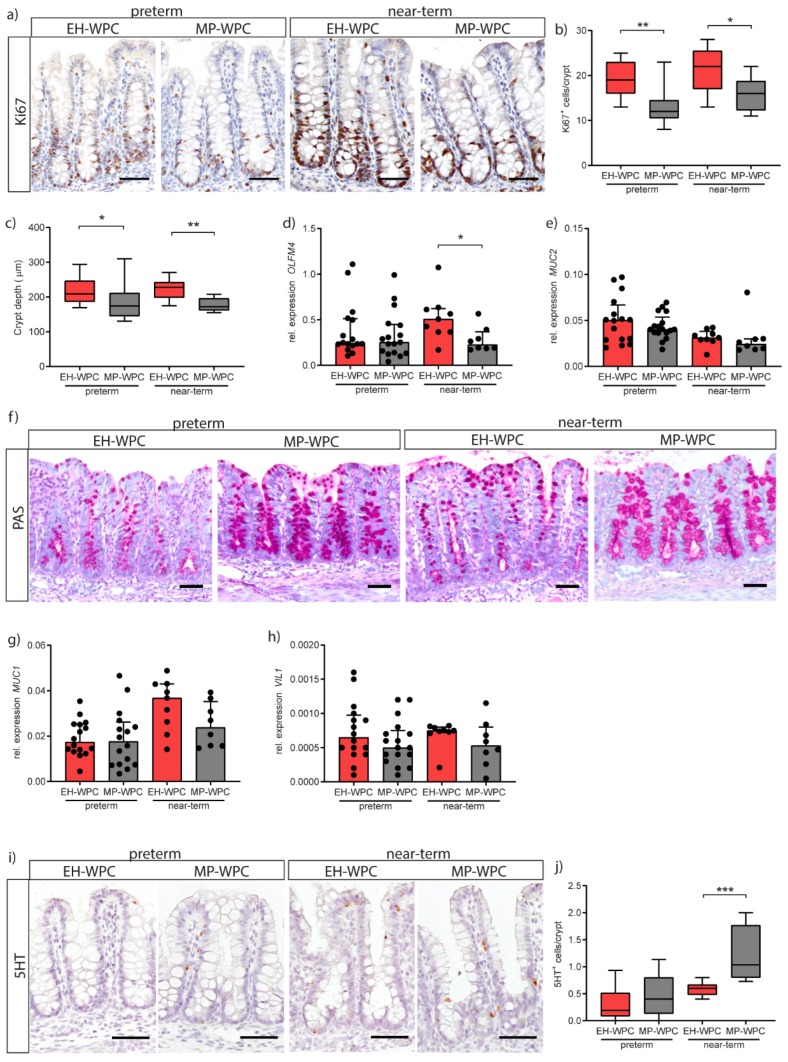
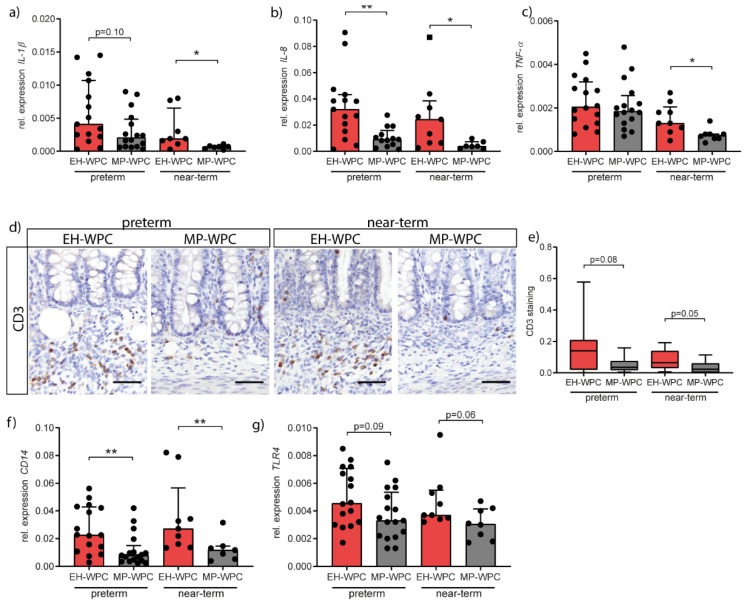
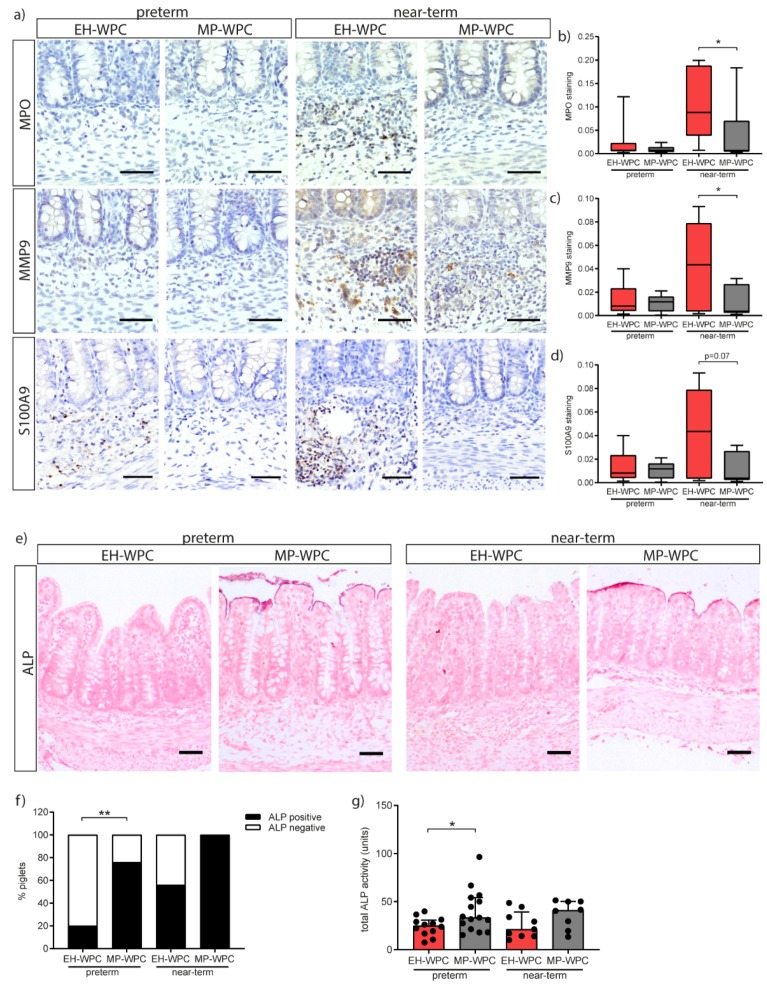
A diet based on MP-WPC limited epithelial intestinal damage and improved colonic integrity compared to EH-WPC. MP-WPC dampened colonic IL1-β, IL-8 and TNF-α expression and lowered T-cell influx in both preterm and near-term piglets. Anti-microbial defense as measured by neutrophil influx in the colon was only observed in near-term piglets, correlated with histological damage and was reduced by MP-WPC. Moreover, MP-WPC stimulated iALP activity in the colonic epithelium and increased differentiation into enteroendocrine cells compared to EH-WPC.
Compared to extensively heated WPC, a formula based on mildly pasteurized WPC limits gut inflammation and stimulates gut maturation in preterm and near-term piglets and might therefore also be beneficial for preterm and (near) term infants.
人类的消化道在出生时结构已经成熟,但消化和黏膜屏障等肠道功能的成熟还需要 1-2 年的时间。人乳和婴儿配方奶(IMF)似乎以不同的方式影响这些肠道功能的成熟,这至少部分与 IMF 的高温处理导致生物活性蛋白的损失和晚期糖基化终产物(AGEs)的形成有关。蛋白质生物活性的丧失和 AGEs 的形成都取决于加热温度和时间。本研究旨在通过仔猪模型来研究轻度巴氏杀菌乳清蛋白浓缩物(MP-WPC)与广泛加热的 WPC(EH-WPC)对肠道成熟的影响,该仔猪模型对肠内营养敏感。
WPC 通过冷过滤获得,并进行轻度巴氏杀菌(73°C,30s)或广泛热处理(73°C,30s+80°C,6min)。早产(90%妊娠期)和近产(96%妊娠期)仔猪接受基于 MP-WPC 或 EH-WPC 的肠内营养 5 天。评估胃肠道的宏观和组织学损伤,并通过 RT-qPCR、免疫组织化学和酶活性分析进一步评估肠道反应。
基于 MP-WPC 的饮食限制了上皮肠道损伤,并改善了结肠的完整性,与 EH-WPC 相比。MP-WPC 降低了早产和近产仔猪结肠中 IL1-β、IL-8 和 TNF-α 的表达,并降低了 T 细胞的浸润。仅在近产仔猪中观察到以中性粒细胞浸润结肠为代表的抗微生物防御,与组织学损伤相关,并被 MP-WPC 降低。此外,MP-WPC 刺激结肠上皮中的 iALP 活性,并增加肠内分泌细胞的分化,与 EH-WPC 相比。
与广泛加热的 WPC 相比,基于轻度巴氏杀菌的 WPC 的配方可限制肠道炎症并刺激早产和近产仔猪的肠道成熟,因此对早产儿和(近)产婴儿也可能有益。