Piouceau Julien, Panfili Frédéric, Bois Grégory, Anastase Matthieu, Feder Frédéric, Morel Julien, Arfi Véronique, Dufossé Laurent
PHYTOREM S.A., site d'Areva, chemin de l'autodrome, 13140 Miramas, France.
Université de La Réunion, CHEMBIOPRO Chimie et Biotechnologie des Produits Naturels, ESIROI agroalimentaire, 15 avenue René Cassin, 97400 Saint-Denis, Réunion island, France.
Plants (Basel). 2020 Apr 17;9(4):522. doi: 10.3390/plants9040522.
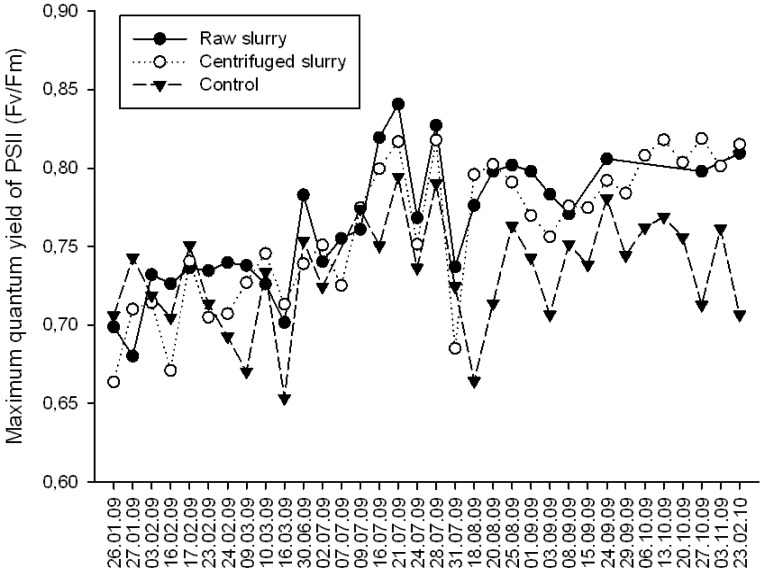
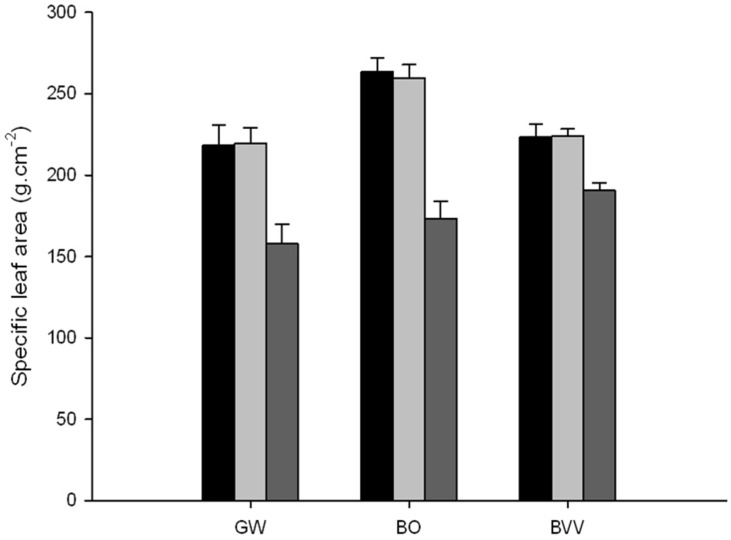
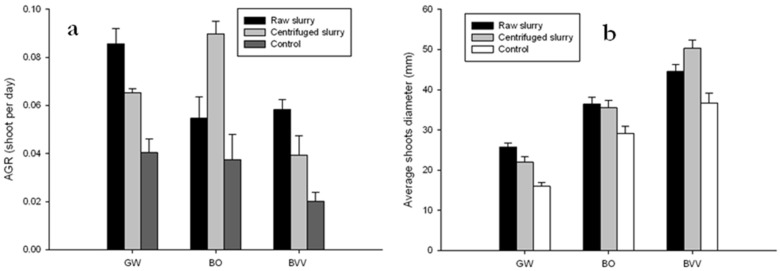
On Réunion Island, a French overseas territory located in the western Indian Ocean, increasing pig livestock farming is generating large quantities of slurry. Most of it is spread on a little agricultural land due to the insular context. Considering the limitation of the quantities that can be spread on agricultural areas (European "Nitrate Directive" 91/676/EEC), the use of wastewater treatment systems using phytoremediation principles is an attractive option for the pig slurry treatment. A wastewater treatment system using bamboo groves was assessed for the pig slurry treatment. Three field plots were designed on an agricultural area and planted with 40 bamboo clumps on each plot. A total of 67 m of pig slurry was spread on two plots in two forms: raw slurry and centrifuged slurry. The latter plot was watered with tap water. The total amount of nitrogen, phosphorus and potassium was 5.3, 1.4 and 5.5 t·ha, respectively, for the raw slurry treatment and 4.2, 0.4 and 5.1 t·ha, respectively, for the centrifuged slurry treatment. The response of bamboo species to pig slurry application was determined using morphologic parameters, Chlorophyll fluorescence measurements and biomass yield. Compared to the control, the biomass increased by 1.8 to 6 times, depending on the species and the form of slurry. Depending on the species, the average biomass ranged from 52 to 135 t.DM.ha in two years of experiment.
在位于印度洋西部的法国海外领地留尼汪岛上,养猪业的不断发展产生了大量粪便污水。由于该岛的环境条件,大部分粪便污水被施用于少量农田。考虑到可施用于农业区域的量的限制(欧洲“硝酸盐指令”91/676/EEC),采用植物修复原理的废水处理系统是处理猪粪便污水的一个有吸引力的选择。对一个使用竹林的废水处理系统进行了猪粪便污水处理评估。在一个农业区域设计了三个试验田,每个试验田种植40丛竹子。总共67立方米的猪粪便污水以两种形式施用于两个试验田:原粪便污水和离心后的粪便污水。后一个试验田用自来水浇灌。原粪便污水处理中氮、磷和钾的总量分别为5.3、1.4和5.5吨·公顷,离心后粪便污水处理中分别为4.2、0.4和5.1吨·公顷。利用形态学参数、叶绿素荧光测量和生物量产量来确定竹子品种对猪粪便污水施用的反应。与对照相比,生物量增加了1.8至6倍,这取决于品种和粪便污水的形式。在两年的试验中,根据品种不同,平均生物量在52至135吨·干物质·公顷之间。