Alshurafa Nabil, Jain Jayalakshmi, Alharbi Rawan, Iakovlev Gleb, Spring Bonnie, Pfammatter Angela
Northwestern University, USA.
Proc ACM Interact Mob Wearable Ubiquitous Technol. 2018 Dec;2(4). doi: 10.1145/3287031.
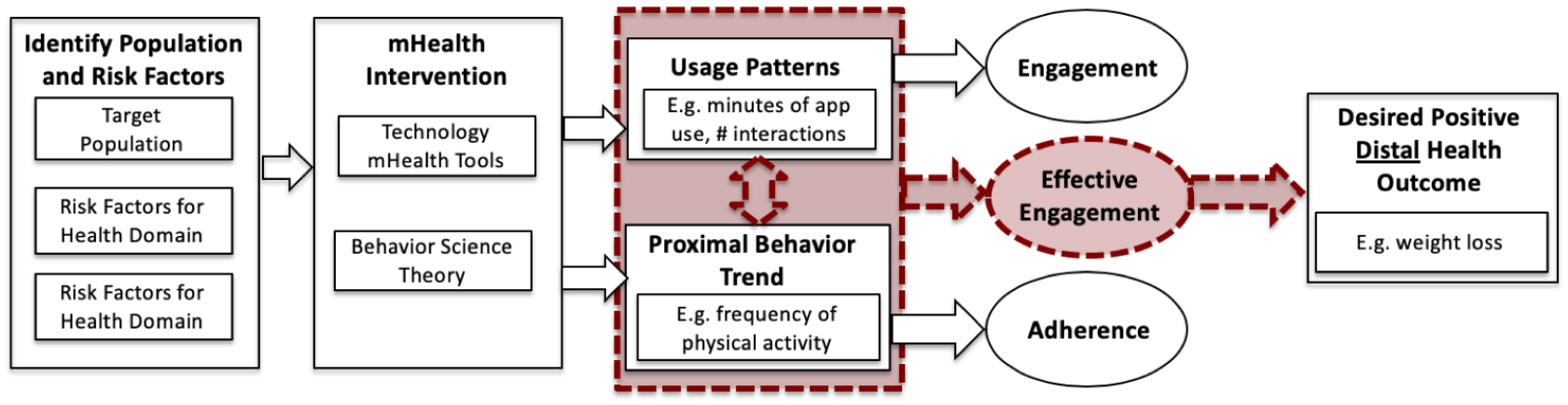
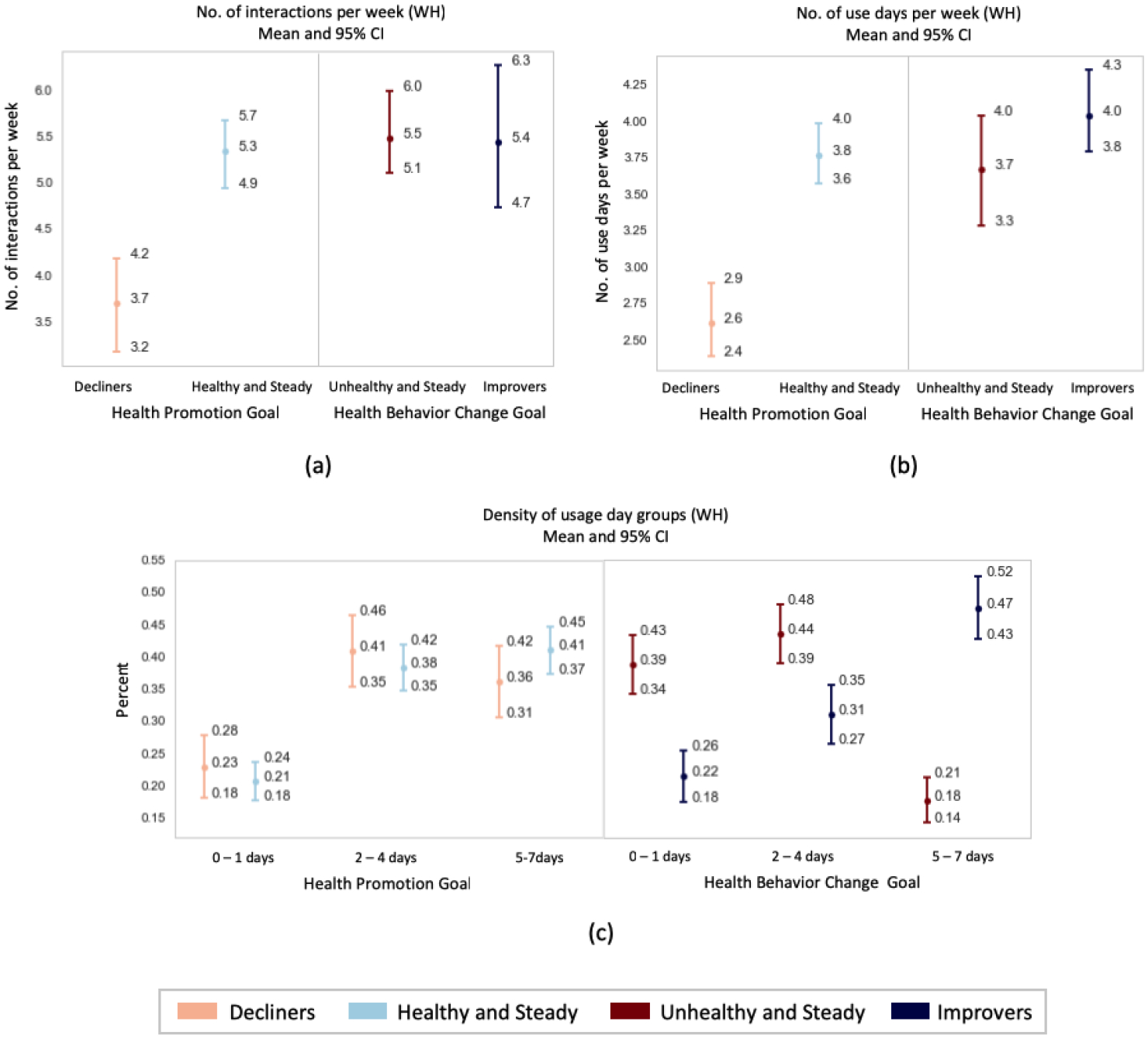
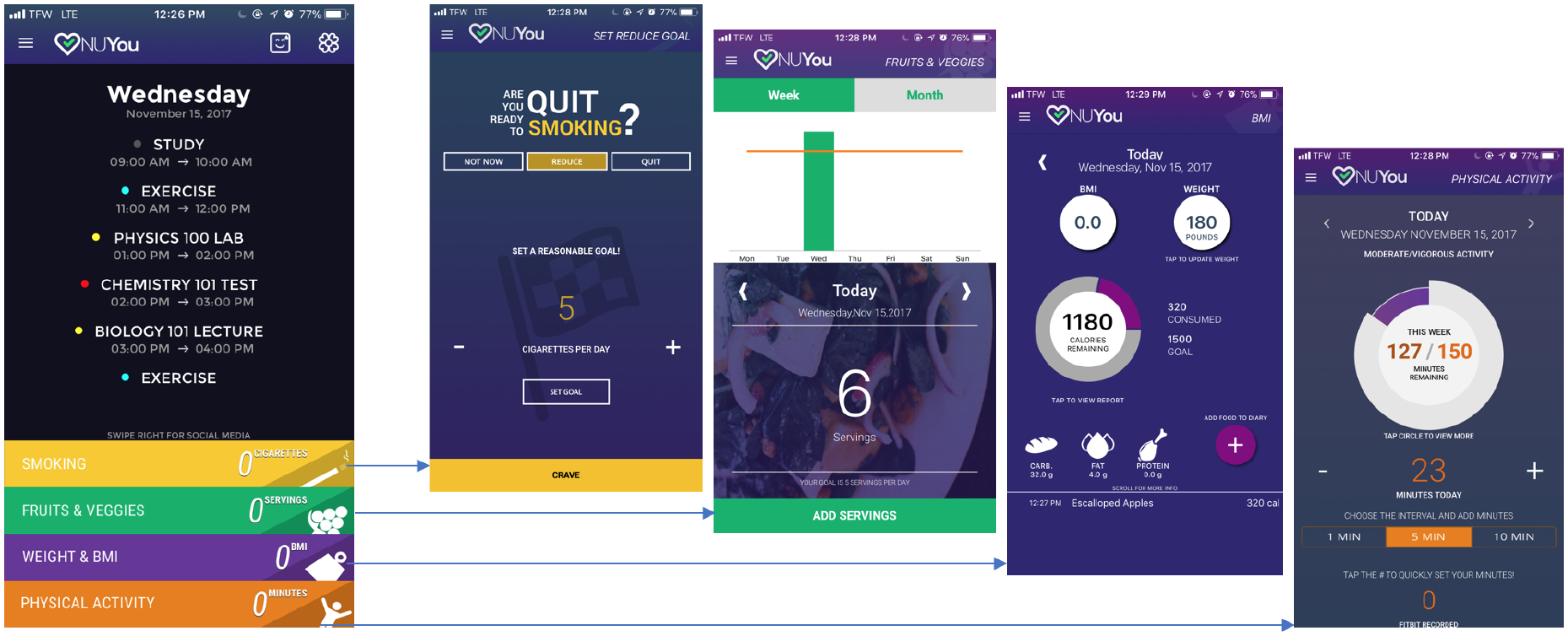
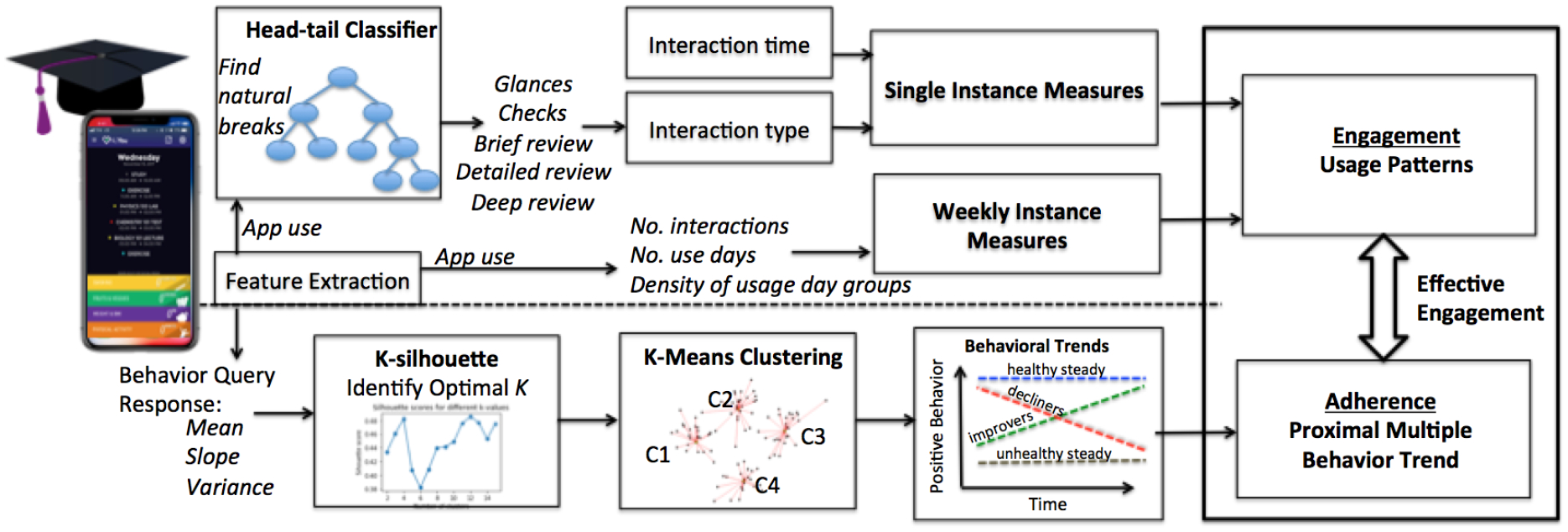
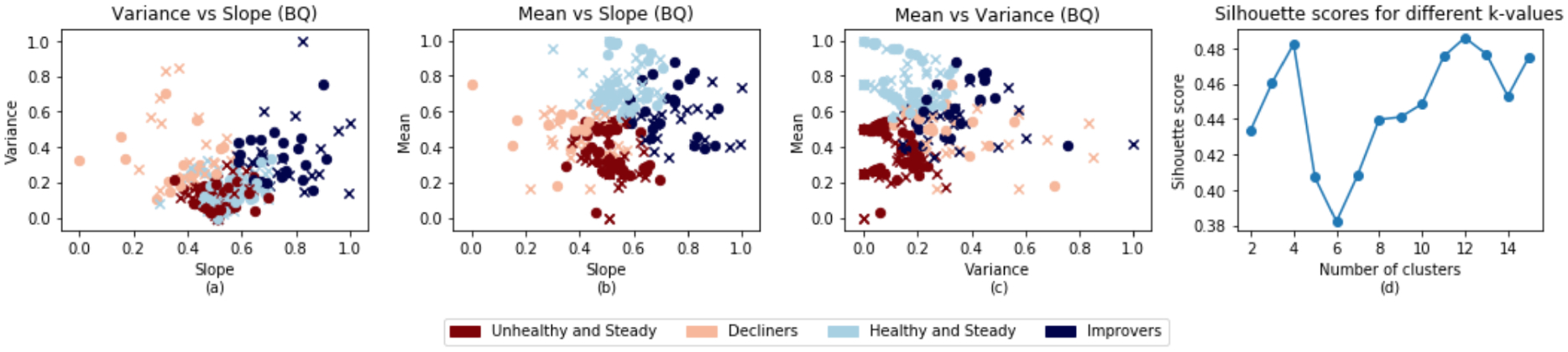
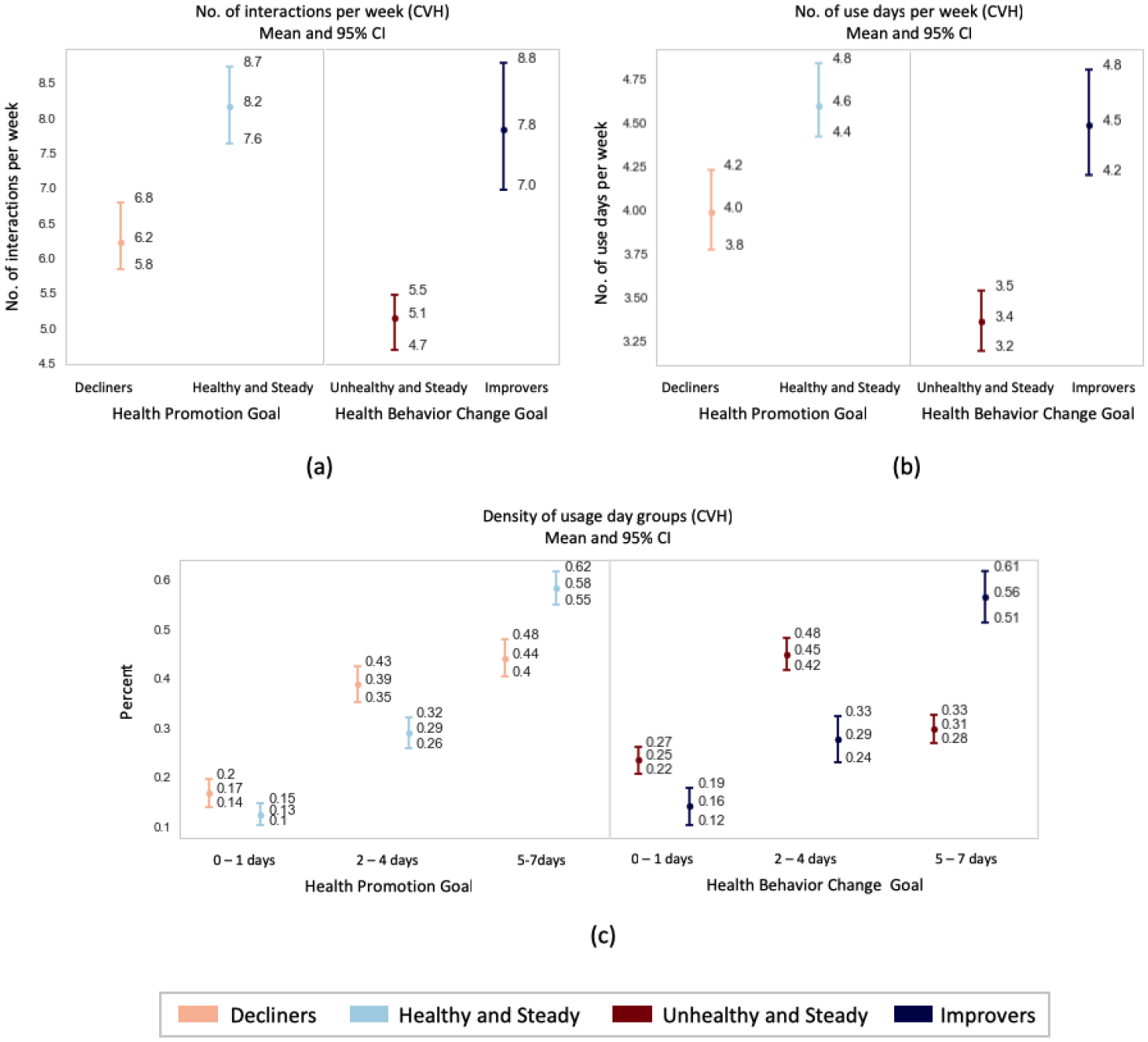
Behavioral medicine is devoting increasing attention to the topic of participant engagement and its role in effective mobile health (mHealth) behavioral interventions. Several definitions of the term "engagement" have been proposed and discussed, especially in the context of digital health behavioral interventions. We consider that engagement refers to specific interaction and use patterns with the mHealth tools such as smartphone applications for intervention, whereas adherence refers to compliance with the directives of the health intervention, independent of the mHealth tools. Through our analysis of participant interaction and self-reported behavioral data in a college student health study with incentives, we demonstrate an example of measuring "effective engagement" as engagement behaviors that can be linked to the goals of the desired intervention. We demonstrate how clustering of one year of weekly health behavior self-reports generate four interpretable clusters related to participants' adherence to the desired health behaviors: healthy and steady, unhealthy and steady, decliners, and improvers. Based on the intervention goals of this study (health promotion and behavioral change), we show that not all app usage metrics are indicative of the desired outcomes that create effective engagement. As such, mHealth intervention design might consider eliciting not just more engagement or use overall, but rather, effective engagement defined by use patterns related to the desired behavioral outcome.
行为医学越来越关注参与者参与度这一主题及其在有效的移动健康(mHealth)行为干预中的作用。“参与度”一词已被提出并讨论了几种定义,尤其是在数字健康行为干预的背景下。我们认为,参与度是指与mHealth工具(如用于干预的智能手机应用程序)的特定交互和使用模式,而依从性是指遵守健康干预的指令,与mHealth工具无关。通过对一项有激励措施的大学生健康研究中参与者的交互和自我报告的行为数据进行分析,我们展示了一个将“有效参与度”衡量为可与期望干预目标相关联的参与行为的示例。我们展示了如何对一年的每周健康行为自我报告进行聚类,从而生成与参与者对期望健康行为的依从性相关的四个可解释的聚类:健康且稳定、不健康且稳定、下降者和改善者。基于本研究的干预目标(健康促进和行为改变),我们表明并非所有应用程序使用指标都能表明产生有效参与度的期望结果。因此,mHealth干预设计可能不仅要考虑引发更多的总体参与度或使用,还要考虑由与期望行为结果相关的使用模式定义的有效参与度。