Zbinden-Foncea Hermann, Francaux Marc, Deldicque Louise, Hawley John A
School of Kinesiology, Faculty of Medicine, Universidad Finis Terrae, Santiago, Chile.
Centro de Salud Deportiva, Clinica Santa Maria, Santiago, Chile.
Obesity (Silver Spring). 2020 Aug;28(8):1378-1381. doi: 10.1002/oby.22849. Epub 2020 Jul 9.
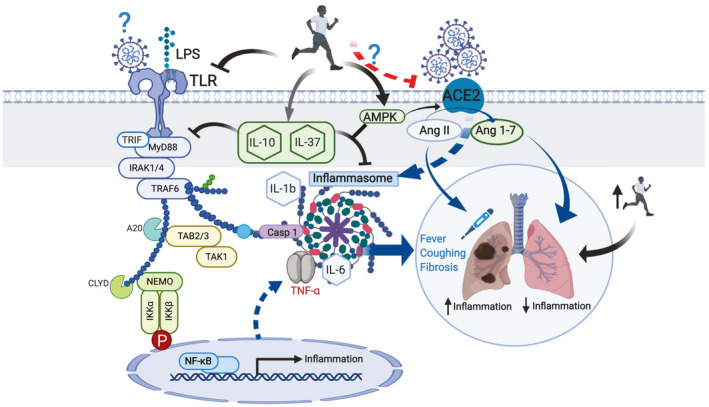
Severe acute respiratory syndrome coronavirus 2 (SARS-CoV-2) originated in China in late 2019 and has since spread rapidly to every continent in the world. This pandemic continues to cause widespread personal suffering, along with severe pressure on medical and health care providers. The symptoms of SARS-CoV-2 and the subsequent prognosis are worsened in individuals who have preexisting comorbidities prior to infection by the virus. Individuals with obesity or overweight, insulin resistance, and diabetes typically have chronic low-grade inflammation characterized by increased levels of several proinflammatory cytokines and the inflammasome; this state predisposes to greater risk for infection along with more adverse outcomes. Here, we consider whether a high level of cardiorespiratory fitness induced by prior exercise training may confer some innate immune protection against COVID-19 by attenuating the "cytokine storm syndrome" often experienced by "at risk" individuals.
严重急性呼吸综合征冠状病毒2(SARS-CoV-2)于2019年末起源于中国,此后迅速传播至世界各大洲。这场大流行继续造成广泛的个人痛苦,同时给医疗保健提供者带来巨大压力。在感染该病毒之前就患有合并症的个体中,SARS-CoV-2的症状及随后的预后会恶化。肥胖或超重、胰岛素抵抗和糖尿病患者通常具有慢性低度炎症,其特征是几种促炎细胞因子和炎性小体水平升高;这种状态使感染风险更高,且会导致更不利的后果。在此,我们探讨先前的运动训练所诱导的高水平心肺适能是否可通过减轻“高危”个体常经历的“细胞因子风暴综合征”,从而赋予针对2019冠状病毒病的某种先天免疫保护。