Food & Nutrition, Obesity/Diabetes Center, Hoseo University, Asan 31499, Korea.
Korean Medicine Convergence Research Division, Korea Institute of Oriental Medicine, Daejeon 34054, Korea.
Int J Mol Sci. 2020 Apr 21;21(8):2900. doi: 10.3390/ijms21082900.
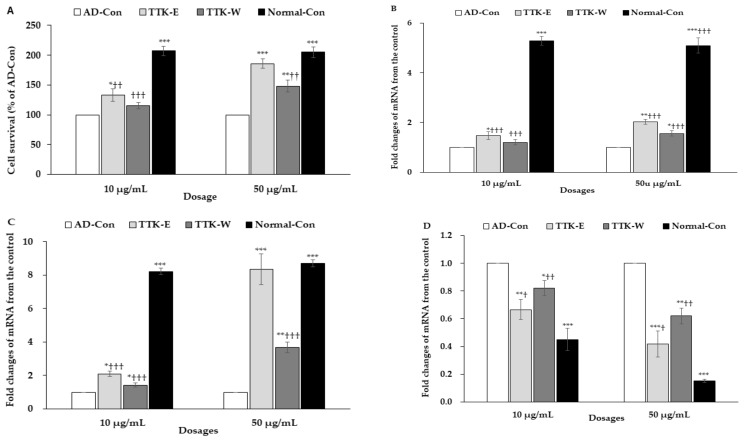
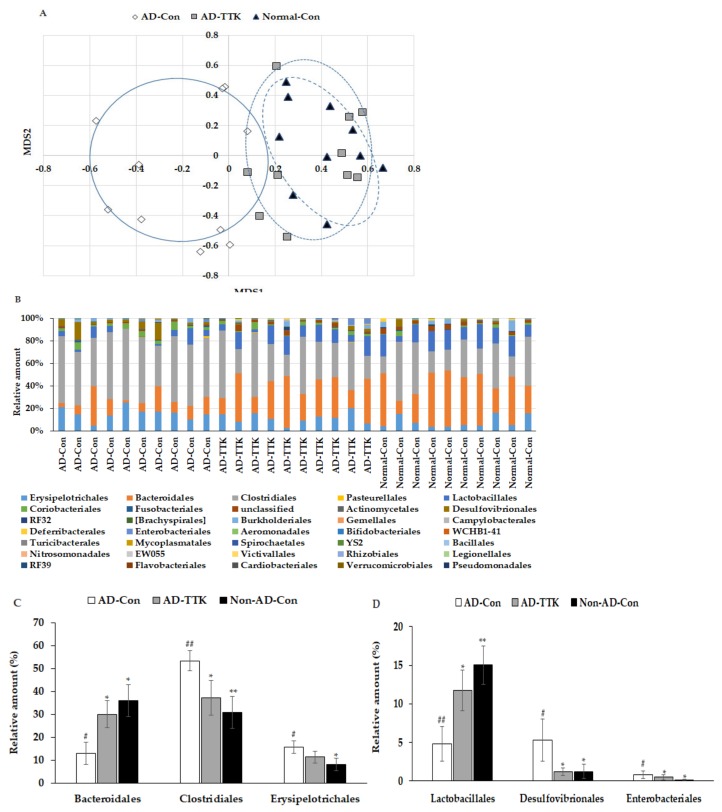
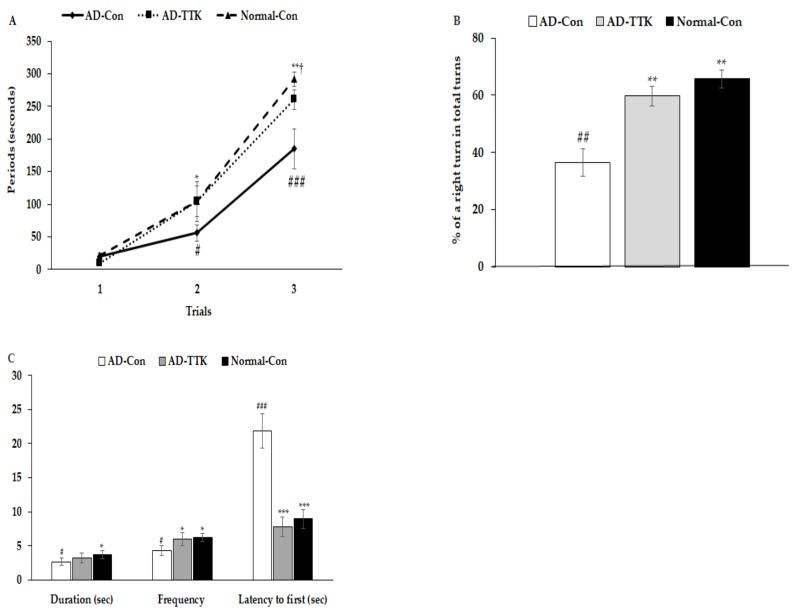
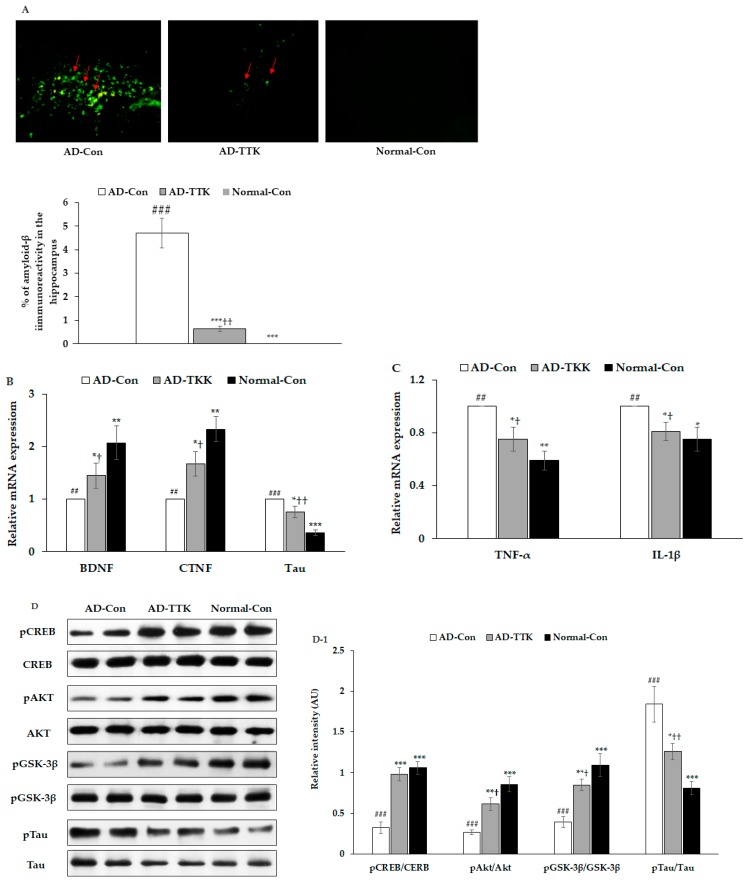
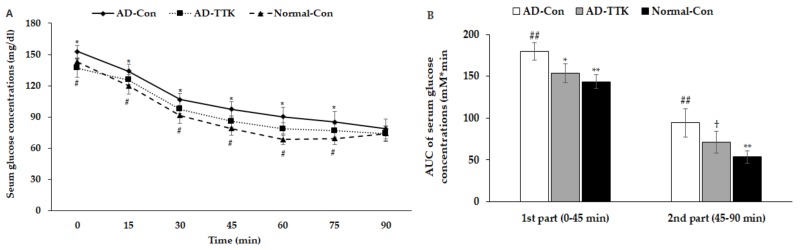
Alzheimer's disease (AD) is a progressive neurodegenerative disease. Herbal medicine may provide efficacious treatments for its prevention and/or cure. This study investigated whether a 70% ethanol extract of Kuntze (TTK; New Zealand spinach) improved the memory deficit by reducing hippocampal amyloid-β deposition and modulating the gut microbiota in rats with amyloid-β(25-35) infused into the hippocampus (AD rats) in an AD animal model. The AD rats had cellulose (AD-CON) or TTK (300 mg/kg bw; AD-TTK) in their high-fat diets for seven weeks. Rats with amyloid-β(35-25) infused into the hippocampus fed an AD-Con diet did not have memory loss (Normal-Con). AD-TTK protected against amyloid-β deposition compared to AD-Con, but it was higher than Normal-Con. AD-TTK protected against short-term and special memory loss measured by passive avoidance, Y maze, and water maze, compared to AD-Con. Compared to the Normal-Con, AD-Con attenuated hippocampal pCREB → pAkt → pGSK-3β, which was prevented in the AD-TTK group. Brain-derived neurotrophic factor (BDNF) and ciliary neurotrophic factor (CNTF) mRNA expression decreased in the AD-CON group, and their expression was prevented in the AD-TTK group. Hippocampal TNF-α and IL-1β mRNA expressions were higher in the AD-Con group than in the Normal-Con, and AD-TTK groups protected against the increase in their expression. The AD-CON group showed an increase in insulin resistance compared to the Normal-Con group and the AD-TTK group showed improvement. AD-Con separated the gut microbiome community compared to the Normal-Con group and AD-TTK overlapped with the normal-Con. The AD-Con group had more , , and than the AD-TKK and Normal-Con group but fewer and . In conclusion, the 70% ethanol extract of TTK enhanced the memory function and potentiated hippocampal insulin signaling, reduced insulin resistance, and improved gut microbiota in amyloid-β-infused rats.
阿尔茨海默病(AD)是一种进行性神经退行性疾病。草药可能为其预防和/或治疗提供有效的治疗方法。本研究旨在探讨新西兰菠菜(TTK)的 70%乙醇提取物是否通过减少海马淀粉样β(Aβ)沉积和调节肠道微生物群来改善记忆缺陷,从而改善海马内注入 Aβ(25-35)的 AD 动物模型(AD 大鼠)中的大鼠的记忆缺陷。AD 大鼠在高脂饮食中添加纤维素(AD-CON)或 TTK(300mg/kg bw;AD-TTK),共七周。海马内注入 Aβ(35-25)并喂食 AD-Con 饮食的大鼠没有记忆丧失(Normal-Con)。与 AD-Con 相比,AD-TTK 可预防 Aβ 沉积,但高于 Normal-Con。与 AD-Con 相比,AD-TTK 可预防被动回避、Y 迷宫和水迷宫测量的短期和特殊记忆丧失。与 Normal-Con 相比,AD-Con 减弱了海马 pCREB→pAkt→pGSK-3β,而 AD-TTK 组则阻止了这一作用。脑源性神经营养因子(BDNF)和睫状神经营养因子(CNTF)mRNA 表达在 AD-CON 组中降低,而在 AD-TTK 组中则阻止了其表达。海马 TNF-α和 IL-1βmRNA 表达在 AD-Con 组中高于 Normal-Con 组,而 AD-TTK 组则阻止了其表达的增加。与 Normal-Con 组相比,AD-Con 组表现出胰岛素抵抗增加,而 AD-TTK 组则有所改善。与 Normal-Con 组相比,AD-Con 组的肠道微生物组群落分离,而 AD-TTK 组与 Normal-Con 重叠。AD-Con 组比 AD-TTK 和 Normal-Con 组有更多的 、 、和 ,但比 AD-TTK 和 Normal-Con 组有更少的 、 。总之,TTK 的 70%乙醇提取物增强了记忆功能,增强了海马胰岛素信号,降低了胰岛素抵抗,并改善了注入 Aβ的大鼠的肠道微生物群。