Baran Mehmet Firat, Acay Hilal, Keskin Cumali
Medical Laboratory Techniques Vocational Higher School of Healthcare Studies Mardin Artuklu University 47200 Mardin Turkey.
Health Science Faculty Department of Nutrition and Dietetics Mardin Artuklu University 47200 Mardin Turkey.
Glob Chall. 2020 Feb 20;4(5):1900104. doi: 10.1002/gch2.201900104. eCollection 2020 May.
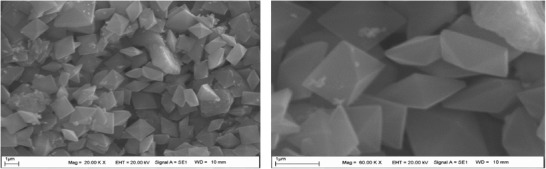
Nanoparticles are valuable materials with widespread use. The fact that these materials are obtained by biological resources with an environmentally friendly method contributes to the development of studies in this field. Gold nanoparticles (AuNPs) from waste vegetable sources (green leaves of L.) are economically and easily synthesized. The obtained particles are characterized by UV-vis spectroscopy (UV-vis), Fourier transform infrared spectroscopy (FTIR), X-ray diffraction (XRD), and scanning electron microscopy (SEM) analysis. The antimicrobial activity of the particles on the pathogenic microorganisms ATCC 25922, ATCC 29213, bacteria, and yeast are found to have a significant suppressive effect. The removal activities of eight toxic metals (Pd, Cd, Fe, Ni, Co, Mn, Zn, Pb) in Diyarbakır drinking water and artificially prepared water within different pHs are investigated. Gold nanoparticles synthesized from L. leaves are found to be effective in toxic metal removal in water samples.
纳米颗粒是具有广泛用途的宝贵材料。这些材料通过环境友好的方法从生物资源中获得,这有助于该领域研究的发展。从废弃蔬菜源(L.的绿叶)中经济且容易地合成了金纳米颗粒(AuNPs)。通过紫外可见光谱(UV-vis)、傅里叶变换红外光谱(FTIR)、X射线衍射(XRD)和扫描电子显微镜(SEM)分析对所得颗粒进行了表征。发现这些颗粒对致病微生物ATCC 25922、ATCC 29213、细菌和酵母具有显著的抗菌活性抑制作用。研究了迪亚巴克尔饮用水和不同pH值的人工制备水中八种有毒金属(钯、镉、铁、镍、钴、锰、锌、铅)的去除活性。发现从L.叶中合成的金纳米颗粒对水样中的有毒金属去除有效。