Department of Radiation Oncology, The University of Texas Southwestern Medical Center, Dallas, TX, 75390, USA.
Biomedical Engineering Graduate Program, The University of Texas Southwestern Medical Center, Dallas, TX, 75390, USA.
Med Phys. 2020 Aug;47(8):3263-3276. doi: 10.1002/mp.14201. Epub 2020 May 23.
Stereotactic radiosurgery (SRS) has become a standard of care for patients' with brain metastases (BMs). However, the manual multiple BMs delineation can be time-consuming and could create an efficiency bottleneck in SRS workflow. There is a clinical need for automatic delineation and quantitative evaluation tools. In this study, building on our previous developed deep learning-based segmentation algorithms, we developed a web-based automated BMs segmentation and labeling platform to assist the SRS clinical workflow.
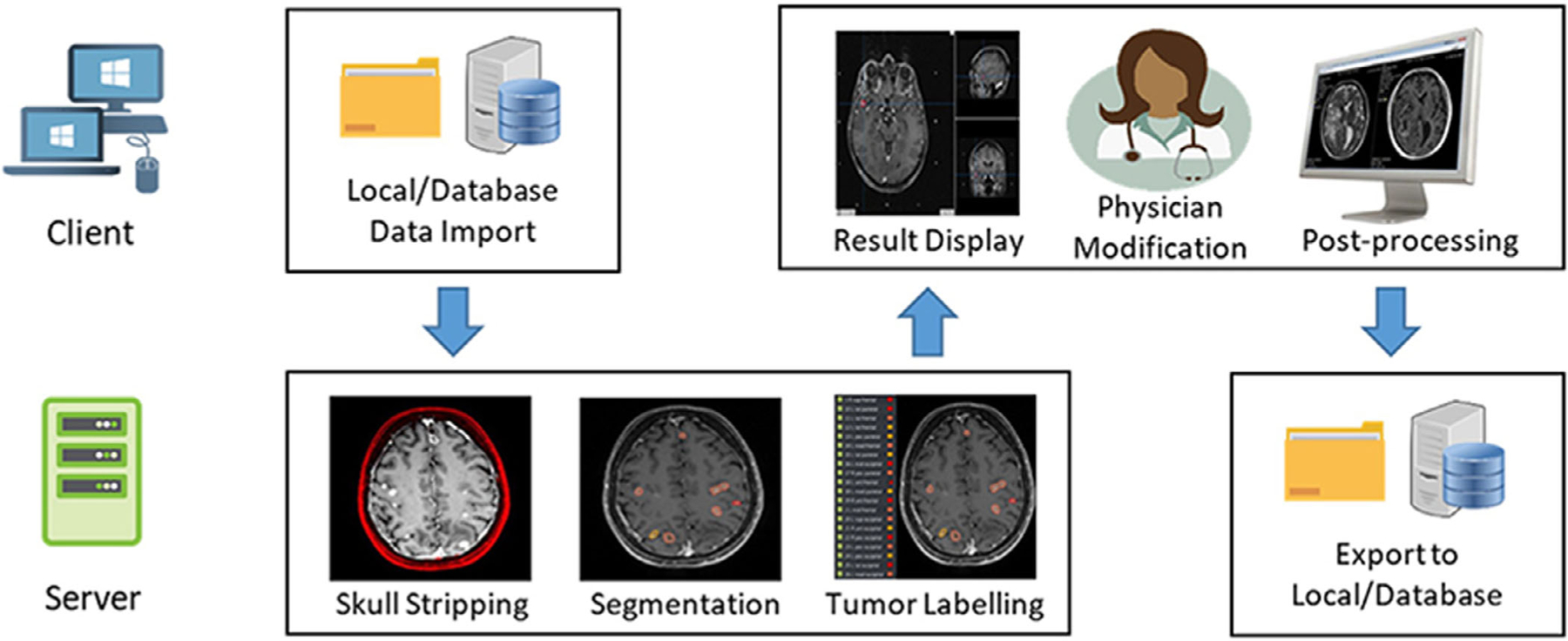
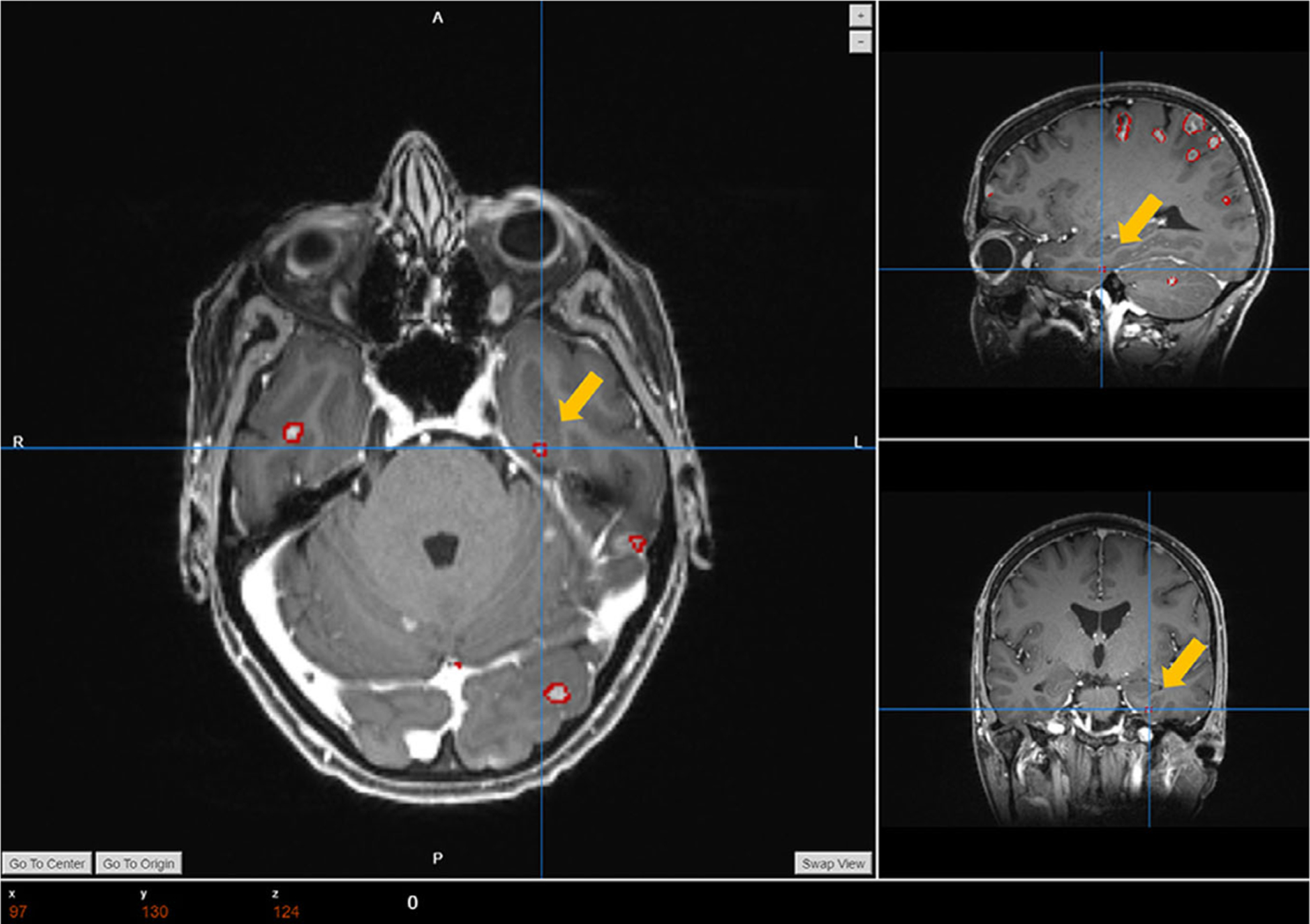
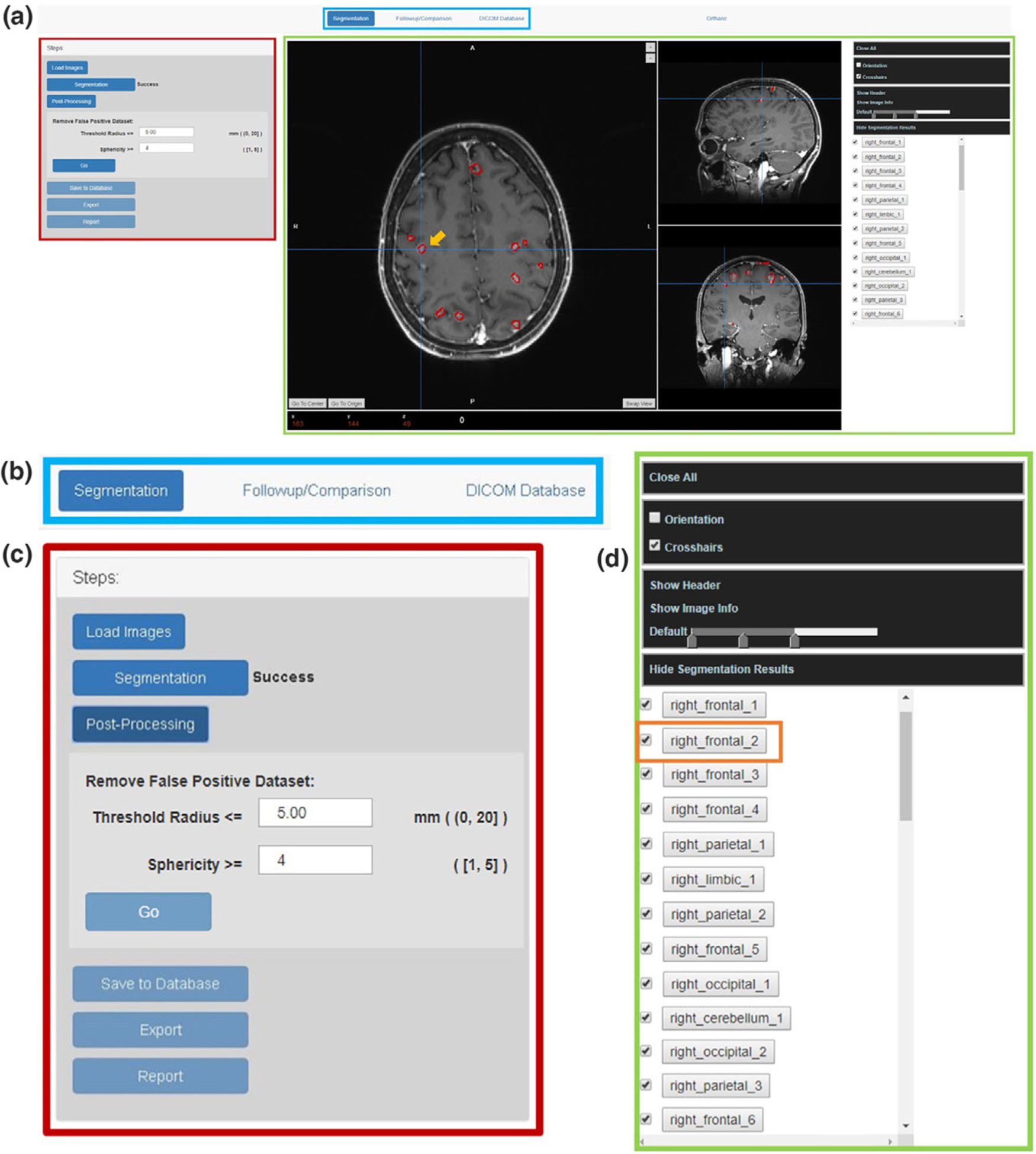
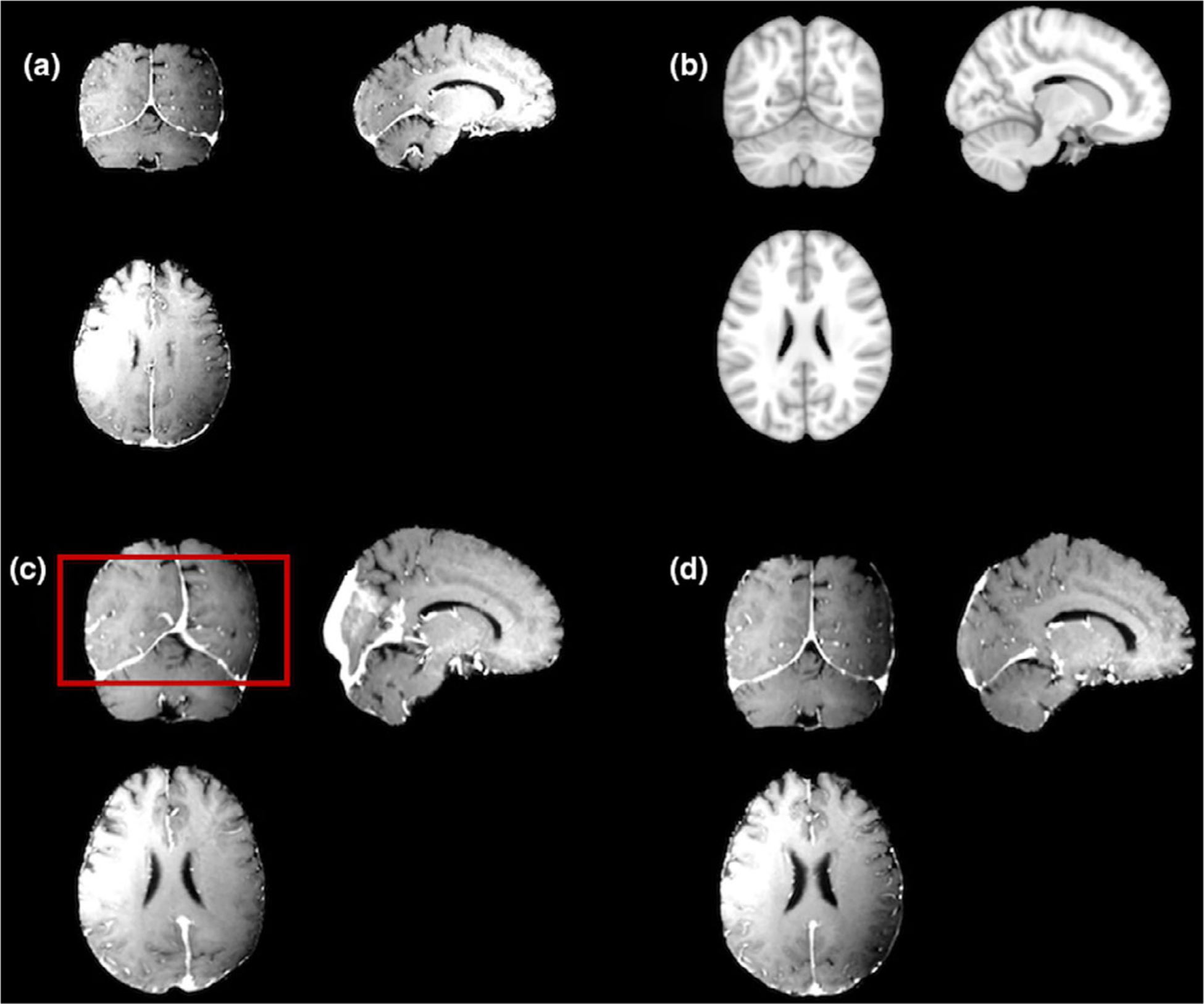
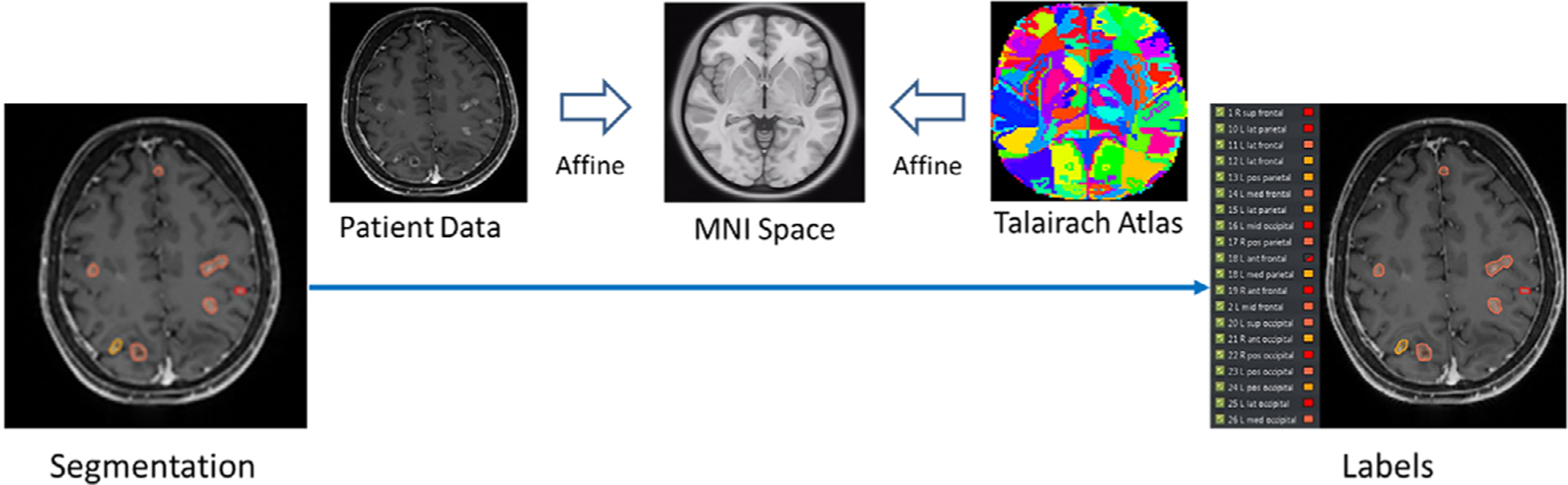
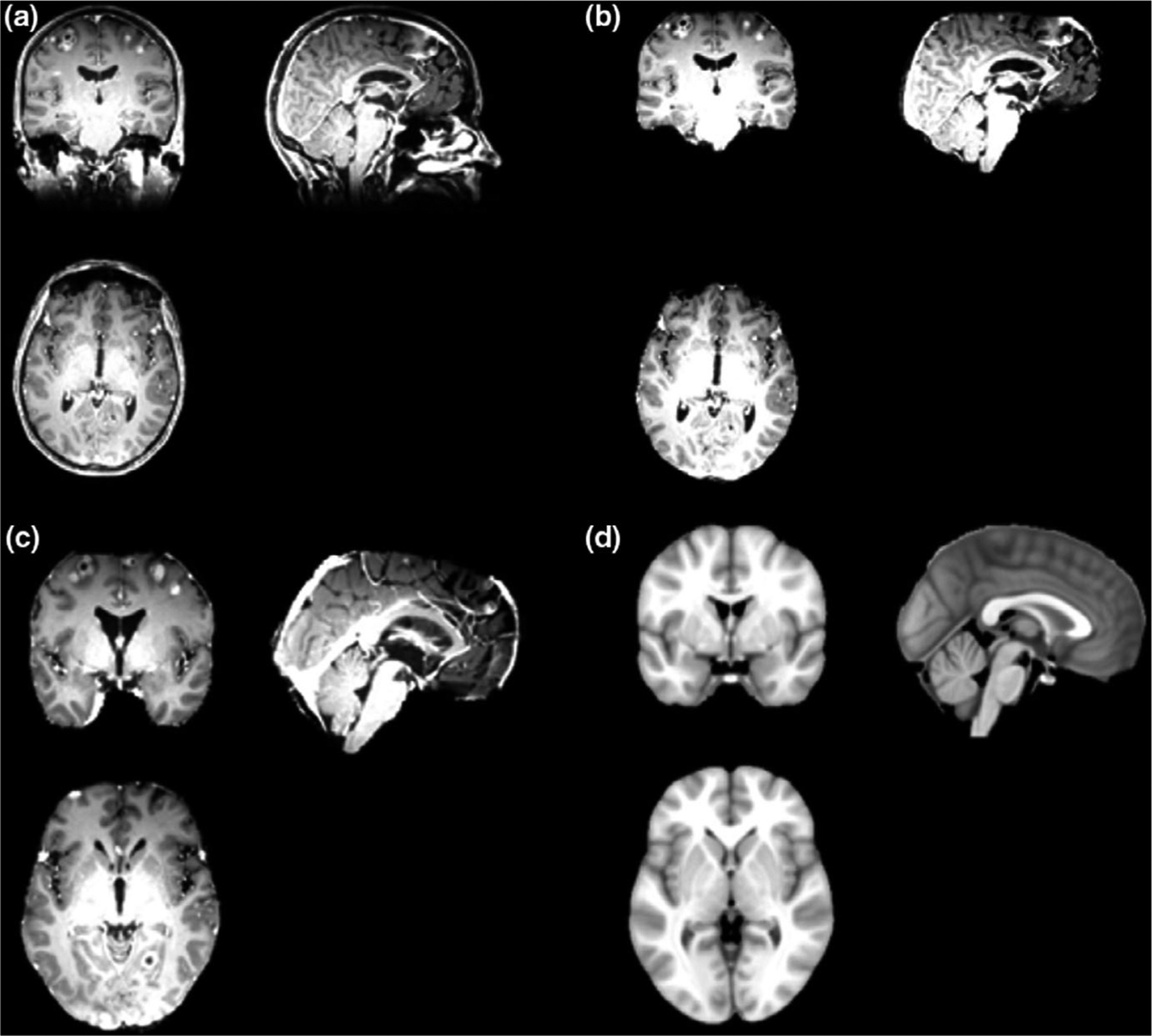
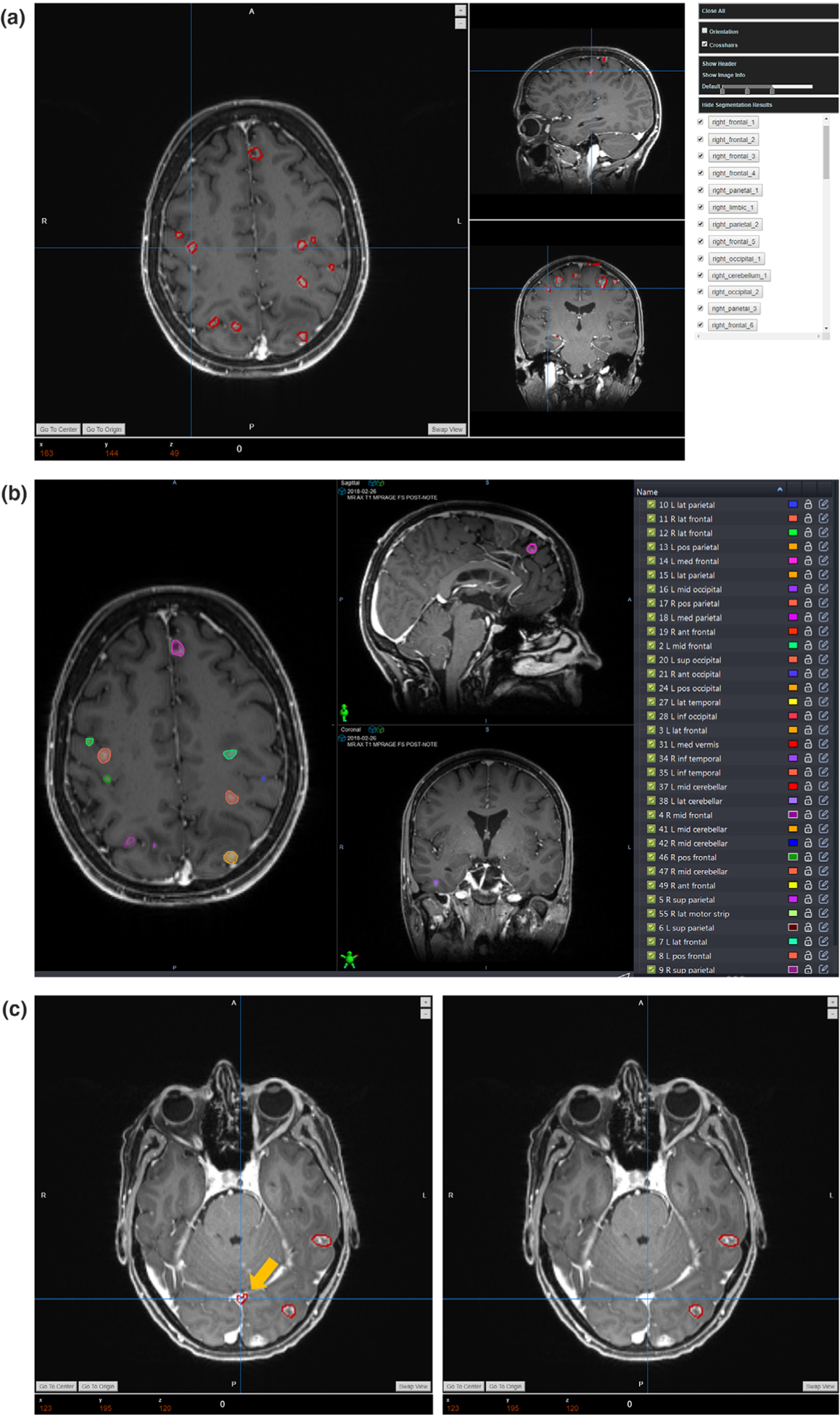
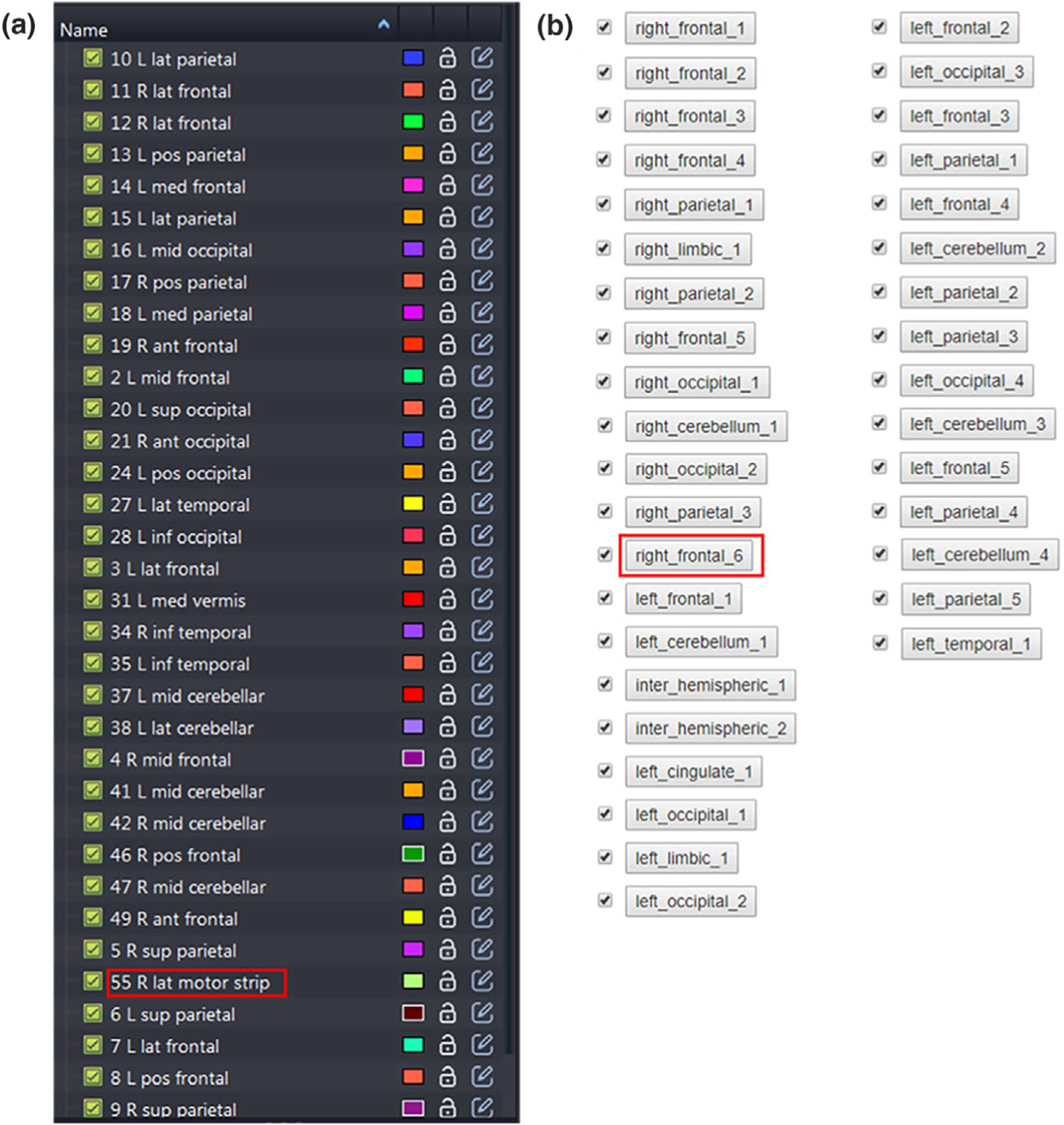
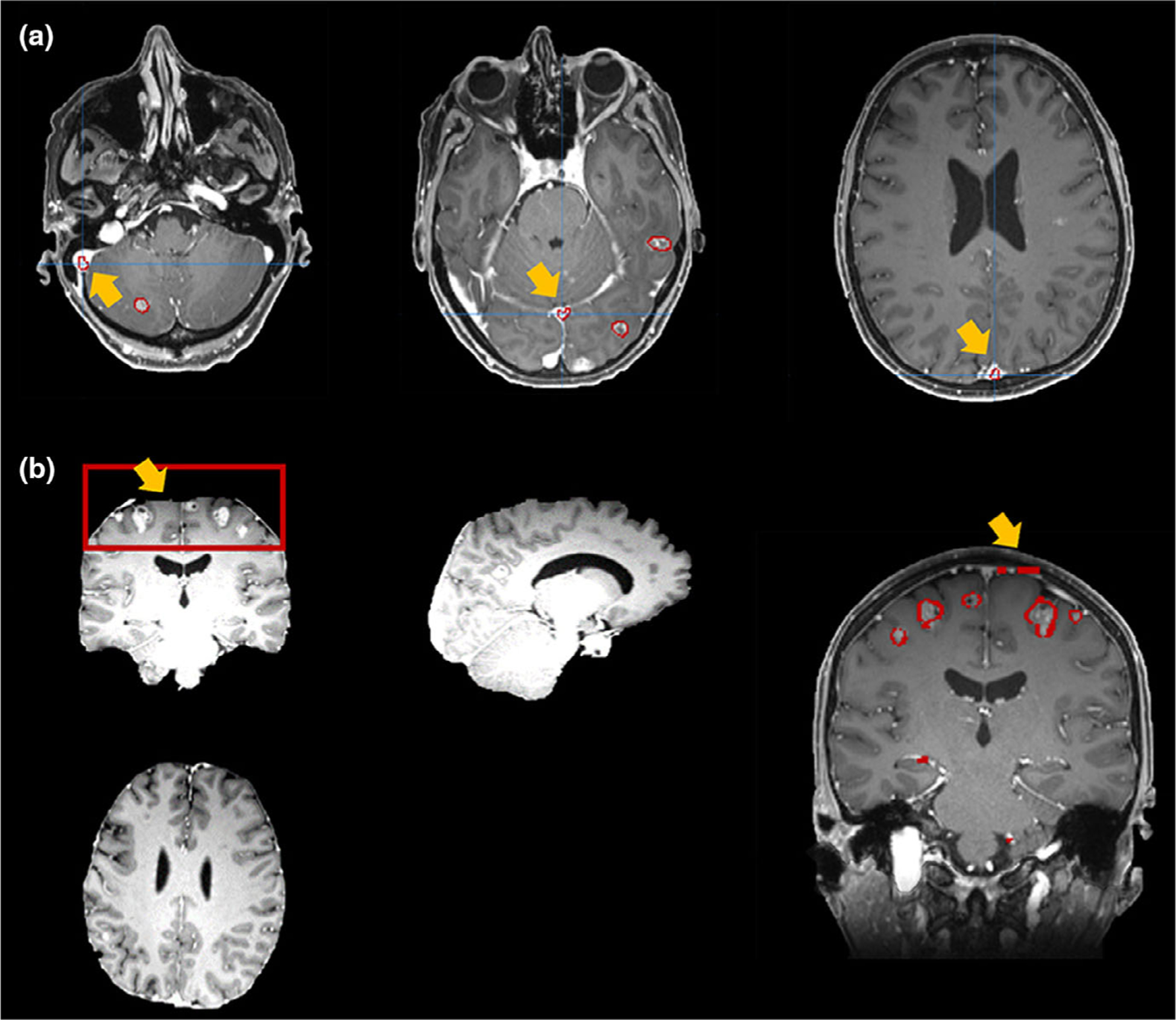
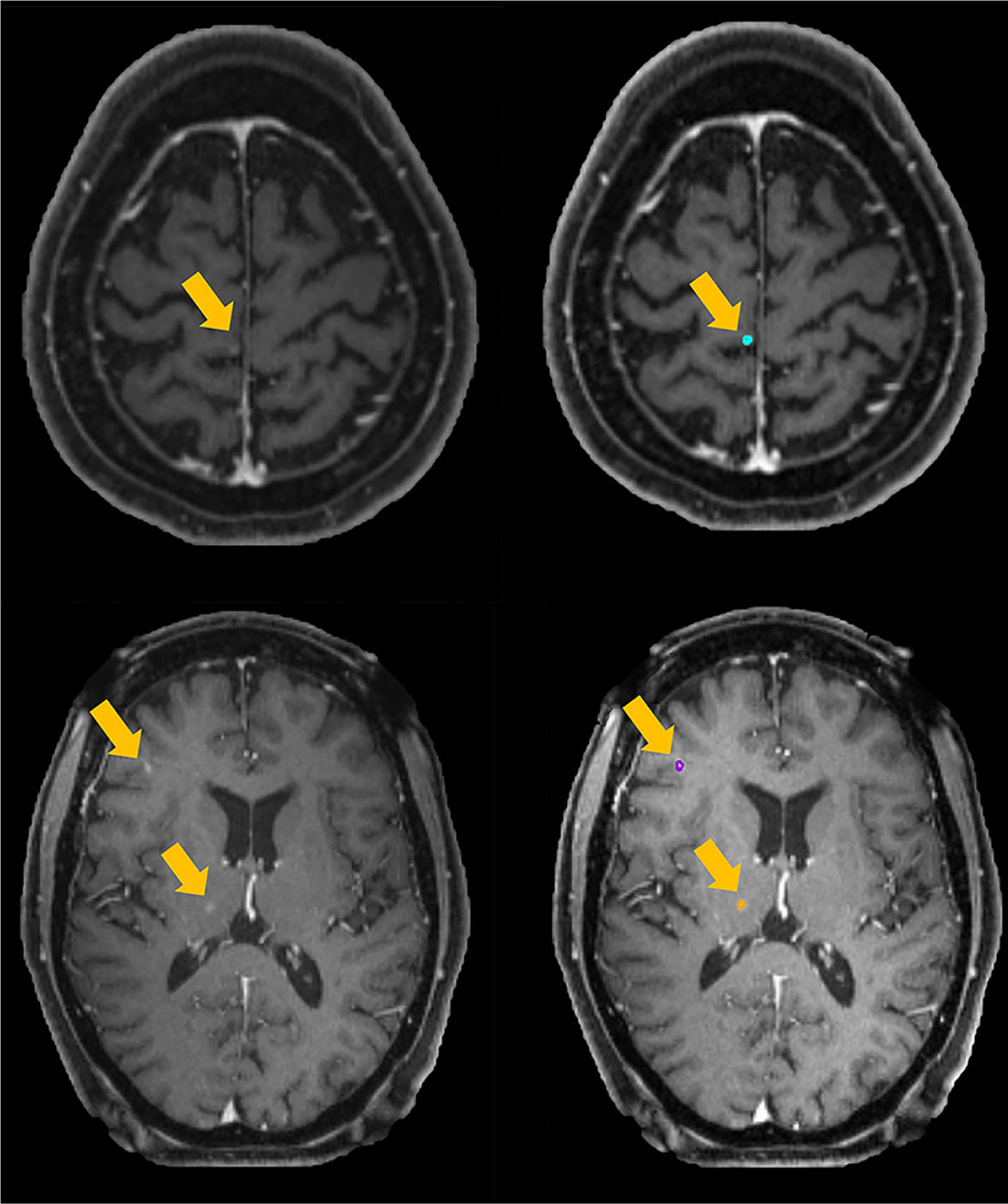
This platform was developed based on the Django framework, including a web client and a back-end server. The web client enables interactions as database access, data import, and image viewing. The server performs the segmentation and labeling tasks including: skull stripping; deep learning-based BMs segmentation; and affine registration-based BMs labeling. Additionally, the client can display BMs contours with corresponding atlas labels, and allows further postprocessing tasks including: (a) adjusting window levels; (b) displaying/hiding specific contours; (c) removing false-positive contours; (d) exporting contours as DICOM RTStruct files; etc. RESULTS: We evaluated this platform on 10 clinical cases with BMs number varied from 12-81 per case. The overall operation took about 4-5 min per patient. The segmentation accuracy was evaluated between the manual contour and automatic segmentation with several metrics. The averaged center of mass shift was 1.55 ± 0.36 mm, the Hausdorff distance was 2.98 ± 0.63 mm, the mean of surface-to-surface distance (SSD) was 1.06 ± 0.31 mm, and the standard deviation of SSD was 0.80 ± 0.16 mm. In addition, the initial averaged false-positive over union (FPoU) and false-negative rate (FNR) were 0.43 ± 0.19 and 0.15 ± 0.10 respectively. After case-specific postprocessing, the averaged FPoU and FNR were 0.19 ± 0.10 and 0.15 ± 0.10 respectively.
The evaluated web-based BMs segmentation and labeling platform can substantially improve the clinical efficiency compared to manual contouring. This platform can be a useful tool for assisting SRS treatment planning and treatment follow-up.
立体定向放射外科(SRS)已成为脑转移瘤(BMs)患者的标准治疗方法。然而,手动勾画多个 BMs 较为耗时,可能会成为 SRS 工作流程中的效率瓶颈。因此,我们需要自动勾画和定量评估工具。在本研究中,我们在之前开发的基于深度学习的分割算法的基础上,开发了一个基于网络的自动 BMs 分割和标注平台,以辅助 SRS 临床工作流程。
该平台基于 Django 框架开发,包括一个网络客户端和一个后端服务器。网络客户端实现了数据库访问、数据导入和图像查看等交互功能。服务器执行分割和标注任务,包括:颅骨剥离;基于深度学习的 BMs 分割;基于仿射配准的 BMs 标注。此外,客户端可以显示带有相应图谱标签的 BMs 轮廓,并允许进行进一步的后处理任务,包括:(a)调整窗宽;(b)显示/隐藏特定轮廓;(c)去除假阳性轮廓;(d)将轮廓导出为 DICOM RTStruct 文件等。
我们在 10 例 BMs 数量从 12 到 81 不等的临床病例上评估了该平台。每位患者的整体操作时间约为 4-5 分钟。我们使用几种指标评估了手动轮廓和自动分割之间的分割准确性。平均质心偏移量为 1.55 ± 0.36mm,Hausdorff 距离为 2.98 ± 0.63mm,平均表面到表面距离(SSD)为 1.06 ± 0.31mm,SSD 标准差为 0.80 ± 0.16mm。此外,初始平均假阳性率(FPoU)和假阴性率(FNR)分别为 0.43 ± 0.19 和 0.15 ± 0.10。经过特定病例的后处理后,平均 FPoU 和 FNR 分别为 0.19 ± 0.10 和 0.15 ± 0.10。
与手动勾画相比,评估的基于网络的 BMs 分割和标注平台可以显著提高临床效率。该平台可以成为辅助 SRS 治疗计划和治疗随访的有用工具。