Yang Kai, Zhang Su, Ying Youmin, Li Yougui, Cai Ming, Guan Rongfa, Hu Junrong, Sun Peilong
College of Food Science and Technology, Zhejiang University of Technology, Hangzhou 310014, P. R. China.
College of Pharmaceutical Science, Zhejiang University of Technology, Hangzhou 310014, P. R. China.
ACS Omega. 2020 Apr 7;5(15):8596-8604. doi: 10.1021/acsomega.9b04478. eCollection 2020 Apr 21.
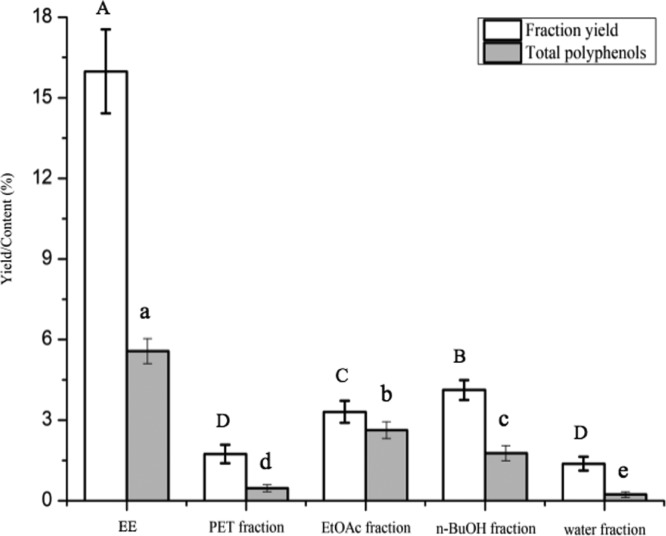
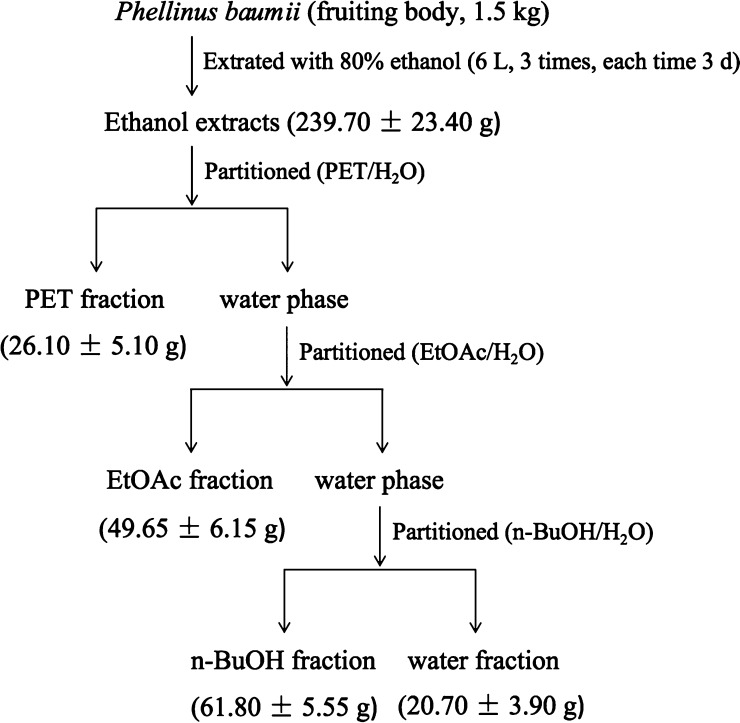
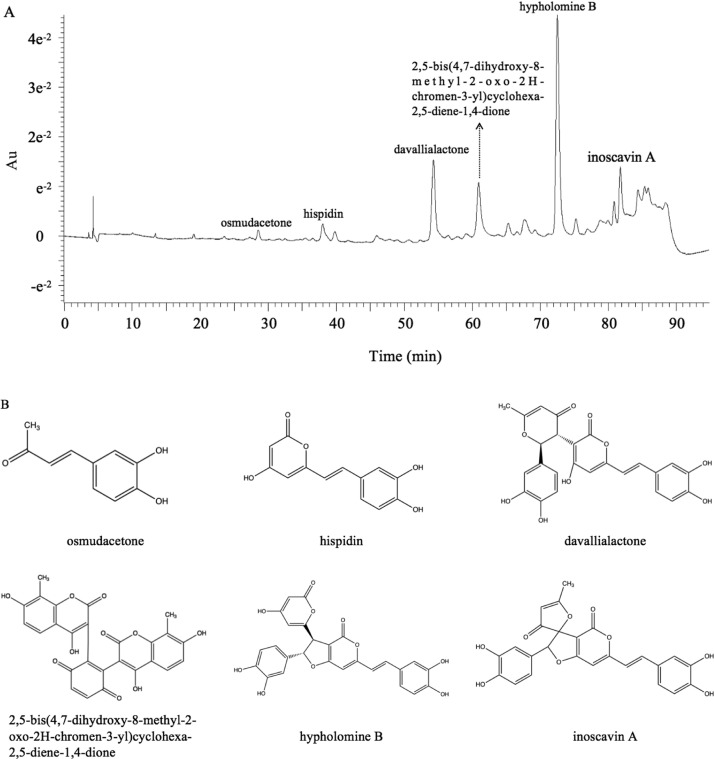
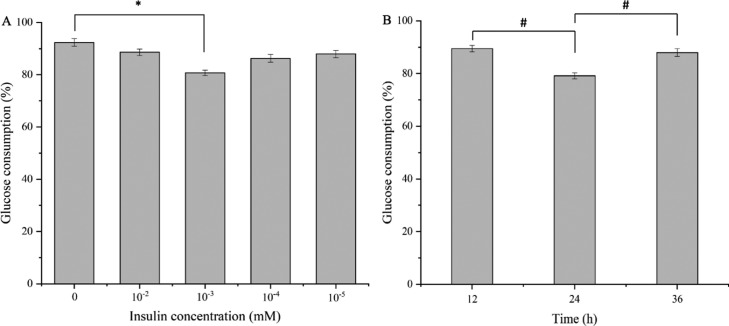
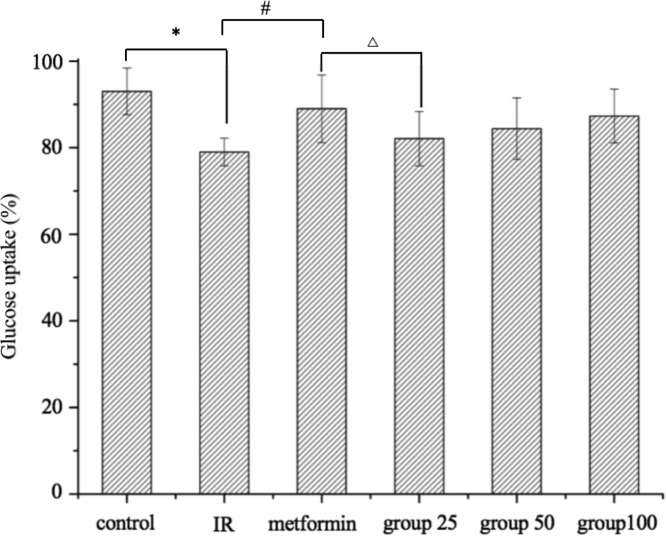
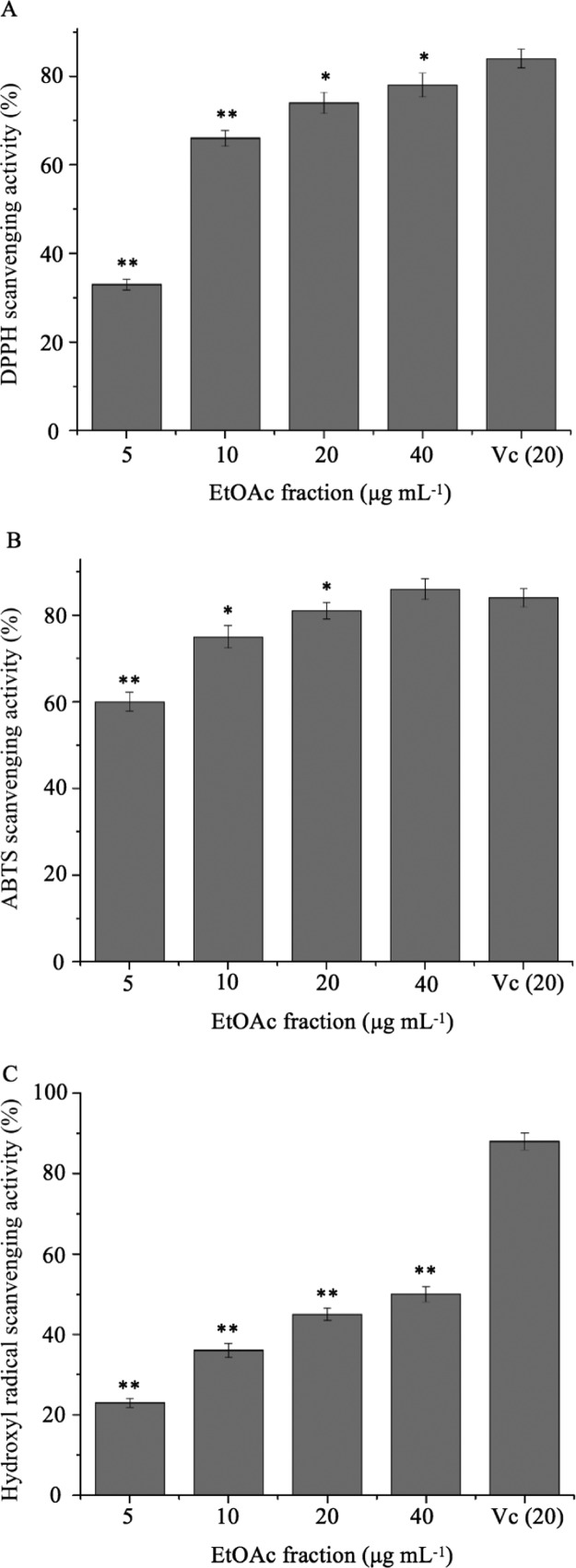
Previous studies have been reported that the fruit body of wild alleviates diabetes, and antioxidants are beneficial to diabetes by protecting the β-cell from damage due to oxidative stress. Large-scale cultivation of fruit body has been successful in the past decade. This paper aimed to investigate whether the fruit body of the cultivated has the same analogical effects as the wild. The cultivated fruit body was extracted by 80% of ethanol extracts, and different fractions were obtained with the successive use of petroleum ether, ethyl acetate (EtOAc), -butanol (-BuOH), and water, which yielded 15.98 ± 1.56, 1.74 ± 0.34, 3.31 ± 0.41, 4.12 ± 0.37, and 1.38 ± 0.26% extract recovery, respectively. Results show that the EtOAc fraction exhibits the highest inhibitory effect on α-glucosidase activity (IC = 49.05 ± 3.14 μg mL), which is an order of magnitude higher than the positive control (acarbose, IC = 645.73 ± 7.86 μg mL). It was mainly composed of phenolic compounds with a purity of 79.45% and characterized by liquid chromatography-mass spectrometry as osmudacetone, hispidin, davallialactone, 2,5-bis(4,7-dihydroxy-8-methyl-2-oxo-2-chromen-3-yl)cyclohexa-2,5-diene-1,4-dione, hypholomin B, and inoscavin A. Furthermore, the EtOAc fraction increased the glucose consumption of insulin-resistant HepG2 cells at a concentration range of 25-100 μg mL. The EtOAc fraction also demonstrated antioxidant activities by scavenging 1,1-diphenyl-2-picrylhydrazyl, 2,2'-azino-bis(3-ethylbenzothiazoline-6-sulfonic acid)diammonium salt, and hydroxyl radicals. In conclusion, the EtOAc fraction of the cultivated fruit body exerted effective antidiabetic effects, possibly due to the high content of selective phenolic compounds. Hence, the cultivated fruit body of can be a sustainable resource for treating diabetes, and our work also shed some light on its future utilization.
先前的研究报道,野生[菌类名称]子实体可缓解糖尿病,且抗氧化剂通过保护β细胞免受氧化应激损伤而对糖尿病有益。在过去十年中,[菌类名称]子实体的大规模栽培已获成功。本文旨在研究栽培的[菌类名称]子实体是否具有与野生子实体相同的类似作用。用80%乙醇提取物对栽培的[菌类名称]子实体进行提取,并依次用石油醚、乙酸乙酯(EtOAc)、正丁醇(n - BuOH)和水获得不同馏分,其提取物回收率分别为15.98±1.56%、1.74±0.34%、3.31±0.41%、4.12±0.37%和1.38±0.26%。结果表明,乙酸乙酯馏分对α - 葡萄糖苷酶活性表现出最高抑制作用(IC50 = 49.05±3.14μg/mL),比阳性对照(阿卡波糖,IC50 = 645.73±7.86μg/mL)高一个数量级。其主要由纯度为79.45%的酚类化合物组成,通过液相色谱 - 质谱表征为奥斯马地丙酮、漆斑菌素、骨碎补内酯、2,5 - 双(4,羟基 - 8 - 甲基 - 2 - 氧代 - 2 - 色烯 - 3 - 基)环己 - 2,5 - 二烯 - 1,4 - 二酮、网孢盘菌素B和香菇嘌呤A。此外,乙酸乙酯馏分在25 - 100μg/mL浓度范围内增加了胰岛素抵抗的HepG2细胞对葡萄糖的消耗。乙酸乙酯馏分还通过清除1,1 - 二苯基 - 2 - 苦基肼、2,2'- 偶氮二(3 - 乙基苯并噻唑啉 - 6 - 磺酸)二铵盐和羟基自由基表现出抗氧化活性。总之,栽培的[菌类名称]子实体的乙酸乙酯馏分发挥了有效的抗糖尿病作用,可能归因于选择性酚类化合物的高含量。因此,栽培的[菌类名称]子实体可成为治疗糖尿病的可持续资源,我们的工作也为其未来利用提供了一些启示。