D'Addazio Gianmaria, Santilli Manlio, Rollo Marco Lorenzo, Cardelli Paolo, Rexhepi Imena, Murmura Giovanna, Al-Haj Husain Nadin, Sinjari Bruna, Traini Tonino, Özcan Mutlu, Caputi Sergio
Department of Medical, Oral and Biotechnological Sciences, University "G. d'Annunzio" of Chieti-Pescara, 66100 Chieti, Italy.
Department of Reconstructive Dentistry and Gerodontology, School of Dental Medicine, University of Bern, 3012 Bern, Switzerland.
Materials (Basel). 2020 Apr 25;13(9):2012. doi: 10.3390/ma13092012.
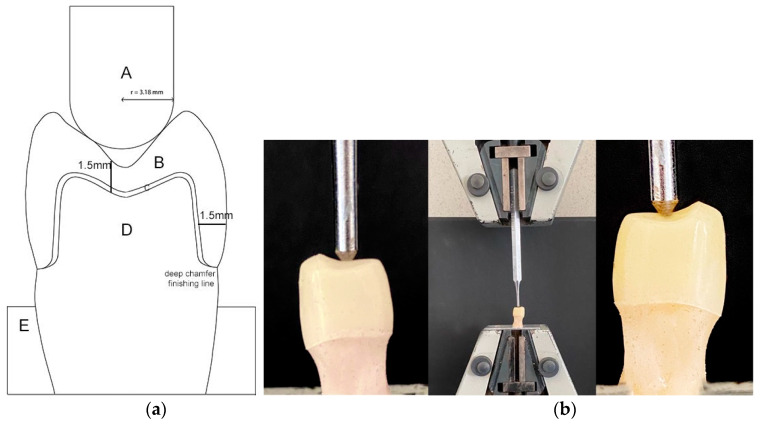
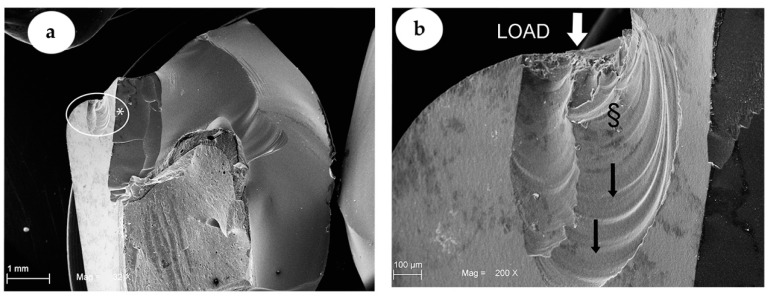
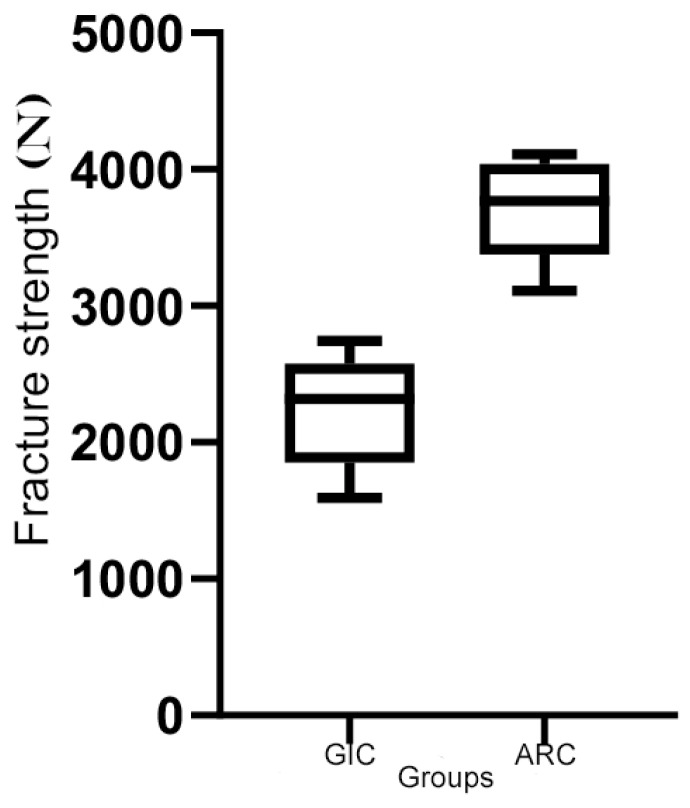
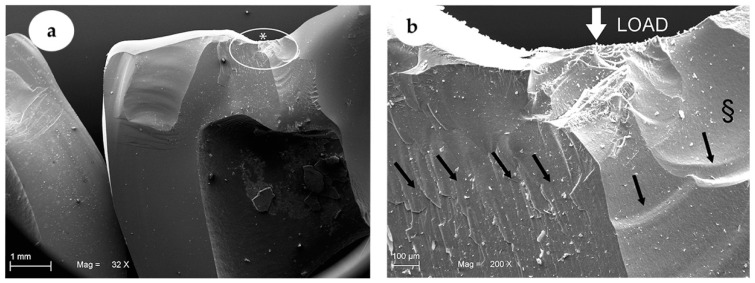
In recent years, Zirconia-reinforced Lithium Silicate ceramic (ZLS), combining lithium-silicate and zirconia features, has shown to have excellent mechanical and aesthetic characteristics. Thus, the aim of this study was to compare the fracture strength of ZLS single crowns cemented with two different cementation techniques. Twenty crowns were realised and cemented on teeth replicas achieved from an extracted premolar human tooth. The samples were divided into two groups of 10 specimens each, Glass-ionomeric cement (GIC) group and Self-Adhesive Resin Cement (ARC) group. The mechanical test was performed using a universal testing machine. The specimens were then evaluated with a scanning electron microscope (SEM) to identify for all crowns and related abutments the pattern of fracture after the breaking point. The data obtained were statistically analysed. The mean fracture toughness values and standard deviations (±SD) were 2227 ± 382 N and 3712 ± 319 N respectively for GIC and ARC groups. In fact, -test showed a statistically significant difference between the two groups ( < 0.001). Moreover, the SEM results demonstrated portions of abutments still attached to the crown fragments in the ARC group, whilst these were not present in the GIC group. Within the limitations of this study, these results suggest the use of adhesive cementation for ZLS crowns, which significantly increase the compressive strength of ZLS restorations compared to GIC.
近年来,结合了锂硅酸盐和氧化锆特性的氧化锆增强锂硅酸盐陶瓷(ZLS)已显示出优异的机械和美学特性。因此,本研究的目的是比较采用两种不同粘结技术粘结的ZLS单冠的断裂强度。制作了20个牙冠,并粘结在由一颗拔除的人类前磨牙制成的牙齿模型上。样本分为两组,每组10个样本,玻璃离子水门汀(GIC)组和自粘结树脂水门汀(ARC)组。使用万能试验机进行力学测试。然后用扫描电子显微镜(SEM)对样本进行评估,以确定所有牙冠及其相关基牙在断裂点后的断裂模式。对获得的数据进行统计分析。GIC组和ARC组的平均断裂韧性值和标准差(±SD)分别为2227±382 N和3712±319 N。事实上,t检验显示两组之间存在统计学上的显著差异(P<0.001)。此外,SEM结果表明,ARC组中部分基牙仍与牙冠碎片相连,而GIC组中则不存在这种情况。在本研究的局限性范围内,这些结果表明ZLS牙冠使用粘结性水门汀,与GIC相比,这显著提高了ZLS修复体的抗压强度。