Assistant Clinical Professor, Department of Pediatrics, Division of Adolescent and Young Adult Medicine, University of California, San Francisco, School of Medicine.
Professor, Department of Pediatrics, Division of Adolescent and Young Adult Medicine, University of California, San Francisco, School of Medicine.
MedEdPORTAL. 2020 Apr 3;16:10896. doi: 10.15766/mep_2374-8265.10896.
While pediatricians should receive training in the care of transgender youth, a paucity of formal educational curricula have been developed to train learners to care for this vulnerable population.
We developed a curriculum including six online modules and an in-person afternoon session observing clinic visits in a pediatric gender clinic. Learners-fourth-year medical students, interns, and nurse practitioner trainees-received protected time during an adolescent medicine rotation to complete the online modules (total duration: 77 minutes). For 20 learners, we assessed the impact of the entire curriculum-online modules and in-person observation-on self-perceived knowledge of considerations for transgender youth. For 31 learners, we assessed the effect of the online modules alone on knowledge and self-efficacy. Descriptive analyses illustrated changes in educational domains by learner group.
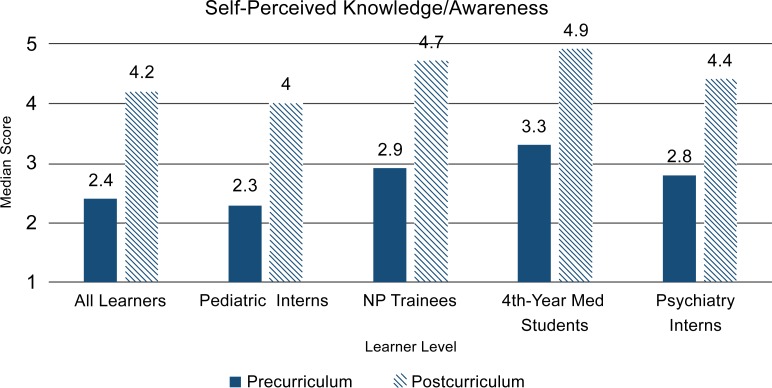
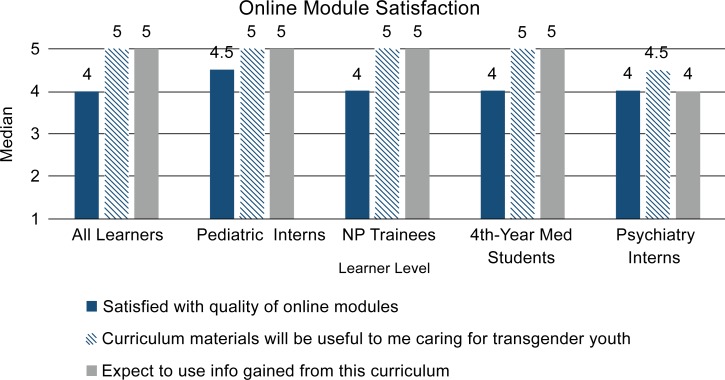
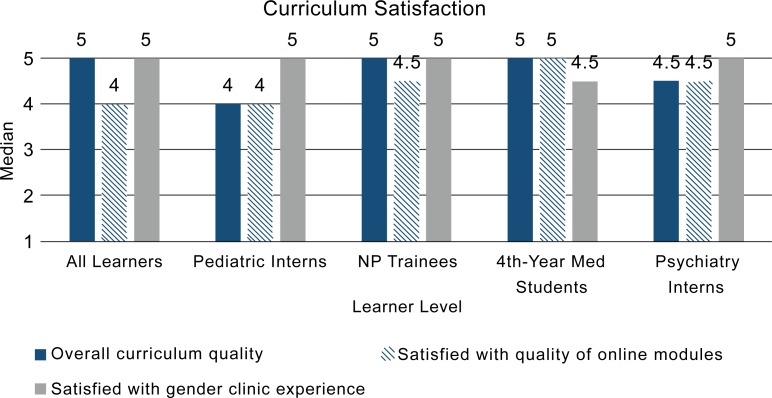
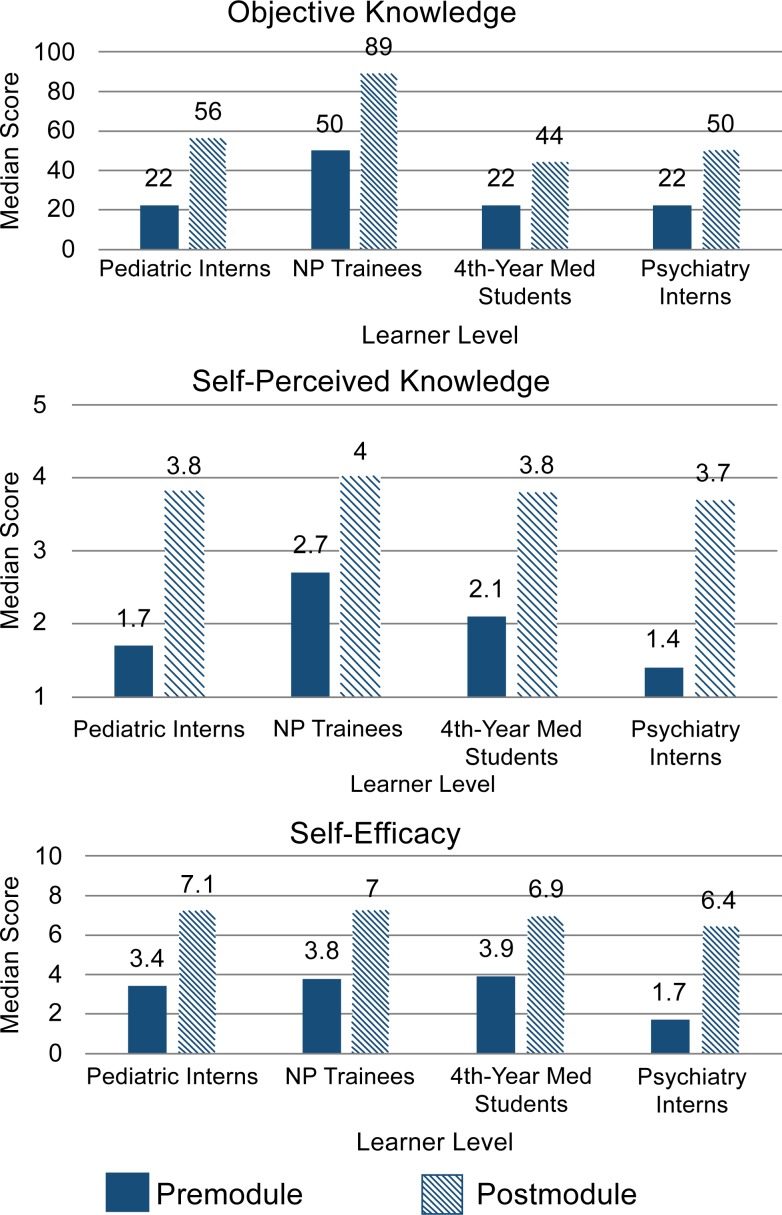
On evaluations of the entire curriculum (modules and observation), median self-perceived knowledge scores (1 = , 5 = ) increased within learner groups: pediatric interns (from 2.3 to 4.0), nurse practitioner trainees (from 2.9 to 4.7), fourth-year medical students (from 3.3 to 4.9), and psychiatry interns (from 2.8 to 4.4). Assessment of learners completing only the online modules demonstrated increases in median knowledge and self-efficacy scores within learner groups. All learner groups highly valued the curriculum.
Our curriculum for multidisciplinary learners in the care of transgender youth was successful and well received. Increasing learner knowledge and self-efficacy is an important step towards skill development in patient care for the transgender youth population.
儿科医生应该接受跨性别青年护理方面的培训,但目前开发的正规教育课程却很少,无法为学习者提供护理这一弱势群体的相关培训。
我们开发了一门课程,其中包括六个在线模块和一个在儿科性别诊所观察临床访问的实地下午课程。学习者(四年级医学生、实习医生和护士从业者学员)在青少年医学轮转期间获得了受保护的时间来完成在线模块(总时长:77 分钟)。对于 20 名学习者,我们评估了整个课程(在线模块和实地观察)对他们自身对跨性别青年相关考虑因素的知识的影响。对于 31 名学习者,我们评估了在线模块对知识和自我效能的单独影响。描述性分析说明了学习者群体中各个教育领域的变化。
在对整个课程(模块和观察)的评估中,学习者群体的自我感知知识得分中位数(1=差,5=优秀)有所提高:儿科实习医生(从 2.3 到 4.0)、护士从业者学员(从 2.9 到 4.7)、四年级医学生(从 3.3 到 4.9)和精神病学实习医生(从 2.8 到 4.4)。对仅完成在线模块的学习者进行评估表明,学习者群体的知识和自我效能得分中位数有所提高。所有学习者群体都非常重视该课程。
我们为跨性别青年护理的多学科学习者设计的课程是成功的,受到了广泛好评。提高学习者的知识和自我效能感是发展跨性别青年人群患者护理技能的重要步骤。