Sydor Svenja, Best Jan, Messerschmidt Insa, Manka Paul, Vilchez-Vargas Ramiro, Brodesser Susanne, Lucas Christina, Wegehaupt Annemarie, Wenning Chiara, Aßmuth Sophia, Hohenester Simon, Link Alexander, Faber Klaas Nico, Moshage Han, Cubero Francisco Javier, Friedman Scott L, Gerken Guido, Trauner Michael, Canbay Ali, Bechmann Lars P
Department of Gastroenterology, Hepatology, and Infectious Diseases, Otto von Guericke University Hospital Magdeburg, Magdeburg, Germany.
Department of Gastroenterology and Hepatology, University Hospital Essen, Essen, Germany.
Clin Transl Gastroenterol. 2020 Mar;11(3):e00131. doi: 10.14309/ctg.0000000000000131.
The precipitous increase in nonalcoholic steatohepatitis (NASH) is accompanied by a dramatic increase in the incidence of NASH-related hepatocellular carcinoma (HCC). HCC in NASH has a higher propensity to arise without pre-existing cirrhosis compared with other chronic liver diseases.
To identify the potential links between liver and gut in NASH-related hepatocarcinogenesis, we compared the gut microbiota and mediators of bile acid (BA) signaling in the absence or presence of cirrhosis through the analysis of stool and serum samples from patients with NASH non-HCC and NASH-HCC and healthy volunteers.
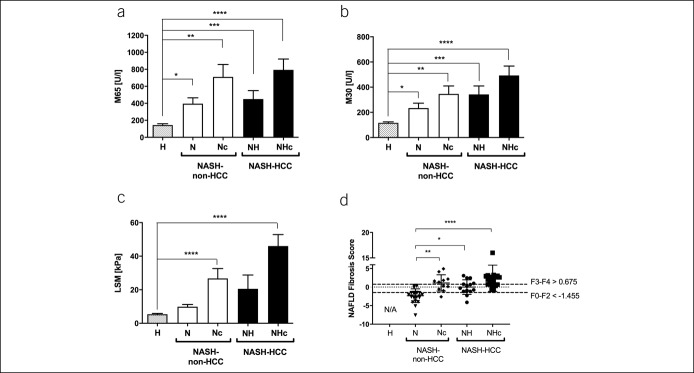
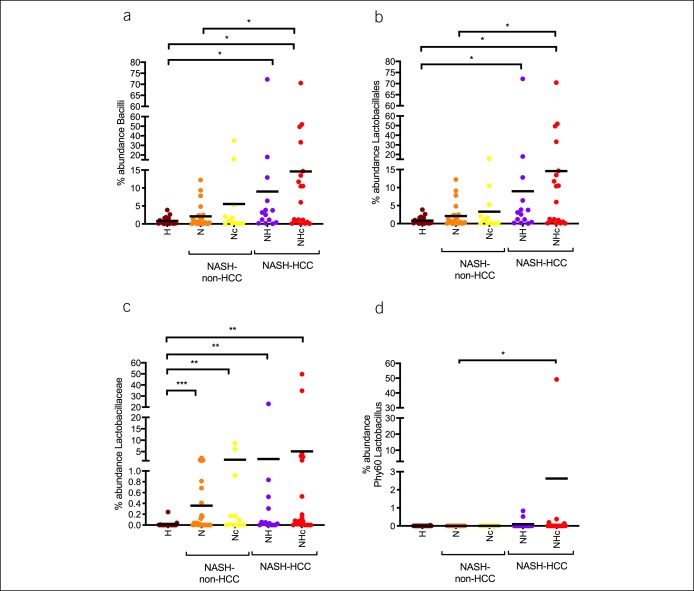
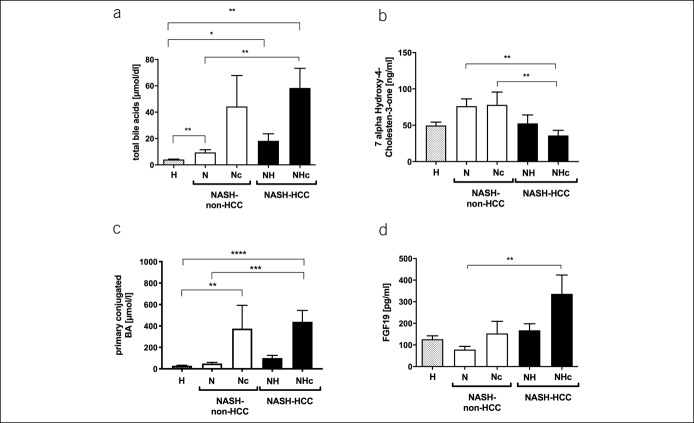
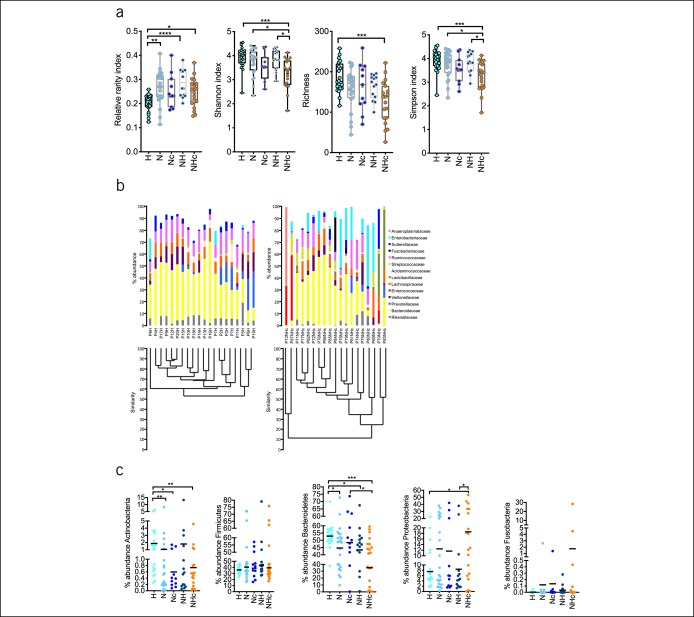
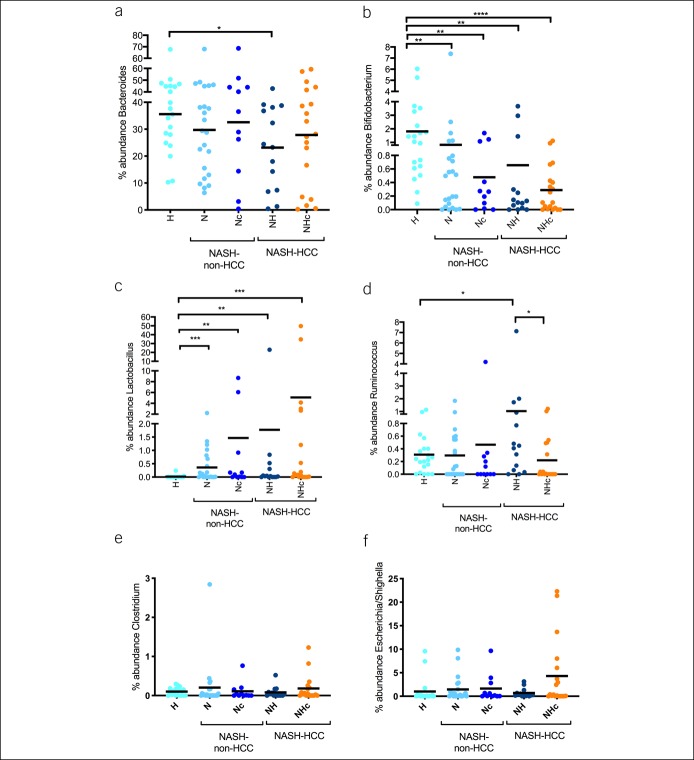
Serum levels of total and individual BA were higher in NASH compared with healthy controls. Furthermore, serum levels of the primary conjugated BAs glycine-conjugated cholic acid, taurine-conjugated cholic acid, glycine-conjugated chenodeoxycholic acid, and taurine-conjugated chenodeoxycholic acid were significantly increased in cirrhotic vs noncirrhotic patients, independent of the occurrence of HCC. By contrast, serum FGF19 levels were higher in patients with NASH-HCC and associated with tumor markers as well as an attenuation of BA synthesis. Specific alterations in the gut microbiome were found for several bacteria involved in the BA metabolism including Bacteroides and Lactobacilli. Specifically, the abundance of Lactobacilli was associated with progressive disease, serum BA levels, and liver injury in NASH and NASH-HCC.
Here, we demonstrate a clear association of the altered gut microbiota and primary conjugated BA composition in cirrhotic and noncirrhotic patients with NASH-HCC. Microbiota-associated alterations in BA homeostasis and farnesoid X receptor signaling, via FGF19, might thus contribute to fibrogenesis, liver injury, and tumorigenesis in NASH-HCC.
非酒精性脂肪性肝炎(NASH)的急剧增加伴随着NASH相关肝细胞癌(HCC)发病率的显著上升。与其他慢性肝病相比,NASH中的HCC在没有预先存在肝硬化的情况下发生的倾向更高。
为了确定肝脏与肠道在NASH相关肝癌发生中的潜在联系,我们通过分析NASH非HCC和NASH-HCC患者以及健康志愿者的粪便和血清样本,比较了有无肝硬化情况下的肠道微生物群和胆汁酸(BA)信号传导介质。
与健康对照组相比,NASH患者的总BA和个体BA血清水平更高。此外,在肝硬化患者与非肝硬化患者中,主要结合型BA(甘氨酸结合胆酸、牛磺酸结合胆酸、甘氨酸结合鹅去氧胆酸和牛磺酸结合鹅去氧胆酸)的血清水平显著升高,与HCC的发生无关。相比之下,NASH-HCC患者的血清FGF19水平更高,并且与肿瘤标志物以及BA合成的减弱有关。在参与BA代谢的几种细菌(包括拟杆菌属和乳杆菌属)中发现了肠道微生物群的特定改变。具体而言,乳杆菌属的丰度与NASH和NASH-HCC中的疾病进展、血清BA水平和肝损伤相关。
在这里,我们证明了在患有NASH-HCC的肝硬化和非肝硬化患者中,肠道微生物群的改变与主要结合型BA组成之间存在明显关联。因此,微生物群相关的BA内稳态和法尼醇X受体信号传导的改变,可能通过FGF19导致NASH-HCC中的纤维化、肝损伤和肿瘤发生。