Li Chunlai, Li Li, Qin Yinying, Jiang Yage, Wei Yi, Chen Jing, Xie Yubo
Department of Anesthesiology, The First Affiliated Hospital, Guangxi Medical University, Nanning 530021, China.
Ann Transl Med. 2020 Mar;8(6):385. doi: 10.21037/atm.2020.03.116.
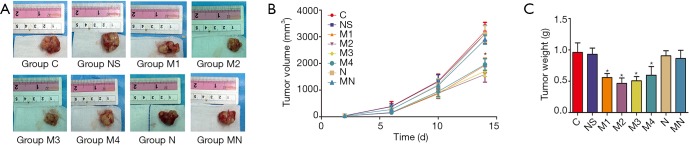
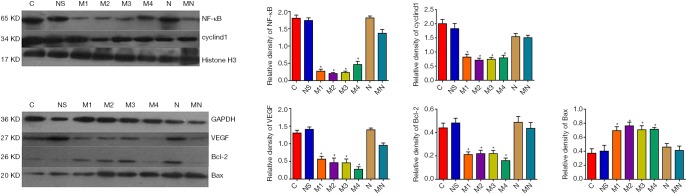
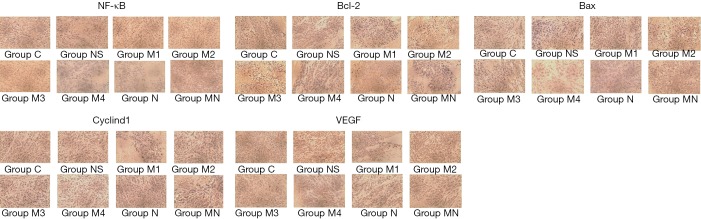
Morphine is commonly used to relieve severe pain that is often associated with cancer. Previous studies have found that morphine could affect cancer development; however, this effect is poorly understood. To further clarify the anti-cancer potential of morphine for the development of cancer , we observed how morphine affects the growth of human gastric tumor in a murine xenografting model and the expression of NF-κB and its downstream target genes (Bcl-2/Bax, cyclind1, and VEGF). The growth of the tumor was evaluated by its growth curves. The mRNA expression levels of NF-κB, Bcl-2/Bax, cyclind1, and VEGF were assessed by semi-quantitative polymerase chain reaction (qPCR). The protein expression of NF-κB, Bcl-2/Bax, cyclind1, and VEGF was detected by immunochemistry staining and western blot. Our data showed that morphine effectively inhibited the tumor growth in the nude mice. Morphine inhibits the expression of NF-κB, Bcl-2, cyclind1, and VEGF while enhancing the expression of Bax in the tumors. Furthermore, the anti-cancer effects of morphine could be reversed by naloxone. The mechanism might be associated with the action of opioid receptors that downregulate the expression of NF-κB leading to the regulation of the downstream target genes (Bcl-2/Bax, cylind1, and VEGF) in the tumors.
吗啡常用于缓解常与癌症相关的剧痛。先前的研究发现吗啡可能影响癌症发展;然而,这种影响尚不清楚。为了进一步阐明吗啡在癌症发展方面的抗癌潜力,我们在小鼠异种移植模型中观察了吗啡如何影响人胃肿瘤的生长以及核因子κB(NF-κB)及其下游靶基因(Bcl-2/Bax、细胞周期蛋白D1和血管内皮生长因子(VEGF))的表达。通过肿瘤生长曲线评估肿瘤的生长情况。采用半定量聚合酶链反应(qPCR)检测NF-κB、Bcl-2/Bax、细胞周期蛋白D1和VEGF的mRNA表达水平。通过免疫化学染色和蛋白质印迹法检测NF-κB、Bcl-2/Bax、细胞周期蛋白D1和VEGF的蛋白表达。我们的数据表明吗啡能有效抑制裸鼠体内肿瘤的生长。吗啡抑制肿瘤中NF-κB、Bcl-2、细胞周期蛋白D1和VEGF的表达,同时增强Bax的表达。此外,纳洛酮可逆转吗啡的抗癌作用。其机制可能与阿片受体的作用有关,阿片受体下调NF-κB的表达,从而导致对肿瘤中下游靶基因(Bcl-2/Bax、细胞周期蛋白D1和VEGF)的调控。