Goto Kaku, Roca Suarez Armando Andres, Wrensch Florian, Baumert Thomas F, Lupberger Joachim
Université de Strasbourg, F-67000 Strasbourg, France.
Institut National de la Santé et de la Recherche Médicale, U1110, Institut de Recherche sur les Maladies Virales et Hépatiques, Université de Strasbourg (IVH), F-67000 Strasbourg, France.
Int J Mol Sci. 2020 Apr 26;21(9):3057. doi: 10.3390/ijms21093057.
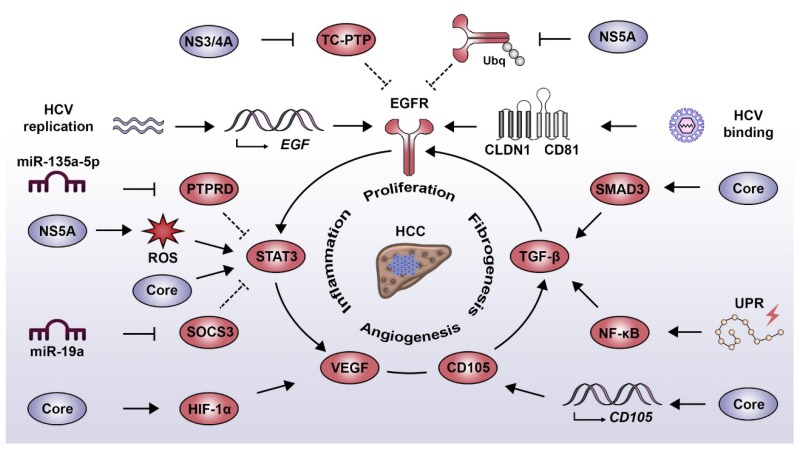
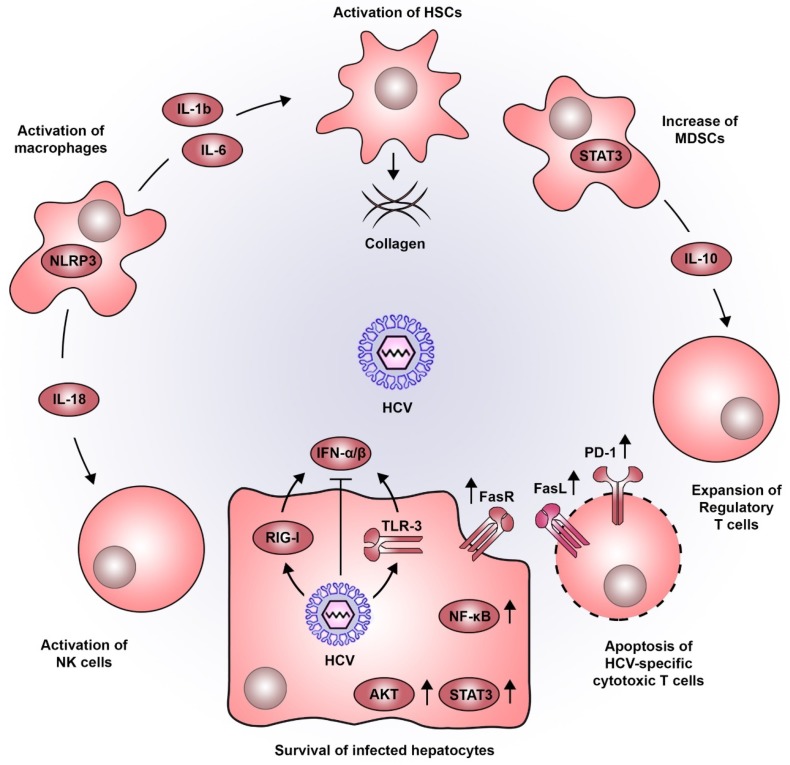
Chronic infection with hepatitis C virus (HCV) is a major cause of hepatocellular carcinoma (HCC). Novel treatments with direct-acting antivirals achieve high rates of sustained virologic response; however, the HCC risk remains elevated in cured patients, especially those with advanced liver disease. Long-term HCV infection causes a persistent and accumulating damage of the liver due to a combination of direct and indirect pro-oncogenic mechanisms. This review describes the processes involved in virus-induced disease progression by viral proteins, derailed signaling, immunity, and persistent epigenetic deregulation, which may be instrumental to develop urgently needed prognostic biomarkers and as targets for novel chemopreventive therapies.
丙型肝炎病毒(HCV)慢性感染是肝细胞癌(HCC)的主要病因。直接作用抗病毒药物的新型治疗可实现高持续病毒学应答率;然而,治愈患者的HCC风险仍然升高,尤其是那些患有晚期肝病的患者。长期HCV感染由于直接和间接促癌机制的共同作用,导致肝脏持续累积损伤。本综述描述了病毒蛋白、信号传导紊乱、免疫以及持续的表观遗传失调所涉及的病毒诱导疾病进展过程,这可能有助于开发急需的预后生物标志物,并作为新型化学预防疗法的靶点。