Pontifícia Universidade Católica do Paraná, Faculdade de Medicina, Laboratório de Doenças Infecciosas Emergentes, Curitiba, PR, Brazil.
Pontifícia Universidade Católica do Paraná, Faculdade de Medicina, Laboratório de Doenças Infecciosas Emergentes, Curitiba, PR, Brazil.
Braz J Infect Dis. 2020 Mar-Apr;24(2):96-103. doi: 10.1016/j.bjid.2020.04.004. Epub 2020 Apr 28.
The emergence of antibiotic resistance is increasing and there are few effective antibiotics to treat infections caused by resistant and multidrug resistant bacterial pathogens. This study aimed to evaluate the in vitro activity of ceftolozane-tazobactam against clinical bacterial isolates from Brazil.
A total of 673 Gram-negative bacterial isolates including Escherichia coli, Klebsiella pneumoniae, Pseudomonas aeruginosa and other Enterobacterales collected from 2016 to 2017 were tested, most of them isolated from patients in intensive care units. Minimum inhibitory concentrations (MIC) were determined by broth microdilution for amikacin, aztreonam, cefepime, cefotaxime, cefoxitin, ceftolozane-tazobactam, ceftazidime, ceftriaxone, ciprofloxacin, colistin, ertapenem, imipenem, levofloxacin, meropenem, and piperacillin-tazobactam using dried panels. Antimicrobial susceptibility results were interpreted according to Clinical and Laboratory Standards Institute criteria.
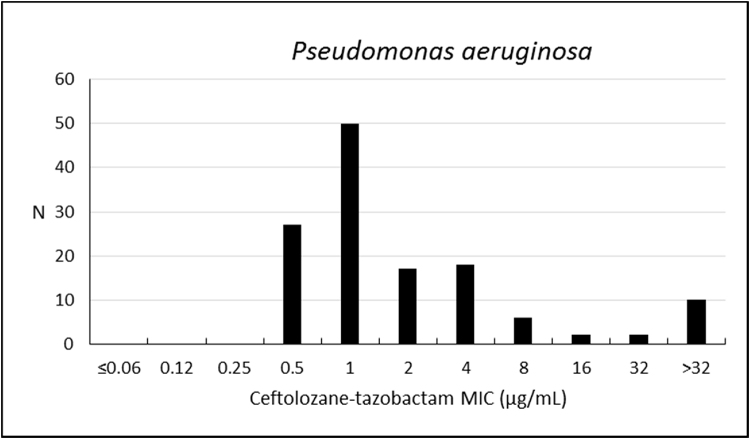
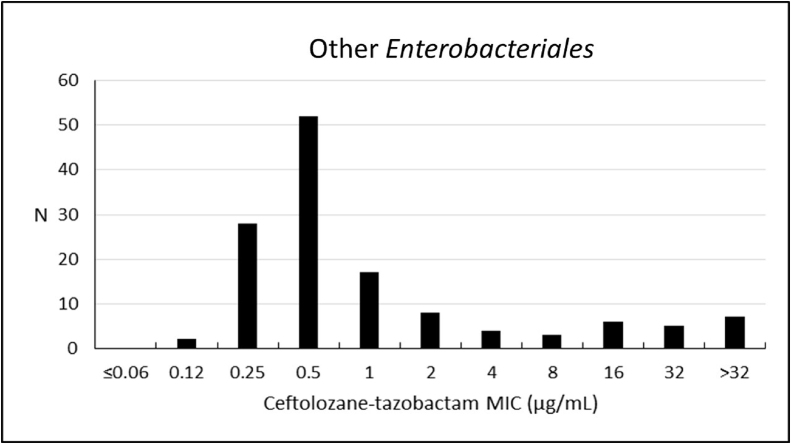
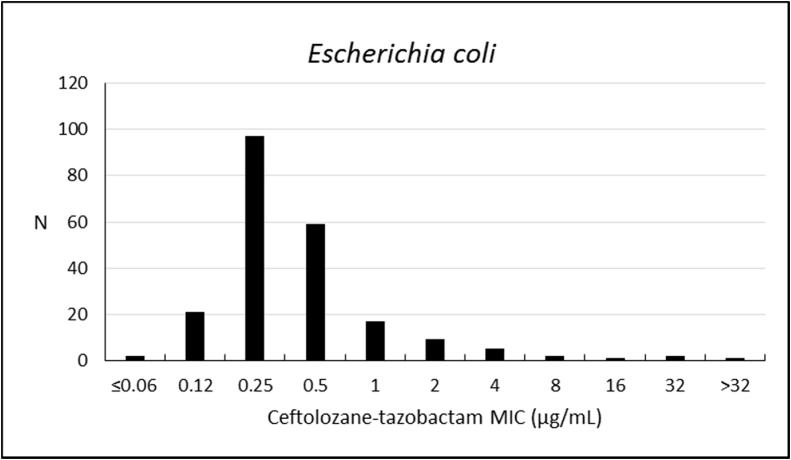
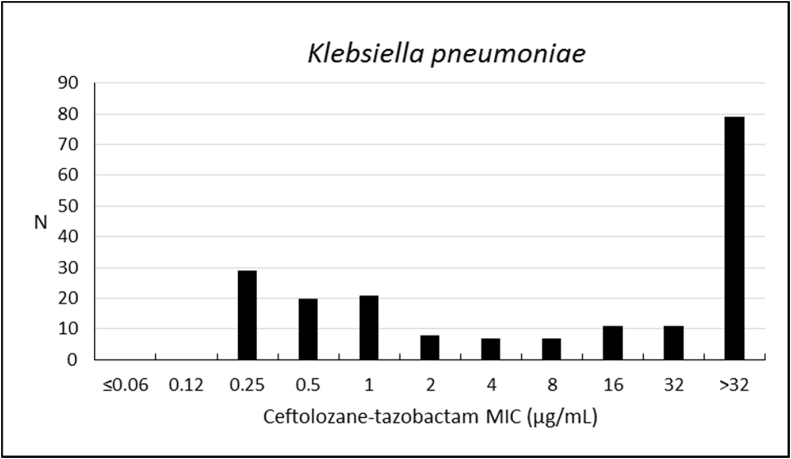
Susceptibility rates to ceftolozane-tazobactam ranged from 40.4% to 94.9%. P. aeruginosa susceptibility rate to ceftolozane-tazobactam was 84.9% (MIC, 1/16μg/mL) and 99.2% to colistin. For E. coli, ceftolozane-tazobactam inhibited 94.9% (MIC, 0.25/1μg/mL) of the microorganisms. The susceptibility rate of K. pneumoniae to ceftolozane-tazobactam was 40.4% (MIC, 16/>32μg/mL). Other Enterobacterales have shown susceptibility rates of 81.1% (MIC, 0.5/16μg/mL) to ceftolozane-tazobactam, 93.9% to meropenem, 90.9% to amikacin (90.9%), and 88.6% to ertapenem. In non-carbapenemase producing isolates, AmpC mutations were found three isolates.
Ceftolozane-tazobactam has shown relevant activity against a large variety of the analyzed microorganisms collected from multiple centers in Brazil, showing promising results even in multidrug resistant strains.
抗生素耐药性的出现正在增加,并且几乎没有有效的抗生素来治疗由耐药和多药耐药细菌病原体引起的感染。本研究旨在评估头孢洛扎他唑巴坦对巴西临床细菌分离株的体外活性。
共检测了 673 株革兰氏阴性细菌分离株,包括 2016 年至 2017 年收集的大肠杆菌、肺炎克雷伯菌、铜绿假单胞菌和其他肠杆菌科细菌,其中大部分分离自重症监护病房的患者。采用干燥板条,通过肉汤微量稀释法测定阿米卡星、氨曲南、头孢吡肟、头孢噻肟、头孢西丁、头孢洛扎他唑巴坦、头孢他啶、头孢曲松、环丙沙星、多粘菌素、厄他培南、亚胺培南、左氧氟沙星、美罗培南和哌拉西林他唑巴坦的最小抑菌浓度(MIC)。根据临床和实验室标准协会标准解释抗菌药物敏感性结果。
头孢洛扎他唑巴坦的敏感性率为 40.4%至 94.9%。铜绿假单胞菌对头孢洛扎他唑巴坦的敏感性率为 84.9%(MIC,1/16μg/mL)和 99.2%对多粘菌素。对于大肠杆菌,头孢洛扎他唑巴坦抑制了 94.9%(MIC,0.25/1μg/mL)的微生物。肺炎克雷伯菌对头孢洛扎他唑巴坦的敏感性率为 40.4%(MIC,16/>32μg/mL)。其他肠杆菌科细菌对头孢洛扎他唑巴坦的敏感性率为 81.1%(MIC,0.5/16μg/mL)、93.9%对美罗培南、90.9%对阿米卡星(90.9%)和 88.6%对厄他培南。在非产碳青霉烯酶的分离株中,发现 3 株分离株有 AmpC 突变。
头孢洛扎他唑巴坦对巴西多个中心收集的大量分析微生物表现出相关活性,即使在多药耐药株中也显示出有希望的结果。