van Kruining Daan, Luo Qian, van Echten-Deckert Gerhild, Mielke Michelle M, Bowman Andrew, Ellis Shane, Oliveira Tiago Gil, Martinez-Martinez Pilar
Division of Neuroscience, School for Mental Health and Neuroscience, Faculty of Health, Medicine, and Life Sciences, Maastricht University, Maastricht, the Netherlands.
LIMES Institute for Membrane Biology and Lipid Biochemistry, Kekulé-Institute, University of Bonn, Bonn, Germany.
Adv Drug Deliv Rev. 2020;159:232-244. doi: 10.1016/j.addr.2020.04.009. Epub 2020 Apr 28.
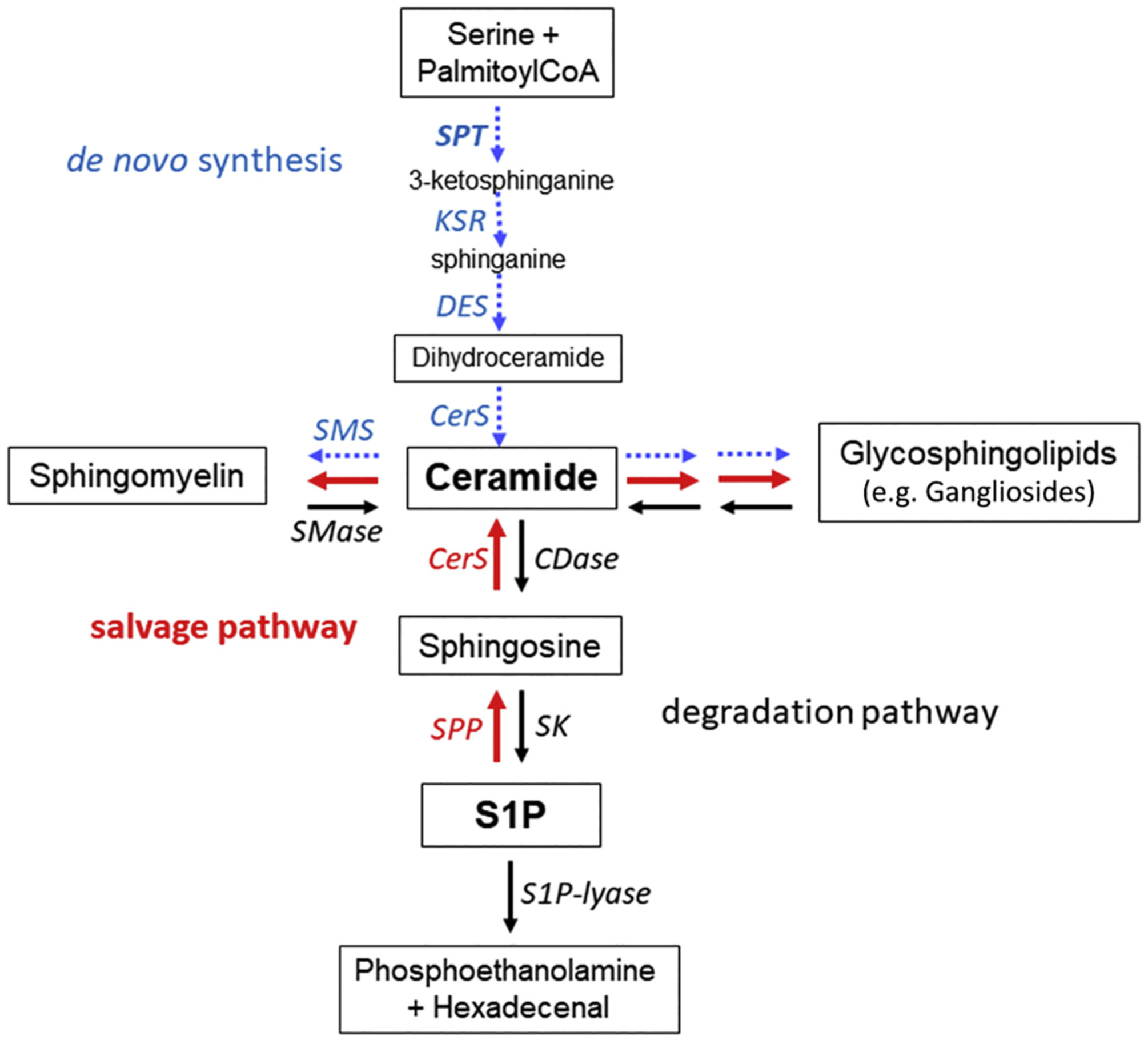
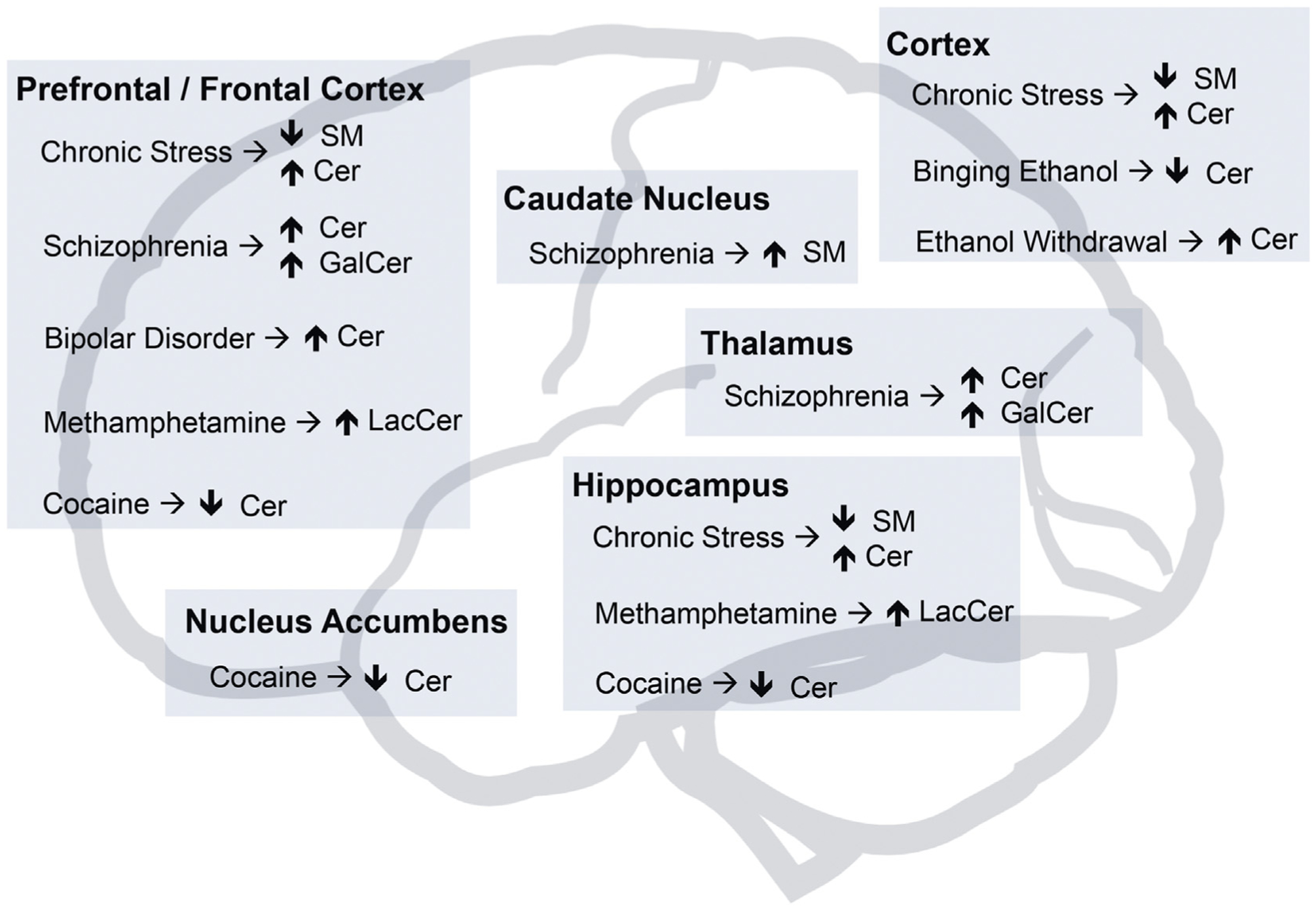
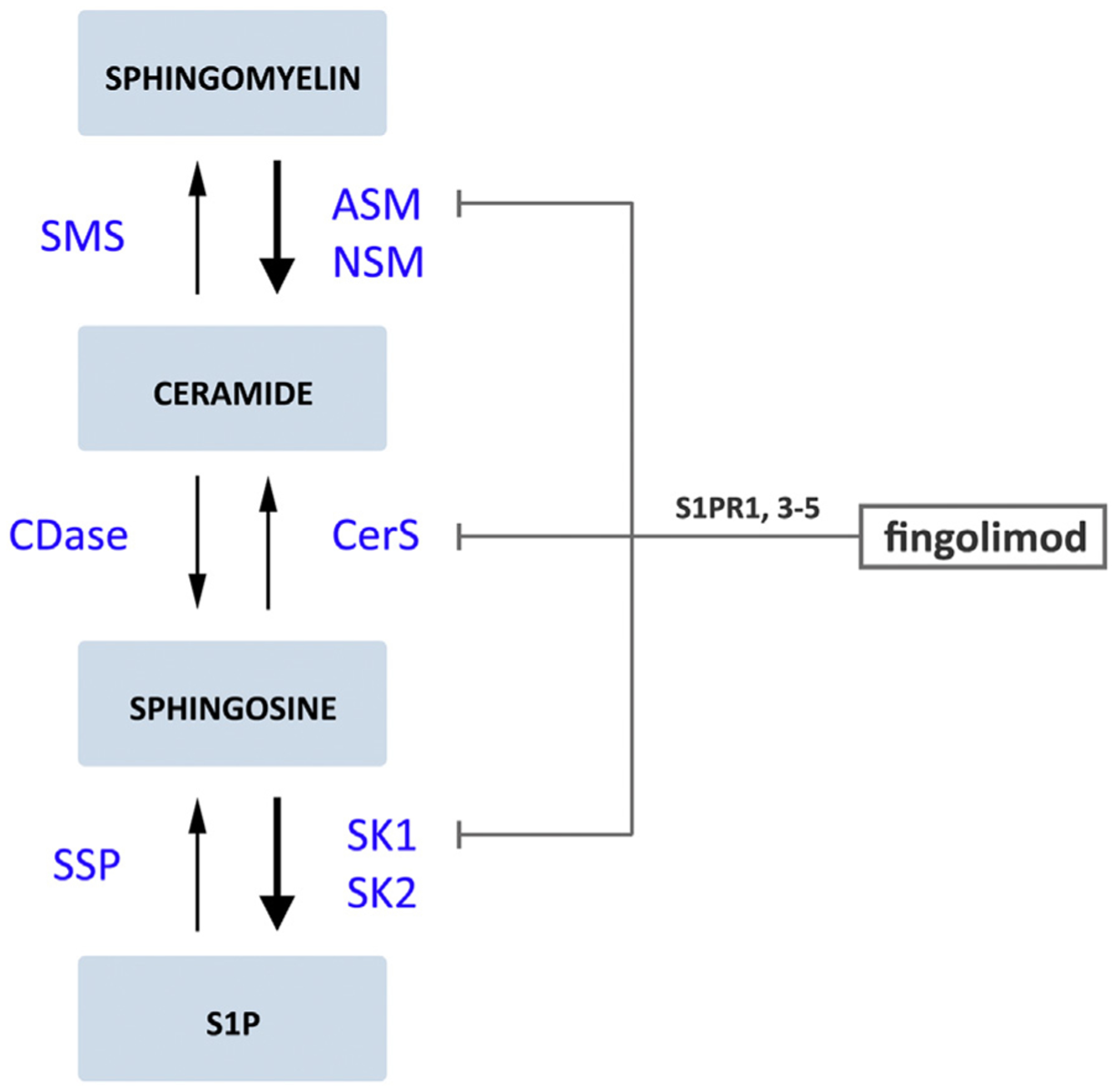
Lipids play an important role in neurodegeneration, neuroinflammation, and psychiatric disorders and an imbalance in sphingolipid levels is associated with disease. Although early diagnosis and intervention of these disorders would clearly have favorable long-term outcomes, no diagnostic tests currently exist that can accurately identify people at risk. Reliable prognostic biomarkers that are easily accessible would be beneficial to determine therapy and treatment response in clinical trials. Recent advances in lipidomic investigation methods have greatly progressed the knowledge of sphingolipids in neurodegenerative and psychiatric disorders over the past decades although more longitudinal studies are needed to understand its exact role in these disorders to be used as potential tools in the clinic. In this review, we give an overview of the current knowledge of sphingolipids in neurodegenerative and psychiatric disorders and explore recent advances in investigation methods. Finally, the potential of sphingolipid metabolism products and signaling molecules as potential biomarkers for diagnosis, prognostic, or surrogate markers of treatment response is discussed.
脂质在神经退行性变、神经炎症和精神疾病中起着重要作用,鞘脂水平失衡与疾病相关。尽管对这些疾病进行早期诊断和干预显然会带来良好的长期结果,但目前尚无能够准确识别高危人群的诊断测试。易于获取的可靠预后生物标志物将有助于在临床试验中确定治疗方法和治疗反应。在过去几十年中,脂质组学研究方法的最新进展极大地增进了我们对神经退行性疾病和精神疾病中鞘脂的认识,不过仍需要更多的纵向研究来了解其在这些疾病中的确切作用,以便将其用作临床潜在工具。在本综述中,我们概述了目前关于神经退行性疾病和精神疾病中鞘脂的知识,并探讨了研究方法的最新进展。最后,讨论了鞘脂代谢产物和信号分子作为诊断、预后或治疗反应替代标志物的潜力。