Podojil Joseph R, Glaser Alexander P, Baker Dylan, Courtois Elise T, Fantini Damiano, Yu Yanni, Eaton Valerie, Sivajothi Santhosh, Chiang Mingyi, Das Arighno, McLaughlin Kimberly A, Robson Paul, Miller Stephen D, Meeks Joshua J
Department of Microbiology and Immunology, Feinberg School of Medicine, Chicago, IL, USA.
Department of Urology, Feinberg School of Medicine, Chicago, IL, USA.
Oncoimmunology. 2020 Apr 16;9(1):1744897. doi: 10.1080/2162402X.2020.1744897. eCollection 2020.
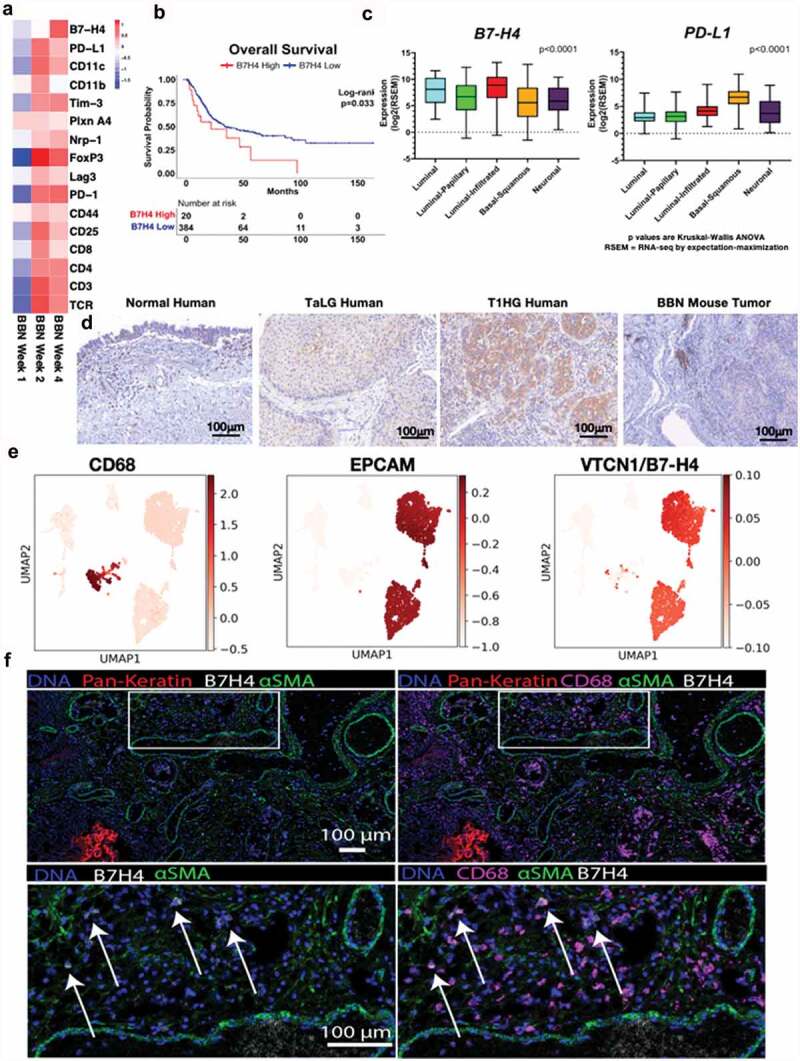
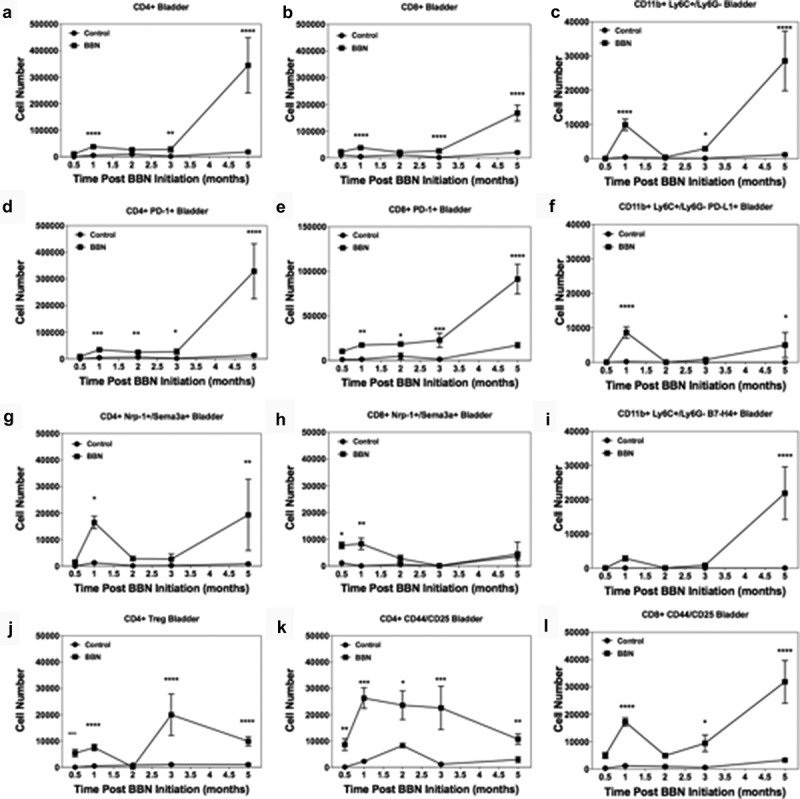
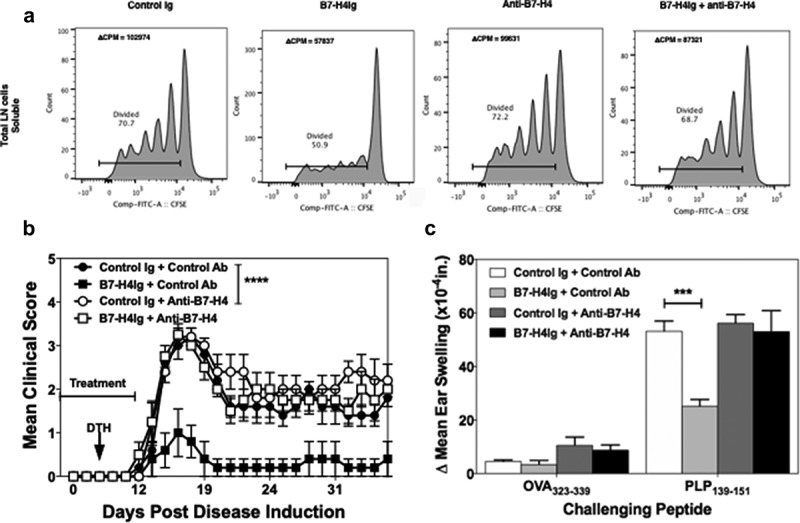
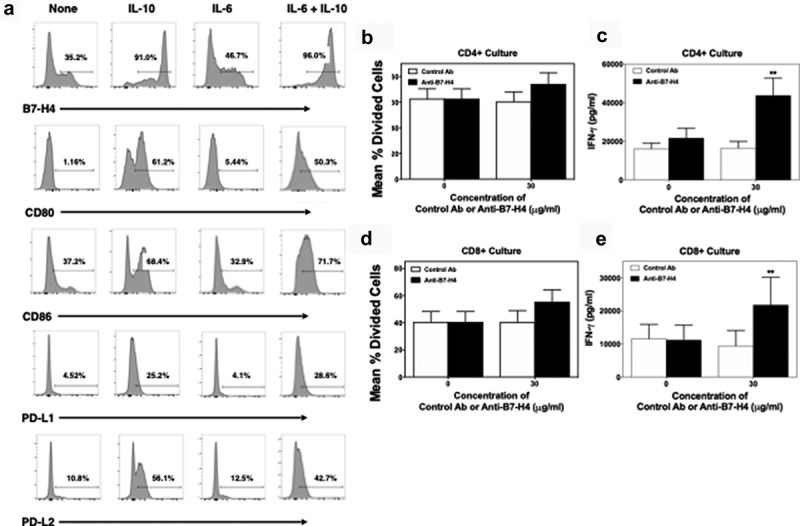
Patients with locally advanced and metastatic urothelial carcinoma have a low survival rate (median 15.7 months, 13.1-17.8), with only a 23% response rate to monotherapy treatment with anti-PDL1 checkpoint immunotherapy. To identify new therapeutic targets, we profiled the immune regulatory signatures during murine cancer development using the BBN carcinogen and identified an increase in the expression of the T cell inhibitory protein B7-H4 (VTCN1, B7S1, B7X). B7-H4 expression temporally correlated with decreased lymphocyte infiltration. While the increase in B7-H4 expression within the bladder by CD11b monocytes is shared with human cancers, B7-H4 expression has not been previously identified in other murine cancer models. Higher expression of B7-H4 was associated with worse survival in muscle-invasive bladder cancer in humans, and increased B7-H4 expression was identified in luminal and luminal-papillary subtypes of bladder cancer. Evaluation of B7-H4 by single-cell RNA-Seq and immune mass cytometry of human bladder tumors found that B7-H4 is expressed in both the epithelium of urothelial carcinoma and CD68+ macrophages within the tumor. To investigate the function of B7-H4, treatment of human monocyte and T cell co-cultures with a B7-H4 blocking antibody resulted in enhanced IFN-γ secretion by CD4 and CD8 T cells. Additionally, anti-B7-H4 antibody treatment of BBN-carcinogen bladder cancers resulted in decreased tumor size, increased CD8 T cell infiltration within the bladder, and a complimentary decrease in tumor-infiltrating T regulatory cells (Tregs). Furthermore, treatment with a combination of anti-PD-1 and anti-B7-H4 antibodies resulted in a significant reduction in tumor stage, a reduction in tumor size, and an increased level of tumor necrosis. These findings suggest that antibodies targeting B7-H4 may be a viable strategy for bladder cancers unresponsive to PD-1 checkpoint inhibitors.
局部晚期和转移性尿路上皮癌患者的生存率较低(中位生存期15.7个月,13.1 - 17.8个月),抗PDL1检查点免疫疗法单药治疗的缓解率仅为23%。为了确定新的治疗靶点,我们使用BBN致癌物对小鼠癌症发展过程中的免疫调节特征进行了分析,并发现T细胞抑制蛋白B7-H4(VTCN1、B7S1、B7X)的表达增加。B7-H4表达与淋巴细胞浸润减少在时间上相关。虽然CD11b单核细胞在膀胱内B7-H4表达的增加在人类癌症中也存在,但B7-H4表达在其他小鼠癌症模型中尚未被发现。B7-H4表达较高与人类肌肉浸润性膀胱癌的较差生存率相关,并且在膀胱癌的管腔和管腔乳头状亚型中发现B7-H4表达增加。通过单细胞RNA测序和人类膀胱肿瘤的免疫质谱流式细胞术对B7-H4进行评估发现,B7-H4在尿路上皮癌上皮细胞和肿瘤内的CD68 +巨噬细胞中均有表达。为了研究B7-H4的功能,用B7-H4阻断抗体处理人单核细胞和T细胞共培养物导致CD4和CD8 T细胞分泌的IFN-γ增加。此外,用抗B7-H4抗体治疗BBN致癌物诱导的膀胱癌导致肿瘤大小减小、膀胱内CD8 T细胞浸润增加,以及肿瘤浸润性调节性T细胞(Tregs)的相应减少。此外,联合使用抗PD-1和抗B7-H4抗体治疗导致肿瘤分期显著降低、肿瘤大小减小以及肿瘤坏死水平增加。这些发现表明,靶向B7-H4的抗体可能是对PD-1检查点抑制剂无反应的膀胱癌的一种可行策略。