Claire K. Ankuda ( Claire. ankuda@mssm. edu ) is an assistant professor in the Department of Geriatrics and Palliative Medicine, Icahn School of Medicine at Mount Sinai, in New York City.
Katherine A. Ornstein is an associate professor in the Department of Geriatrics and Palliative Medicine and the Institute for Translational Epidemiology, Icahn School of Medicine at Mount Sinai.
Health Aff (Millwood). 2020 May;39(5):809-818. doi: 10.1377/hlthaff.2019.01070.
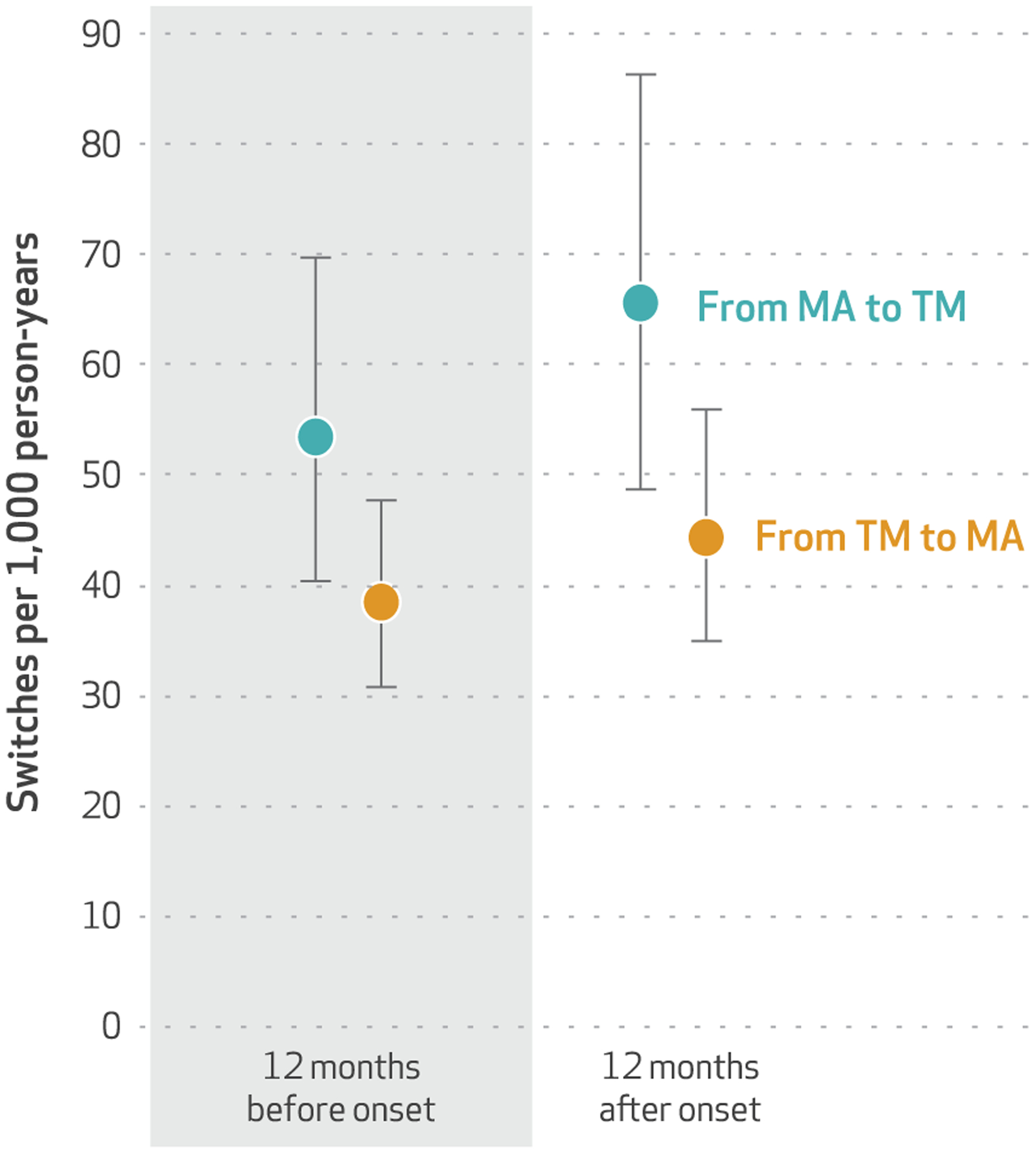
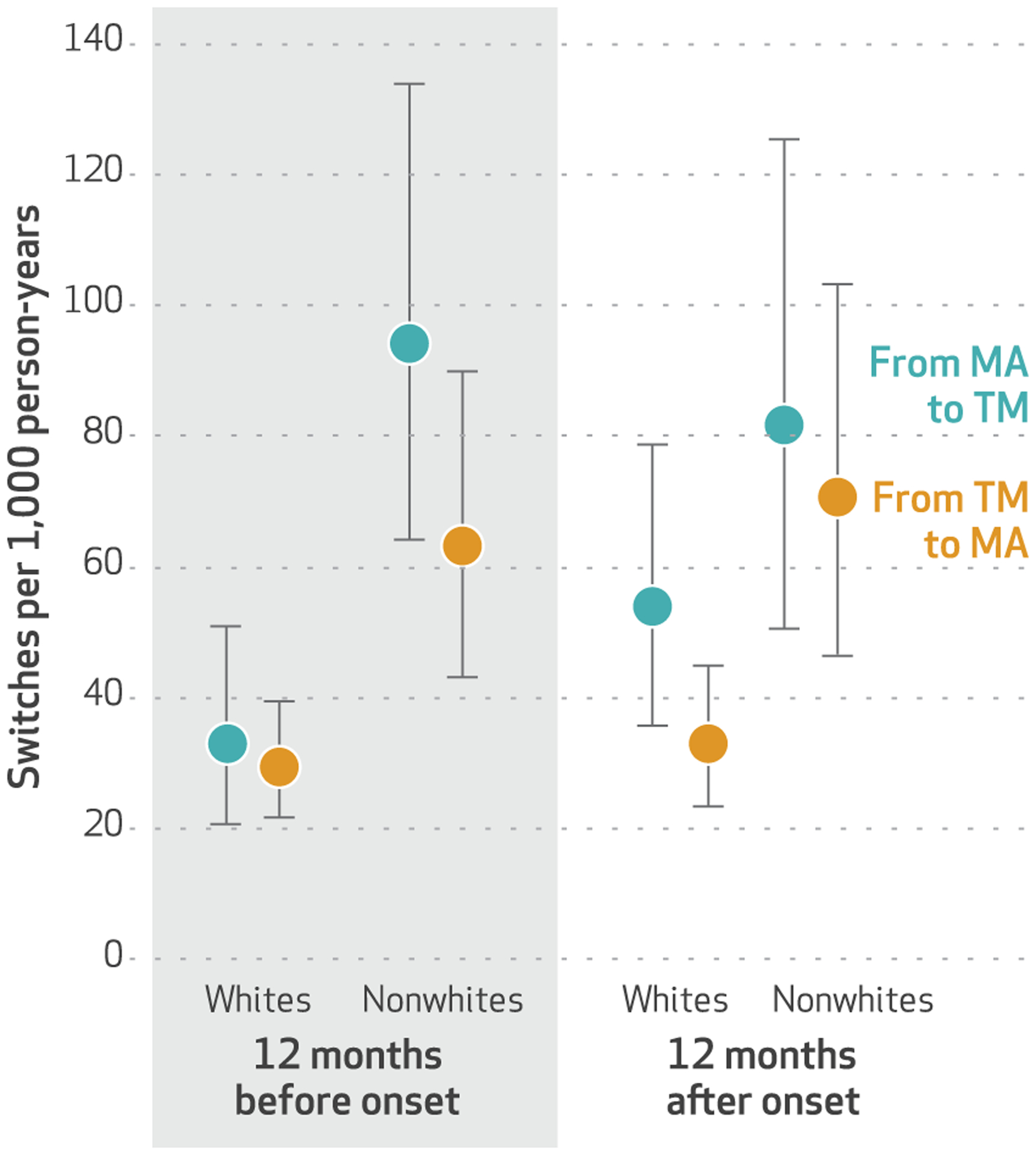
Medicare Advantage (MA) plans have increasing flexibility to provide nonmedical services to support older adults aging in place in the community. However, prior research has suggested that enrollees with functional disability (hereafter, "disability") were more likely than those without disability to leave MA plans. This indicates that MA plans might not meet the needs of older adults with disability. We used data for 2011-16 from the National Health and Aging Trends Study linked to Medicare claims to measure and characterize switches in either direction between Medicare Advantage and traditional Medicare in the twelve months before and after onset of disability. While the rate of switches from Medicare Advantage to traditional Medicare increased slightly after disability onset, people with greater levels of disability were more likely to switch to traditional Medicare, compared to those with lower levels: 36 percent of those who switched from Medicare Advantage to traditional Medicare needed help with two or more activities of daily living, compared to 14.3 percent of those who switched from traditional Medicare to Medicare Advantage. This indicates the potential benefit of including functional measures in MA plan risk adjustment and quality measures. Furthermore, the highest-need older adults with disability may experience lower-quality care in Medicare Advantage and thus leave before accessing the program's expanded benefits.
医疗保险优势(MA)计划在为支持社区中老年人就地老龄化提供非医疗服务方面具有越来越大的灵活性。然而,先前的研究表明,有功能障碍(以下简称“残疾”)的参保人比没有残疾的参保人更有可能离开 MA 计划。这表明 MA 计划可能无法满足残疾老年人的需求。我们使用了 2011-2016 年来自全国健康老龄化趋势研究的数据,这些数据与医疗保险索赔相关联,以衡量和描述残疾发生前后十二个月内医疗保险优势和传统医疗保险之间的双向转换。虽然残疾发生后,从医疗保险优势向传统医疗保险的转换率略有增加,但与残疾程度较低的人相比,残疾程度较高的人更有可能转向传统医疗保险:从医疗保险优势转向传统医疗保险的人中,有 36%的人需要帮助完成两项或多项日常生活活动,而从传统医疗保险转向医疗保险优势的人中,这一比例为 14.3%。这表明在 MA 计划风险调整和质量措施中纳入功能测量的潜在好处。此外,残疾程度最高的高需求老年人在医疗保险优势中可能会体验到较低质量的护理,因此在获得该计划扩大的福利之前就会离开。