Thapa Ngeemasara, Park Hye Jin, Yang Ja-Gyeong, Son Haeun, Jang Minwoo, Lee Jihyeon, Kang Seung Wan, Park Kyung Won, Park Hyuntae
Department of Health Sciences, Graduate School, Dong-A University, Busan 49315, Korea.
Laboratory of Smart Healthcare, Dong-A University, Busan 49315, Korea.
J Clin Med. 2020 Apr 29;9(5):1283. doi: 10.3390/jcm9051283.
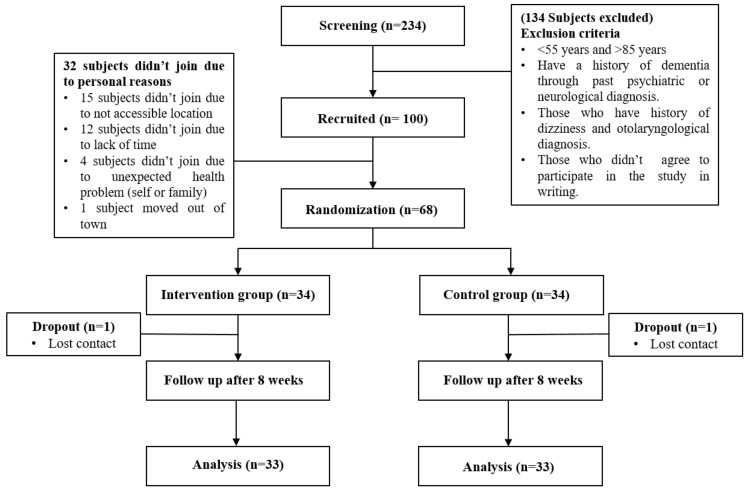
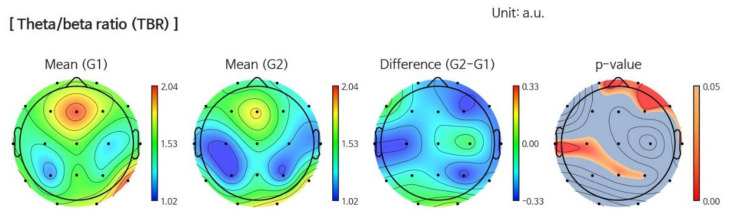
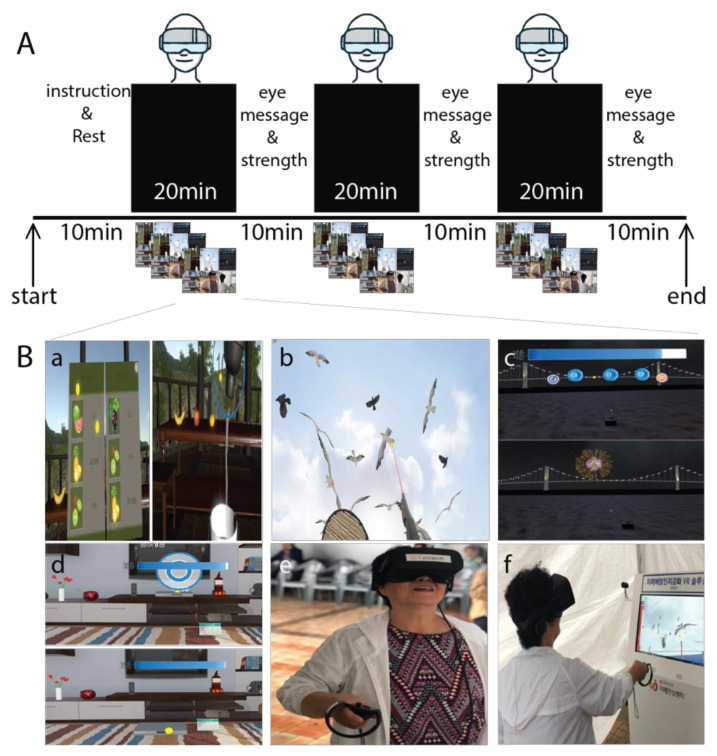
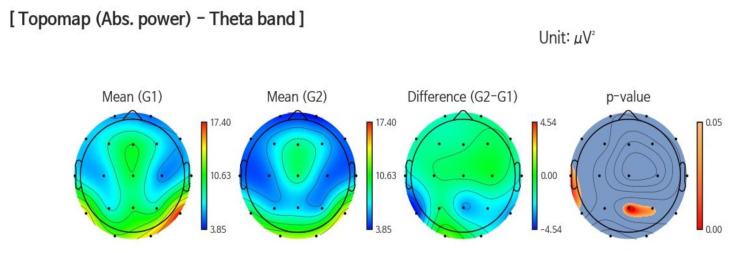
This study aimed to investigate the association between a virtual reality (VR) intervention program and cognitive, brain and physical functions in high-risk older adults. In a randomized controlled trial, we enrolled 68 individuals with mild cognitive impairment (MCI). The MCI diagnosis was based on medical evaluations through a clinical interview conducted by a dementia specialist. Cognitive assessments were performed by neuropsychologists according to standardized methods, including the Mini-Mental State Examination (MMSE) and frontal cognitive function: trail making test (TMT) A & B, and symbol digit substitute test (SDST). Resting state electroencephalogram (EEG) was measured in eyes open and eyes closed conditions for 5 minutes each, with a 19-channel wireless EEG device. The VR intervention program (3 times/week, 100 min each session) comprised four types of VR game-based content to improve the attention, memory and processing speed. Analysis of the subjects for group-time interactions revealed that the intervention group exhibited a significantly improved executive function and brain function at the resting state. Additionally, gait speed and mobility were also significantly improved between and after the follow-up. The VR-based training program improved cognitive and physical function in patients with MCI relative to controls. Encouraging patients to perform VR and game-based training may be beneficial to prevent cognitive decline.
本研究旨在调查虚拟现实(VR)干预项目与高危老年人认知、大脑及身体功能之间的关联。在一项随机对照试验中,我们招募了68名轻度认知障碍(MCI)患者。MCI诊断基于痴呆症专家通过临床访谈进行的医学评估。认知评估由神经心理学家按照标准化方法进行,包括简易精神状态检查表(MMSE)以及额叶认知功能:连线测验(TMT)A和B,还有符号数字替换测验(SDST)。使用19通道无线脑电图设备,在睁眼和闭眼状态下分别测量5分钟静息态脑电图(EEG)。VR干预项目(每周3次,每次100分钟)包含四种基于VR游戏的内容,以提高注意力、记忆力和处理速度。对受试者进行组间时间交互分析发现,干预组在静息状态下的执行功能和大脑功能有显著改善。此外,随访前后的步速和活动能力也有显著提高。相对于对照组,基于VR的训练项目改善了MCI患者的认知和身体功能。鼓励患者进行VR和基于游戏的训练可能有助于预防认知衰退。