Aggarwal Vaishali, Tuli Hardeep Singh, Kaur Jagjit, Aggarwal Diwakar, Parashar Gaurav, Chaturvedi Parashar Nidarshana, Kulkarni Samruddhi, Kaur Ginpreet, Sak Katrin, Kumar Manoj, Ahn Kwang Seok
Department of Histopathology, Postgraduate Institute of Medical Education and Research (PGIMER), Chandigarh, Punjab 160012, India.
Department of Biotechnology, Maharishi Markandeshwar (Deemed to be University), Mullana-Ambala, Haryana 133207, India.
Biomedicines. 2020 Apr 30;8(5):103. doi: 10.3390/biomedicines8050103.
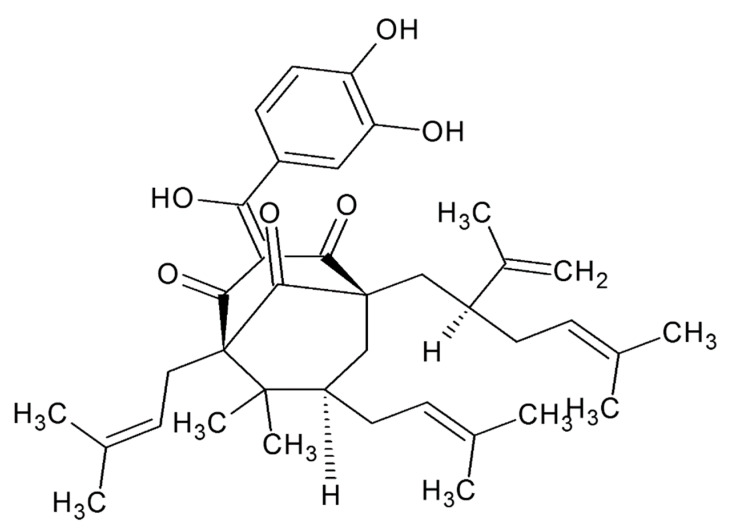
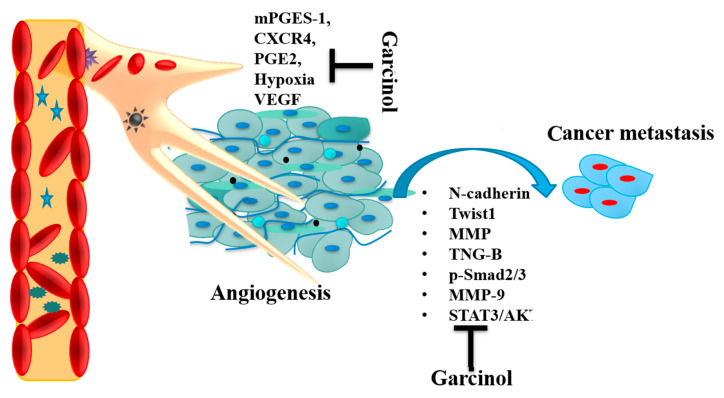
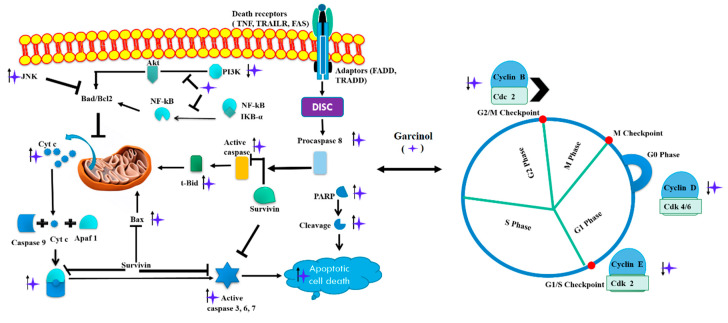
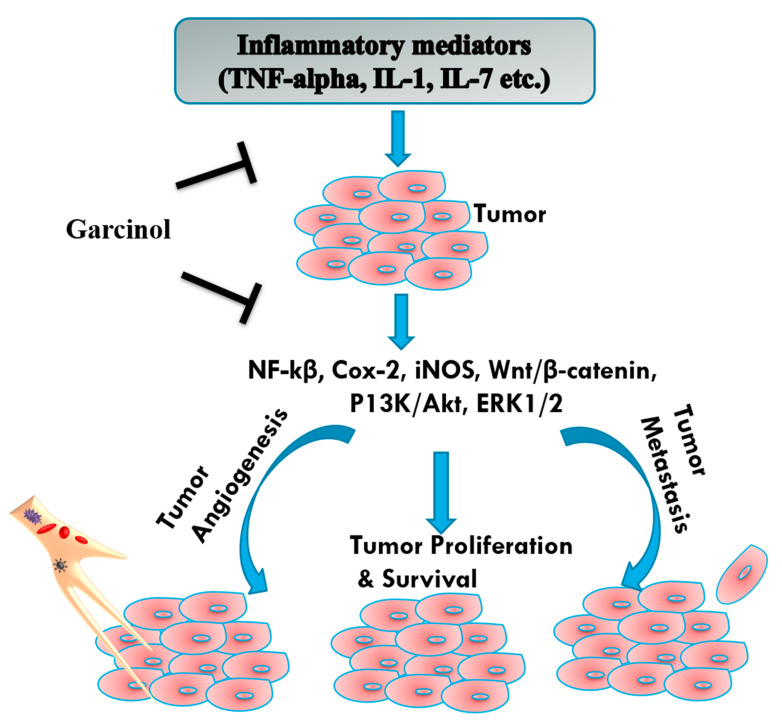
Garcinol, a polyisoprenylated benzophenone, is the medicinal component obtained from fruits and leaves of () and has traditionally been extensively used for its antioxidant and anti-inflammatory properties. In addition, it has been also been experimentally illustrated to elicit anti-cancer properties. Several in vitro and in vivo studies have illustrated the potential therapeutic efficiency of garcinol in management of different malignancies. It mainly acts as an inhibitor of cellular processes via regulation of transcription factors NF-κB and JAK/STAT3 in tumor cells and have been demonstrated to effectively inhibit growth of malignant cell population. Numerous studies have highlighted the anti-neoplastic potential of garcinol in different oncological transformations including colon cancer, breast cancer, prostate cancer, head and neck cancer, hepatocellular carcinoma, etc. However, use of garcinol is still in its pre-clinical stage and this is mainly attributed to the limitations of conclusive evaluation of pharmacological parameters. This necessitates evaluation of garcinol pharmacokinetics to precisely identify an appropriate dose and route of administration, tolerability, and potency under physiological conditions along with characterization of a therapeutic index. Hence, the research is presently ongoing in the dimension of exploring the precise metabolic mechanism of garcinol. Despite various lacunae, garcinol has presented with promising anti-cancer effects. Hence, this review is motivated by the constantly emerging and promising positive anti-cancerous effects of garcinol. This review is the first effort to summarize the mechanism of action of garcinol in modulation of anti-cancer effect via regulation of different cellular processes.
藤黄脂,一种多异戊二烯基化二苯甲酮,是从()的果实和叶子中提取的药用成分,传统上因其抗氧化和抗炎特性而被广泛使用。此外,实验还表明它具有抗癌特性。多项体外和体内研究表明藤黄脂在治疗不同恶性肿瘤方面具有潜在的治疗效果。它主要通过调节肿瘤细胞中的转录因子NF-κB和JAK/STAT3来抑制细胞过程,并已被证明能有效抑制恶性细胞群体的生长。众多研究强调了藤黄脂在不同肿瘤转化中的抗肿瘤潜力,包括结肠癌、乳腺癌、前列腺癌、头颈癌、肝细胞癌等。然而,藤黄脂的使用仍处于临床前阶段,这主要归因于药理学参数的确定性评估存在局限性。这就需要评估藤黄脂的药代动力学,以精确确定生理条件下的合适剂量、给药途径、耐受性和效力,并确定治疗指数。因此,目前正在探索藤黄脂精确代谢机制方面开展研究。尽管存在各种不足,但藤黄脂已呈现出有前景的抗癌效果。因此,本综述的动机是藤黄脂不断出现且有前景的积极抗癌作用。本综述是首次对藤黄脂通过调节不同细胞过程来调节抗癌作用的作用机制进行总结。