• 文献检索
  • 文档翻译
  • 深度研究
  • 学术资讯
  • Suppr Zotero 插件Zotero 插件
  • 邀请有礼
  • 套餐&价格
  • 历史记录
应用&插件
Suppr Zotero 插件Zotero 插件浏览器插件Mac 客户端Windows 客户端微信小程序
定价
高级版会员购买积分包购买API积分包
服务
文献检索文档翻译深度研究API 文档MCP 服务
关于我们
关于 Suppr公司介绍联系我们用户协议隐私条款
关注我们

Suppr 超能文献

核心技术专利:CN118964589B侵权必究
粤ICP备2023148730 号-1Suppr @ 2026

文献检索

告别复杂PubMed语法,用中文像聊天一样搜索,搜遍4000万医学文献。AI智能推荐,让科研检索更轻松。

立即免费搜索

文件翻译

保留排版,准确专业,支持PDF/Word/PPT等文件格式,支持 12+语言互译。

免费翻译文档

深度研究

AI帮你快速写综述,25分钟生成高质量综述,智能提取关键信息,辅助科研写作。

立即免费体验

COVID-19 大流行期间新发嗅觉丧失后的早期康复 - 一项观察性队列研究。

Early recovery following new onset anosmia during the COVID-19 pandemic - an observational cohort study.

机构信息

Guy's and St Thomas' Hospitals, London, SE1 9RT, UK.

King's College, London, UK.

出版信息

J Otolaryngol Head Neck Surg. 2020 May 4;49(1):26. doi: 10.1186/s40463-020-00423-8.

DOI:10.1186/s40463-020-00423-8
PMID:32366299
原文链接:https://pmc.ncbi.nlm.nih.gov/articles/PMC7196882/
Abstract

BACKGROUND

A rapidly evolving evidence suggests that smell and taste disturbance are common symptoms in COVID-19 infection. As yet there are no reports on duration and recovery rates. We set out to characterise patients reporting new onset smell and taste disturbance during the COVID-19 pandemic and report on early recovery rates.

METHODS

Online Survey of patients reporting self-diagnosed new onset smell and taste disturbance during the COVID-19 pandemic, with 1 week follow-up.

RESULTS

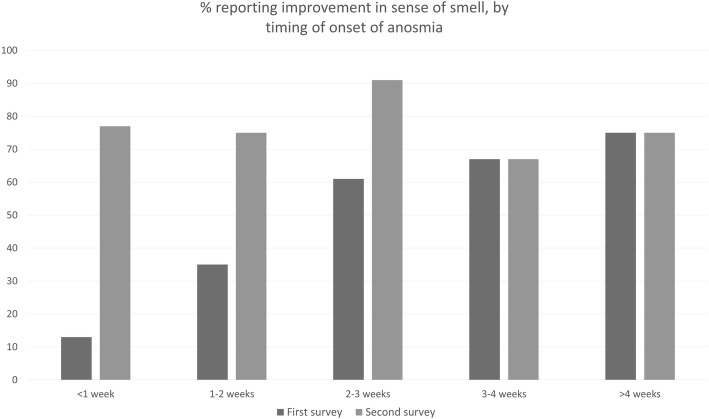
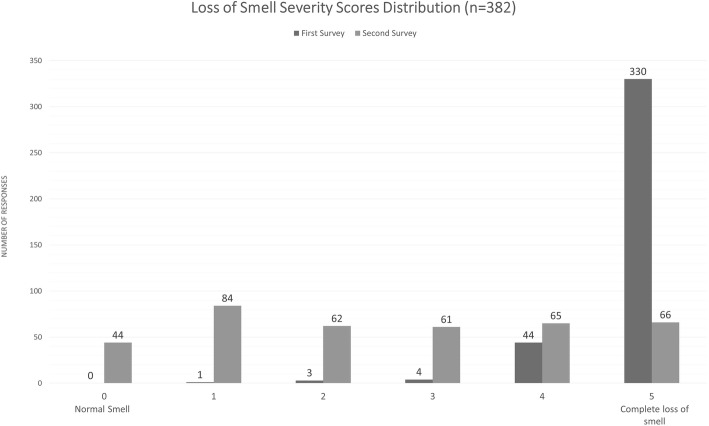
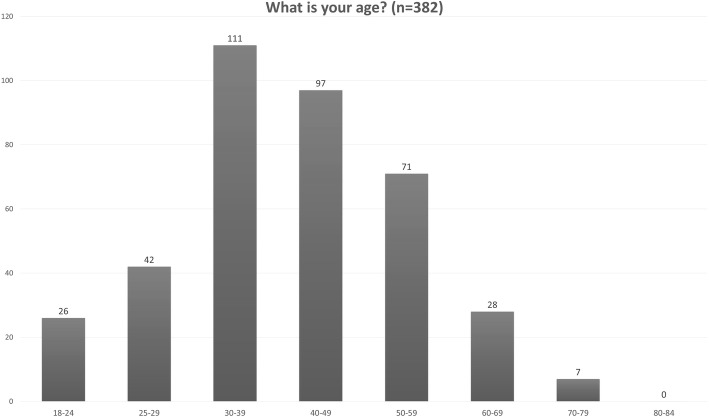
Three hundred eighty-two patents completed bot an initial and follow-up survey. 86.4% reported complete anosmia and a further 11.5% a very severe loss of smell at the time of completing the first survey. At follow-up 1 week later, there is already significant improvement in self-rating of severity of olfactory loss. 80.1% report lower severity scores at follow-up, 17.6% are unchanged and 1.9% are worse. 11.5% already report compete resolution at follow up, while 17.3% report persistent complete loss of smell, with reported duration being 1 to over 4 weeks. This is reflected in the overall cumulative improvement rate of 79% patients overall in the interval between surveys.

CONCLUSIONS

A review of the growing evidence base supports the likelihood that out cohort have suffered olfactory loss as part of COVID-19 infection. While early recovery rates are encouraging, long term rates will need to be further investigated and there may be an increase in patients with persistent post-viral loss as a result of the pandemic. We further call for loss of sense of smell to be formerly recognised as a marker of COVID-19 infection.

摘要

背景

不断涌现的证据表明,嗅觉和味觉障碍是 COVID-19 感染的常见症状。目前尚无关于持续时间和恢复率的报告。我们旨在描述在 COVID-19 大流行期间报告新发嗅觉和味觉障碍的患者,并报告早期恢复率。

方法

对在 COVID-19 大流行期间报告自我诊断新发嗅觉和味觉障碍的患者进行在线调查,并进行为期 1 周的随访。

结果

382 名患者完成了初始和随访调查。86.4%的患者报告完全嗅觉丧失,另有 11.5%的患者在首次调查时嗅觉严重丧失。在 1 周后的随访中,自我评估嗅觉丧失的严重程度已经有了显著改善。80.1%的患者报告在随访时严重程度评分较低,17.6%的患者无变化,1.9%的患者更严重。11.5%的患者已经报告完全缓解,而 17.3%的患者报告持续完全嗅觉丧失,报告的持续时间为 1 周至 4 周以上。这反映在两次调查之间的 79%的患者总体上的累积改善率。

结论

对不断增加的证据基础的回顾支持了我们的队列很可能已经遭受了 COVID-19 感染引起的嗅觉丧失。虽然早期恢复率令人鼓舞,但需要进一步调查长期的恢复率,并且由于大流行,可能会有更多的患者出现持续性病毒后嗅觉丧失。我们进一步呼吁将嗅觉丧失正式确认为 COVID-19 感染的标志物。
https://cdn.ncbi.nlm.nih.gov/pmc/blobs/7a02/7197150/94bb2a143ff9/40463_2020_423_Fig3_HTML.jpg
https://cdn.ncbi.nlm.nih.gov/pmc/blobs/7a02/7197150/a7d943943aa5/40463_2020_423_Fig1_HTML.jpg
https://cdn.ncbi.nlm.nih.gov/pmc/blobs/7a02/7197150/75a1692574eb/40463_2020_423_Fig2_HTML.jpg
https://cdn.ncbi.nlm.nih.gov/pmc/blobs/7a02/7197150/94bb2a143ff9/40463_2020_423_Fig3_HTML.jpg
https://cdn.ncbi.nlm.nih.gov/pmc/blobs/7a02/7197150/a7d943943aa5/40463_2020_423_Fig1_HTML.jpg
https://cdn.ncbi.nlm.nih.gov/pmc/blobs/7a02/7197150/75a1692574eb/40463_2020_423_Fig2_HTML.jpg
https://cdn.ncbi.nlm.nih.gov/pmc/blobs/7a02/7197150/94bb2a143ff9/40463_2020_423_Fig3_HTML.jpg

相似文献

1
Early recovery following new onset anosmia during the COVID-19 pandemic - an observational cohort study.COVID-19 大流行期间新发嗅觉丧失后的早期康复 - 一项观察性队列研究。
J Otolaryngol Head Neck Surg. 2020 May 4;49(1):26. doi: 10.1186/s40463-020-00423-8.
2
Olfactory and gustatory dysfunctions as a clinical presentation of mild-to-moderate forms of the coronavirus disease (COVID-19): a multicenter European study.嗅觉和味觉障碍作为冠状病毒病(COVID-19)轻至中度形式的临床特征:一项多中心欧洲研究。
Eur Arch Otorhinolaryngol. 2020 Aug;277(8):2251-2261. doi: 10.1007/s00405-020-05965-1. Epub 2020 Apr 6.
3
Smell and Taste Dysfunction in COVID-19 Is Associated With Younger Age in Ambulatory Settings: A Multicenter Cross-Sectional Study.在门诊环境中,COVID-19 嗅觉和味觉障碍与年龄较小有关:一项多中心横断面研究。
J Investig Allergol Clin Immunol. 2020;30(5):346-357. doi: 10.18176/jiaci.0595. Epub 2020 Jun 17.
4
The role of self-reported smell and taste disorders in suspected COVID‑19.自我报告的嗅觉和味觉障碍在疑似 COVID-19 中的作用。
Eur Arch Otorhinolaryngol. 2020 Sep;277(9):2625-2630. doi: 10.1007/s00405-020-06069-6. Epub 2020 May 23.
5
Predictive Value of Sudden Olfactory Loss in the Diagnosis of COVID-19.突发嗅觉丧失在COVID-19诊断中的预测价值
ORL J Otorhinolaryngol Relat Spec. 2020;82(4):175-180. doi: 10.1159/000509143. Epub 2020 Jun 11.
6
Association of chemosensory dysfunction and COVID-19 in patients presenting with influenza-like symptoms.味觉和嗅觉功能障碍与以流感样症状就诊的 COVID-19 患者的关联。
Int Forum Allergy Rhinol. 2020 Jul;10(7):806-813. doi: 10.1002/alr.22579. Epub 2020 Jun 1.
7
Early recovery patterns of olfactory disorders in COVID-19 patients; a clinical cohort study.COVID-19 患者嗅觉障碍的早期恢复模式:一项临床队列研究。
Am J Otolaryngol. 2020 Nov-Dec;41(6):102725. doi: 10.1016/j.amjoto.2020.102725. Epub 2020 Sep 14.
8
Prevalence and Duration of Acute Loss of Smell or Taste in COVID-19 Patients.新型冠状病毒肺炎患者急性嗅觉或味觉丧失的流行率和持续时间。
J Korean Med Sci. 2020 May 11;35(18):e174. doi: 10.3346/jkms.2020.35.e174.
9
Olfactory Dysfunction in the COVID-19 Outbreak.新冠疫情中的嗅觉功能障碍。
J Investig Allergol Clin Immunol. 2020;30(5):317-326. doi: 10.18176/jiaci.0567. Epub 2020 May 14.
10
COVID-19 Anosmia Reporting Tool: Initial Findings.COVID-19 嗅觉丧失报告工具:初步研究结果。
Otolaryngol Head Neck Surg. 2020 Jul;163(1):132-134. doi: 10.1177/0194599820922992. Epub 2020 Apr 28.

引用本文的文献

1
Psychological Distress in Patients with Long-lasting COVID-19 Olfactory Dysfunction.长期新冠嗅觉功能障碍患者的心理困扰
J Otolaryngol Head Neck Surg. 2025 Jan-Dec;54:19160216251328960. doi: 10.1177/19160216251328960. Epub 2025 May 3.
2
SARS-CoV-2-induced sensory perturbations: A narrative review of clinical phenotypes, molecular pathologies, and possible interventions.严重急性呼吸综合征冠状病毒2(SARS-CoV-2)引起的感觉障碍:临床表型、分子病理学及可能干预措施的叙述性综述
Brain Behav Immun Health. 2025 Mar 24;45:100983. doi: 10.1016/j.bbih.2025.100983. eCollection 2025 May.
3
Olfactory dysfunction in COVID-19; Self-report or olfactory dysfunction test?

本文引用的文献

1
Is loss of sense of smell a diagnostic marker in COVID-19: A systematic review and meta-analysis.嗅觉丧失是否为 COVID-19 的诊断标志物:系统评价和荟萃分析。
Clin Otolaryngol. 2020 Nov;45(6):914-922. doi: 10.1111/coa.13620. Epub 2020 Sep 16.
2
COVID-19 Anosmia Reporting Tool: Initial Findings.COVID-19 嗅觉丧失报告工具:初步研究结果。
Otolaryngol Head Neck Surg. 2020 Jul;163(1):132-134. doi: 10.1177/0194599820922992. Epub 2020 Apr 28.
3
Association of chemosensory dysfunction and COVID-19 in patients presenting with influenza-like symptoms.
新型冠状病毒肺炎中的嗅觉功能障碍;自我报告还是嗅觉功能障碍测试?
Caspian J Intern Med. 2024 Oct 19;16(1):37-46. doi: 10.22088/cjim.16.1.37. eCollection 2025 Winter.
4
COVID-19 and Mental Health: A "Pandemic Within a Pandemic".新冠病毒与精神健康:一场“大流行中的大流行”。
Adv Exp Med Biol. 2024;1458:1-18. doi: 10.1007/978-3-031-61943-4_1.
5
The long-term effect of COVID-19 infection on olfaction and taste; a prospective analysis.COVID-19 感染对嗅觉和味觉的长期影响;一项前瞻性分析。
Eur Arch Otorhinolaryngol. 2024 Nov;281(11):6001-6007. doi: 10.1007/s00405-024-08827-2. Epub 2024 Jul 8.
6
Recovery rates and long-term olfactory dysfunction following COVID-19 infection.新冠病毒感染后的恢复率及长期嗅觉功能障碍
World J Otorhinolaryngol Head Neck Surg. 2024 Mar 19;10(2):121-128. doi: 10.1002/wjo2.163. eCollection 2024 Jun.
7
Incidence and prognosis of olfactory and gustatory dysfunctions related to SARS-CoV-2 Omicron strain infection in China: A national multicenter survey of 35,566 individuals.中国新型冠状病毒奥密克戎毒株感染相关嗅觉和味觉功能障碍的发病率及预后:一项针对35566人的全国多中心调查
World J Otorhinolaryngol Head Neck Surg. 2024 Mar 28;10(2):113-120. doi: 10.1002/wjo2.167. eCollection 2024 Jun.
8
COVID-19-related chemosensory changes: Findings from a prospective national database.新型冠状病毒肺炎相关的化学感应变化:来自全国前瞻性数据库的研究结果
World J Otorhinolaryngol Head Neck Surg. 2024 Mar 26;10(2):97-104. doi: 10.1002/wjo2.164. eCollection 2024 Jun.
9
Integrating the patient's voice into the research agenda for treatment of chemosensory disorders.将患者的声音纳入治疗化疗感觉障碍的研究议程中。
Chem Senses. 2024 Jan 1;49. doi: 10.1093/chemse/bjae020.
10
Assessment of olfactory recovery after COVID-19: cross-sectional study.COVID-19 后嗅觉恢复的评估:横断面研究。
Eur Arch Otorhinolaryngol. 2024 Sep;281(9):4827-4834. doi: 10.1007/s00405-024-08646-5. Epub 2024 Apr 19.
味觉和嗅觉功能障碍与以流感样症状就诊的 COVID-19 患者的关联。
Int Forum Allergy Rhinol. 2020 Jul;10(7):806-813. doi: 10.1002/alr.22579. Epub 2020 Jun 1.
4
Presentation of new onset anosmia during the COVID-19 pandemic.在 COVID-19 大流行期间出现新发嗅觉丧失。
Rhinology. 2020 Jun 1;58(3):295-298. doi: 10.4193/Rhin20.116.
5
Olfactory and gustatory dysfunctions as a clinical presentation of mild-to-moderate forms of the coronavirus disease (COVID-19): a multicenter European study.嗅觉和味觉障碍作为冠状病毒病(COVID-19)轻至中度形式的临床特征:一项多中心欧洲研究。
Eur Arch Otorhinolaryngol. 2020 Aug;277(8):2251-2261. doi: 10.1007/s00405-020-05965-1. Epub 2020 Apr 6.
6
Isolated sudden onset anosmia in COVID-19 infection. A novel syndrome?COVID-19 感染中的孤立性突发性嗅觉丧失。一种新综合征?
Rhinology. 2020 Jun 1;58(3):299-301. doi: 10.4193/Rhin20.114.
7
Virological assessment of hospitalized patients with COVID-2019.住院 COVID-19 患者的病毒学评估。
Nature. 2020 May;581(7809):465-469. doi: 10.1038/s41586-020-2196-x. Epub 2020 Apr 1.
8
Self-reported Olfactory and Taste Disorders in Patients With Severe Acute Respiratory Coronavirus 2 Infection: A Cross-sectional Study.严重急性呼吸综合征冠状病毒2感染患者的自我报告嗅觉和味觉障碍:一项横断面研究。
Clin Infect Dis. 2020 Jul 28;71(15):889-890. doi: 10.1093/cid/ciaa330.
9
Detection of SARS-CoV-2 in Different Types of Clinical Specimens.SARS-CoV-2 在不同类型临床标本中的检测。
JAMA. 2020 May 12;323(18):1843-1844. doi: 10.1001/jama.2020.3786.
10
Axonal Transport Enables Neuron-to-Neuron Propagation of Human Coronavirus OC43.轴突运输使人类冠状病毒 OC43 能够在神经元之间传播。
J Virol. 2018 Aug 16;92(17). doi: 10.1128/JVI.00404-18. Print 2018 Sep 1.