Department of Cardiology, Prairie Heart Institute, Springfield, IL (K.J.R.-S.).
Cardiovascular Division, University of Minnesota Medical School, Minneapolis (S.D.).
Circulation. 2020 Jun 9;141(23):1859-1869. doi: 10.1161/CIRCULATIONAHA.119.044697. Epub 2020 May 6.
Paclitaxel-containing devices (PTXDs) significantly reduce reintervention in patients with symptomatic femoropopliteal peripheral artery disease. A recent aggregate-data meta-analysis reported increased late mortality in patients with peripheral artery disease treated with PTXDs. We performed an individual patient data meta-analysis to evaluate mortality.
Manufacturers of US Food and Drug Administration-approved and commercially available devices in the United States provided deidentified individual patient data for independent analysis. Cox proportional hazards 1-stage meta-analysis models using intention-to-treat methods were used for the primary analysis. A secondary analysis of recovered missing vital status data was performed. The impact of control crossover to PTXDs, cause-specific mortality, and drug dose mortality were assessed.
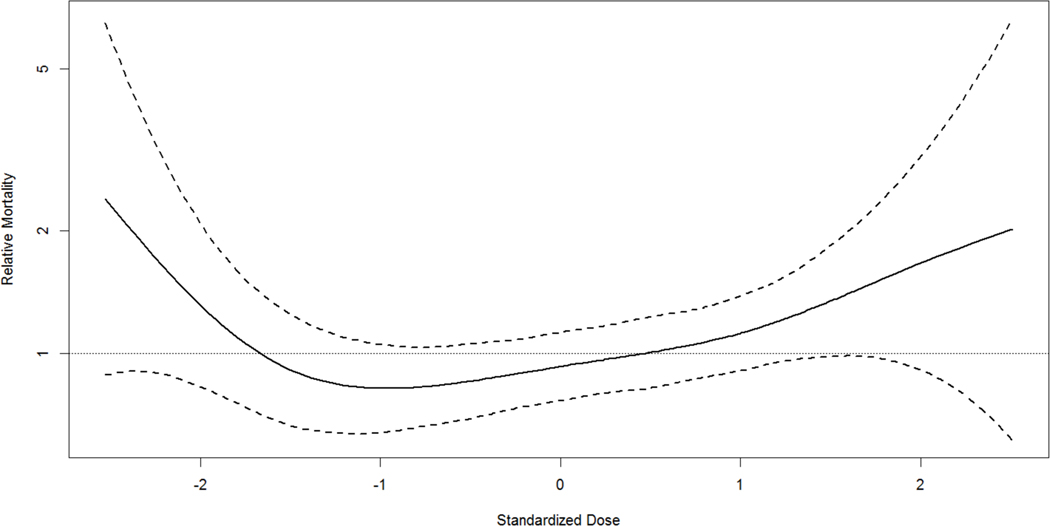
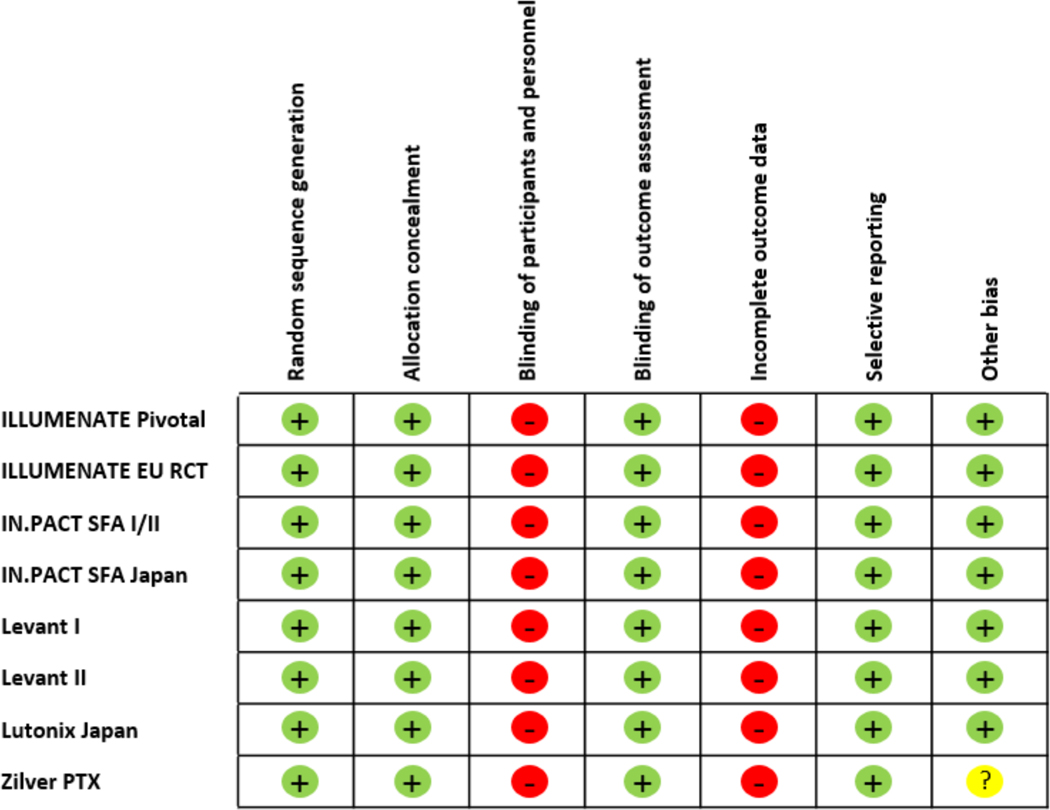
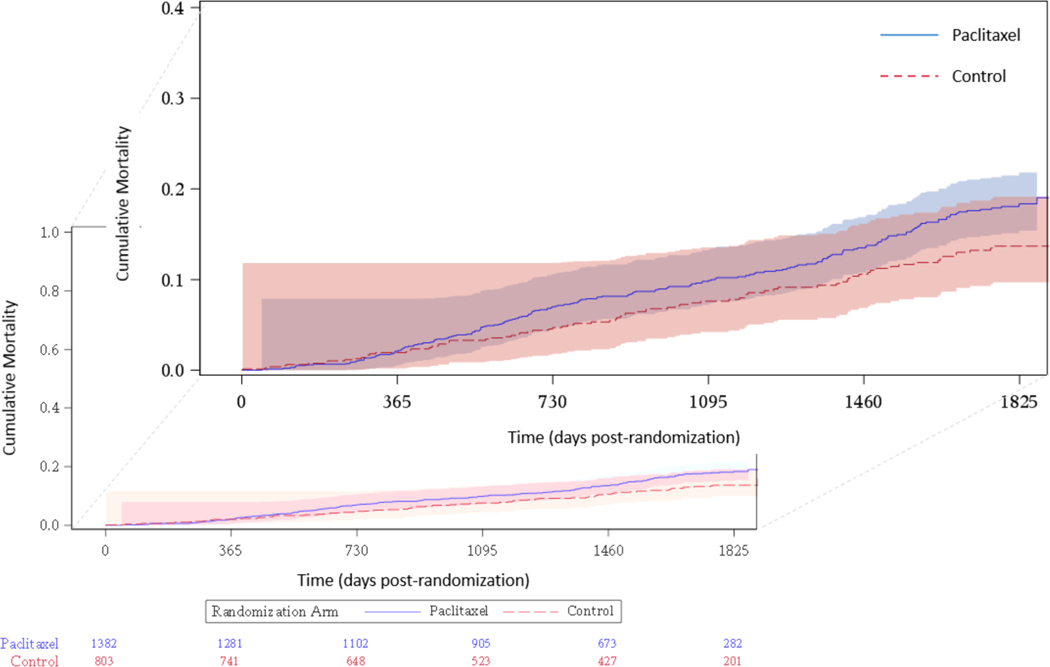
A total of 2185 subjects and 386 deaths from 8 PTXD trials with 4-year median follow-up were identified. The primary analysis indicated a 38% (95% CI, 6% to 80%) increased relative mortality risk, corresponding to 4.6% absolute increase, at 5 years associated with PTXD use. Control and treatment arm loss to follow-up and withdrawal were 24% and 23%, respectively. With inclusion of recovered vital status data, the excess relative mortality risk was 27% (95% CI, 3%-58%). This observation was consistent across various scenarios, including as-treated analyses, with no evidence of increased risk over time with PTXDs. Mortality risk tended to be increased for all major causes of death. There were no subgroup differences. No drug dose-mortality association was identified.
This individual patient data meta-analysis, based on the most complete available data set of mortality events from PTXD randomized controlled trials, identified an absolute 4.6% increased mortality risk associated with PTXD use.
紫杉醇载药器械(PTXDs)可显著降低有症状的股腘外周动脉疾病患者的再介入率。最近的汇总数据荟萃分析报告称,接受 PTXDs 治疗的外周动脉疾病患者的晚期死亡率增加。我们进行了一项个体患者数据荟萃分析以评估死亡率。
美国食品和药物管理局批准的和市售的美国器械制造商提供了经过去识别的个体患者数据进行独立分析。使用意向治疗方法的 Cox 比例风险 1 期荟萃分析模型用于主要分析。对恢复的缺失生存状态数据进行了二次分析。评估了对照交叉至 PTXDs 的影响、特定原因死亡率和药物剂量死亡率。
共纳入 8 项 PTXD 试验的 2185 名患者和 386 例死亡事件,中位随访时间为 4 年。主要分析表明,与 PTXD 使用相关的 5 年相对死亡率风险增加 38%(95%CI,6%至 80%),相应的绝对死亡率增加 4.6%。对照和治疗组的随访和退出失访率分别为 24%和 23%。包括恢复的生存状态数据后,超额相对死亡率风险为 27%(95%CI,3%-58%)。这种观察结果在各种情况下均一致,包括按治疗分析,没有随着时间推移使用 PTXDs 而增加风险的证据。所有主要死亡原因的死亡率风险均增加。没有发现药物剂量与死亡率的关联。
这项基于 PTXD 随机对照试验中死亡率事件的最完整可用数据集的个体患者数据荟萃分析,确定了与 PTXD 使用相关的绝对 4.6%的死亡率风险增加。