Renal Medicine, University College London, London, UK
Renal Medicine, Barts Health NHS Trust, London, London, UK.
BMJ Glob Health. 2020 May;5(5). doi: 10.1136/bmjgh-2020-002312.
Kidney disease is prevalent in low-resource settings worldwide, but tests for its diagnosis are often unavailable. The saliva urea nitrogen (SUN) dipstick is a laboratory and electricity independent tool, which may be used for the detection of kidney disease. We investigated the feasibility and performance of its use in diagnosing kidney disease in community settings in Africa.
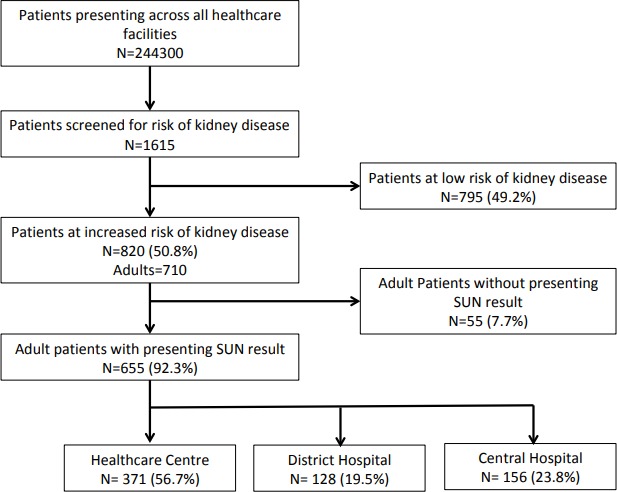
Adult patients at increased risk of kidney disease presenting to three community health centres, a rural district hospital and a central hospital in Malawi were recruited between October 2016 and September 2017. Patients underwent concurrent SUN and creatinine testing at enrolment, and at 1 week, 1 month, 3 months and 6 months thereafter.
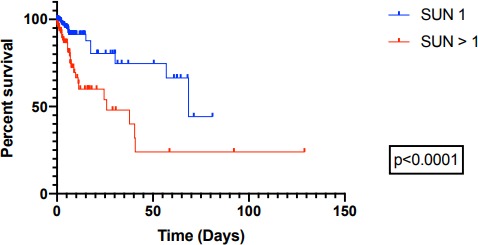
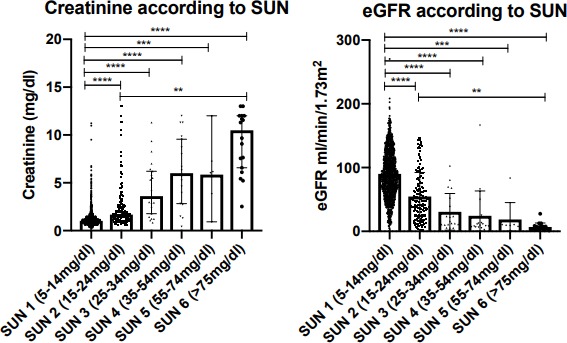
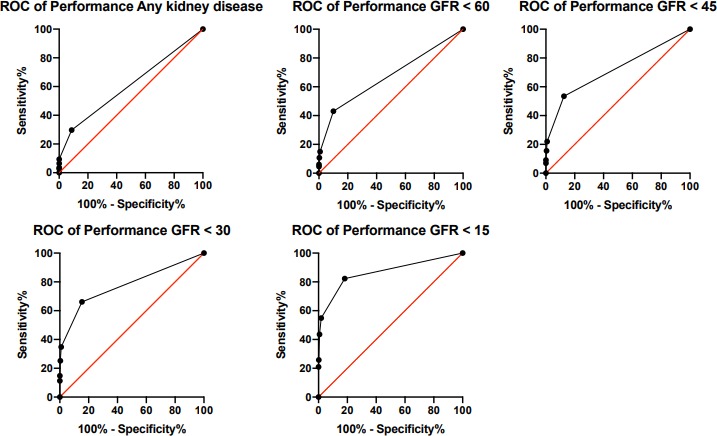
Of 710 patients who presented at increased risk of kidney disease, 655 (92.3%) underwent SUN testing at enrolment, and were included (aged 38 (29-52) years, 367 (56%) female and 333 (50.8%) with HIV). Kidney disease was present in 482 (73.6%) patients and 1479 SUN measurements were made overall. Estimated glomerular filtration rate (eGFR) correlated with SUN (r=-0.39; p<0.0001). The area under the receiver operating characteristics curve was 0.61 for presenting SUN to detect acute or chronic kidney disease, and 0.87 to detect severe (eGFR <15 mL/min/1.73 m) kidney disease (p<0.0001; sensitivity 82.3%, specificity 81.8%, test accuracy 81.8%). In-hospital mortality was greater if enrolment SUN was elevated (>test pad #1) compared with patients with non-elevated SUN (p<0.0001; HR 3.3 (95% CI 1.7 to 6.1).
SUN, measured by dipstick, is feasible and may be used to screen for kidney disease in low resource settings where creatinine tests are unavailable.
在全球范围内,肾脏病在资源匮乏的环境中较为普遍,但肾脏病的诊断检测往往难以实施。唾液尿素氮(SUN)检测棒是一种无需实验室和电力的工具,可用于肾脏病的检测。我们在非洲的社区环境中研究了其用于肾脏病诊断的可行性和性能。
2016 年 10 月至 2017 年 9 月期间,我们招募了在马拉维的三个社区卫生中心、一家农村地区医院和一家中心医院就诊、患有肾脏病风险增加的成年患者。患者在入组时同时进行 SUN 和肌酐检测,此后分别在 1 周、1 个月、3 个月和 6 个月时进行检测。
在出现肾脏病风险增加的 710 名患者中,有 655 名(92.3%)在入组时进行了 SUN 检测,并被纳入研究(年龄为 38(29-52)岁,367 名(56%)为女性,333 名(50.8%)感染了 HIV)。482 名(73.6%)患者患有肾脏病,共进行了 1479 次 SUN 测量。肾小球滤过率估计值(eGFR)与 SUN 呈负相关(r=-0.39;p<0.0001)。SUN 检测用于诊断急性或慢性肾脏病的受试者工作特征曲线下面积为 0.61,用于诊断严重肾脏病(eGFR<15 mL/min/1.73 m)的曲线下面积为 0.87(p<0.0001;敏感性 82.3%,特异性 81.8%,检测准确性 81.8%)。与 SUN 检测未升高的患者相比,SUN 检测升高(>检测棒#1)的患者院内死亡率更高(p<0.0001;HR 3.3(95%CI 1.7 至 6.1))。
通过检测棒进行 SUN 检测在肌酐检测不可用的资源匮乏环境中是可行的,可用于肾脏病的筛查。