Department of Hepatobiliary and Pancreatic Surgery, the Second Affiliated Hospital, Zhejiang University School of Medicine, Hangzhou, Zhejiang 310009.
Key Laboratory of Precision Diagnosis and Treatment for Hepatobiliary and Pancreatic Tumor of Zhejiang Province, Hangzhou, Zhejiang 310009.
Theranostics. 2020 Apr 6;10(12):5195-5208. doi: 10.7150/thno.45017. eCollection 2020.
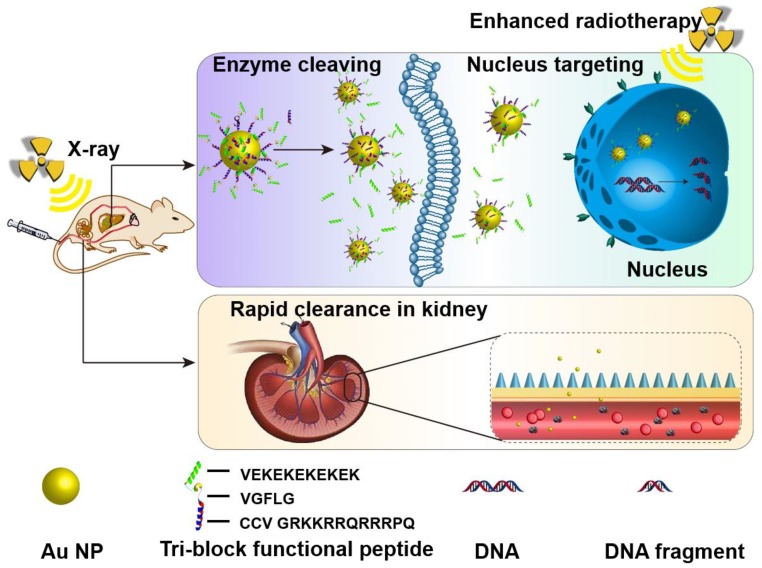
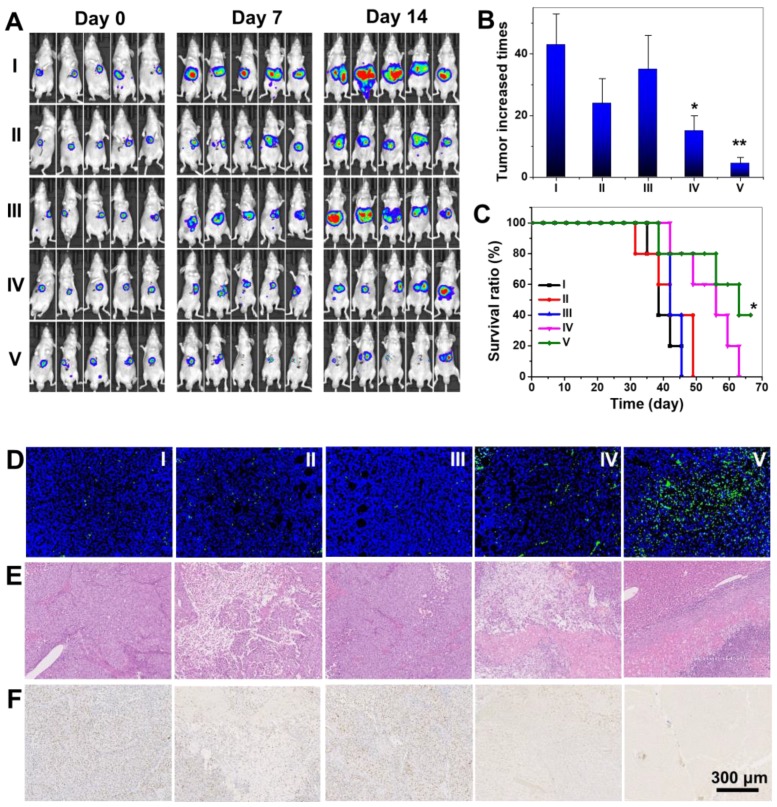
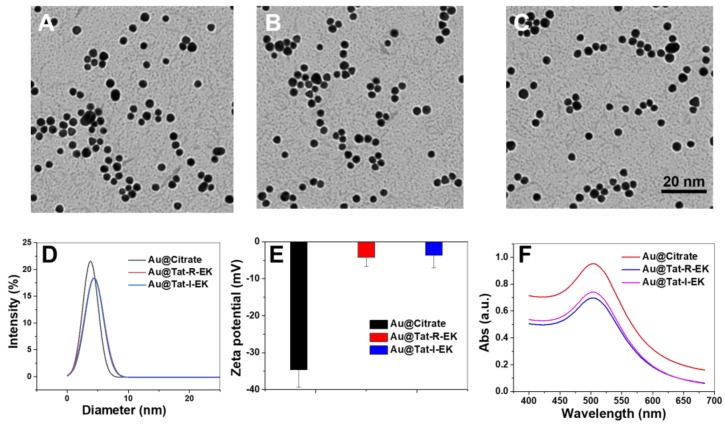
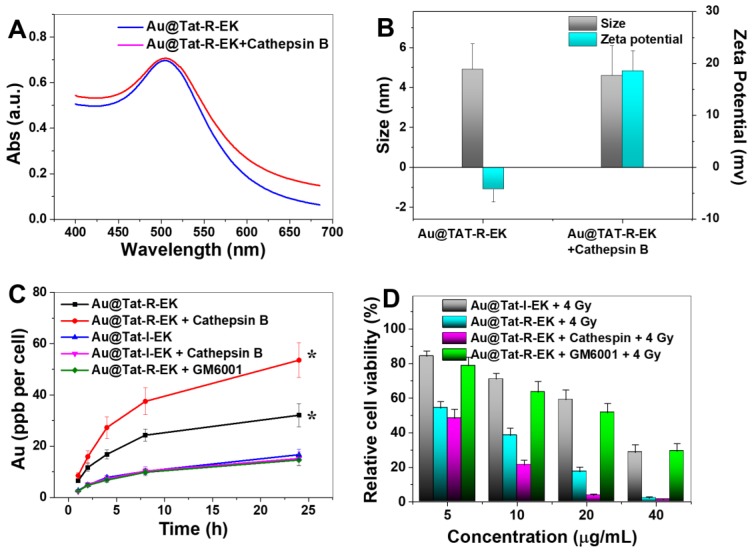
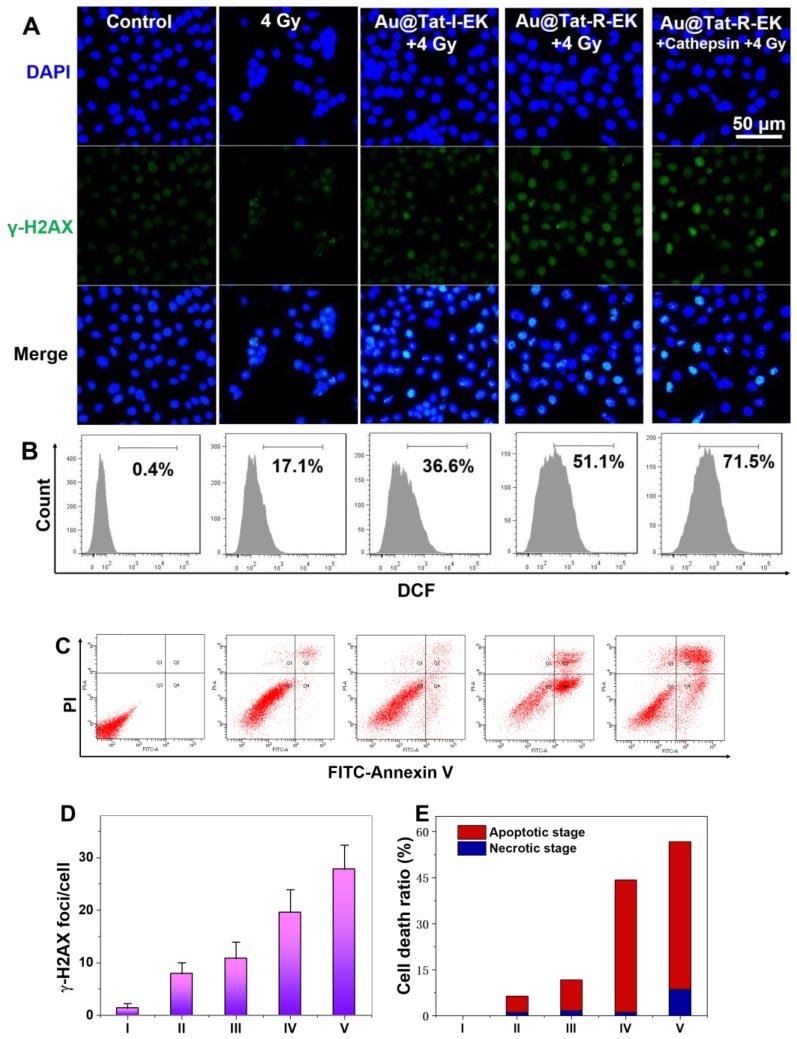
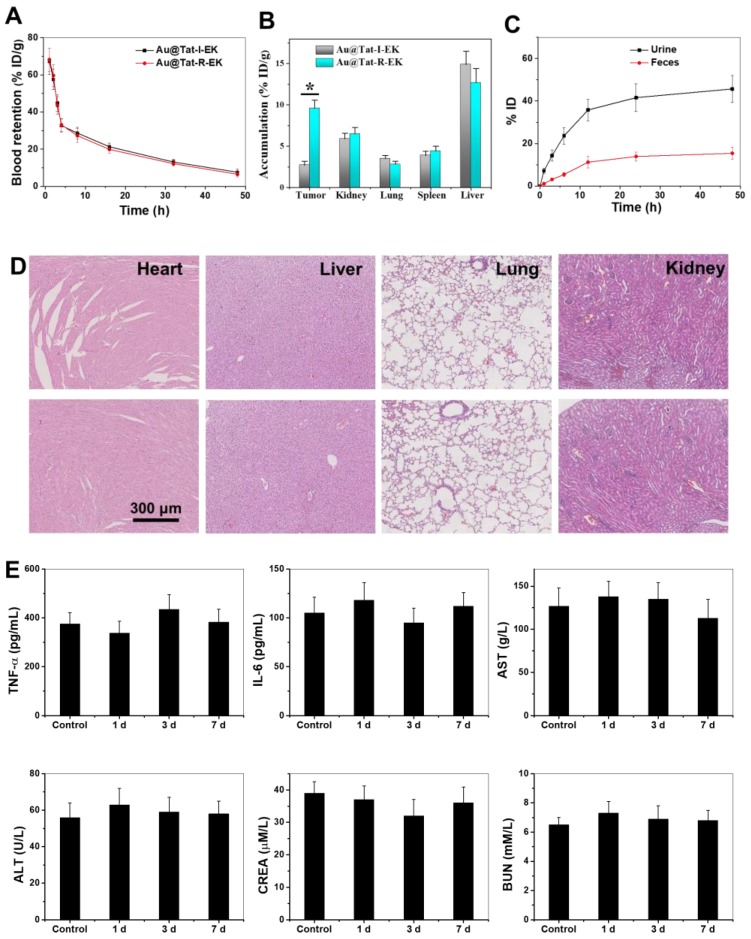
Two important features are required for promising radiosensitizers: one is selective tumor cell targeting to enhance the therapeutic outcome via lethal DNA damage and the other is rapid clearance to enable excellent biocompatibility for potential clinical application. Herein, ultrasmall gold nanoparticles (Au NPs) with diameter smaller than 5 nm were prepared and covered with a multifunctional peptide to endow them with selective tumor cell uptake capability. Combined with X-ray irradiation, the responsive Au NPs demonstrated superior radio-sensitizing toxicity and rapid renal clearance . : A responsive peptide (Tat-R-EK) consists of three build blocks were used: a cell and even nuclear penetrating block derived from human immunodeficiency virus-1 transactivator of transcription protein (Tat), an cathepsin B cleavable linker, and a zwitterionic antifouling block. Ultrasmall Au NPs were prepared and then covered by the peptide via the Au-S bonds between gold and thiol groups from cysteine. The morphology, colloidal stability and the responsiveness of obtained Au@Tat-R-EK NPs were studied using transmittance electron microscopy and dynamic laser scattering. The selective cancer cell uptake and accumulation of Au@Tat-R-EK NPs in cancer tissue were studied via ICP-MS and , respectively. The cytotoxicity of Au@Tat-R-EK NPs on HepG2 cancer cells was evaluated in terms of cell viability, DNA damage, intracellular reactive oxygen species generation, and apoptosis analysis. Finally, the biocompatibility and tumor destruction ability against orthotopic LM3 liver cancers were verified . : Multifunctional peptide modified ultrasmall Au NPs were successfully prepared. The Au NPs exhibited enough colloidal stability and cathepsin B-responsive surface change, leading to selectively uptake by cancer cells and accumulation to tumor sites . Combined with X-ray irradiation, the responsive Au NPs demonstrated superior radio-sensitizing cytotoxicity and therapeutic outcome on mouse liver cancer . The ultrasmall size enables rapid clearance of the Au NPs, guarantees the biocompatibility for potential clinical applications. : Some obstacles faced by the Au NPs-based radiotherapy, such as short circulation half-life, non-specific distribution, slow clearance and low radio-sensitizing effect, were effective solved through rational design of the smart nanomedicine. This work provides new insight in designing tumor microenvironment-responsive nanomedicine in cancer radiotherapy.
一是选择性肿瘤细胞靶向,通过致死性 DNA 损伤提高治疗效果,二是快速清除,以实现潜在临床应用的优异生物相容性。在此,制备了直径小于 5nm 的超小金纳米粒子 (Au NPs),并将其覆盖在多功能肽上,使其具有选择性肿瘤细胞摄取能力。结合 X 射线照射,响应性 Au NPs 表现出优异的放射增敏毒性和快速肾脏清除。
一种响应性肽 (Tat-R-EK) 由三个构建块组成:来自人类免疫缺陷病毒-1 转录激活蛋白 (Tat) 的细胞甚至核穿透模块、组织蛋白酶 B 可切割的连接子和两性离子抗污块。超小的 Au NPs 通过金与半胱氨酸中的巯基之间的 Au-S 键被肽覆盖。通过透射电子显微镜和动态激光散射研究了获得的 Au@Tat-R-EK NPs 的形态、胶体稳定性和响应性。通过 ICP-MS 和 ,分别研究了 Au@Tat-R-EK NPs 在癌细胞中的选择性摄取和积累。通过细胞活力、DNA 损伤、细胞内活性氧物种生成和细胞凋亡分析评估了 Au@Tat-R-EK NPs 对 HepG2 癌细胞的细胞毒性。最后,验证了针对原位 LM3 肝癌的生物相容性和肿瘤破坏能力。
成功制备了多功能肽修饰的超小 Au NPs。Au NPs 表现出足够的胶体稳定性和组织蛋白酶 B 响应表面变化,导致癌细胞选择性摄取和肿瘤部位积累。结合 X 射线照射,响应性 Au NPs 表现出优异的放射增敏细胞毒性和对小鼠肝癌的治疗效果。超小尺寸使 Au NPs 能够快速清除,保证了潜在临床应用的生物相容性。
通过合理设计智能纳米医学,有效解决了基于 Au NPs 的放射治疗所面临的一些障碍,如循环半衰期短、分布非特异性、清除缓慢和放射增敏效果低。这项工作为癌症放射治疗中肿瘤微环境响应性纳米医学的设计提供了新的思路。