Azzarelli Roberta
Unit of Cell and Developmental Biology, Department of Biology, University of Pisa, Pisa, Italy.
Front Cell Dev Biol. 2020 Apr 16;8:220. doi: 10.3389/fcell.2020.00220. eCollection 2020.
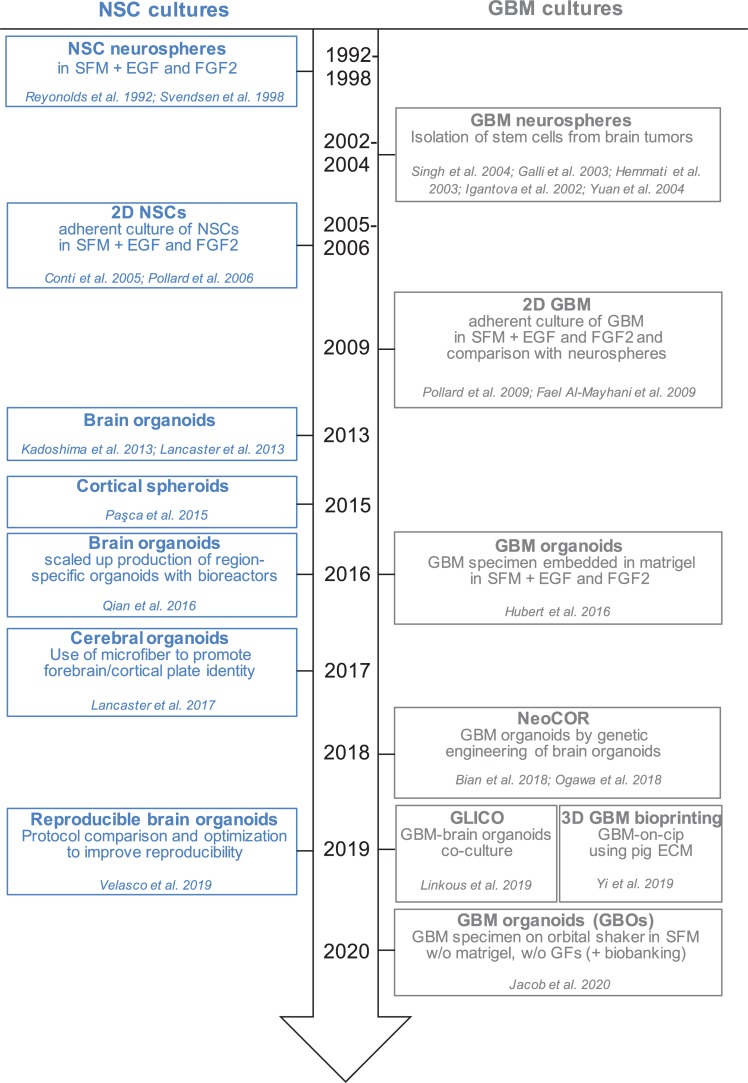
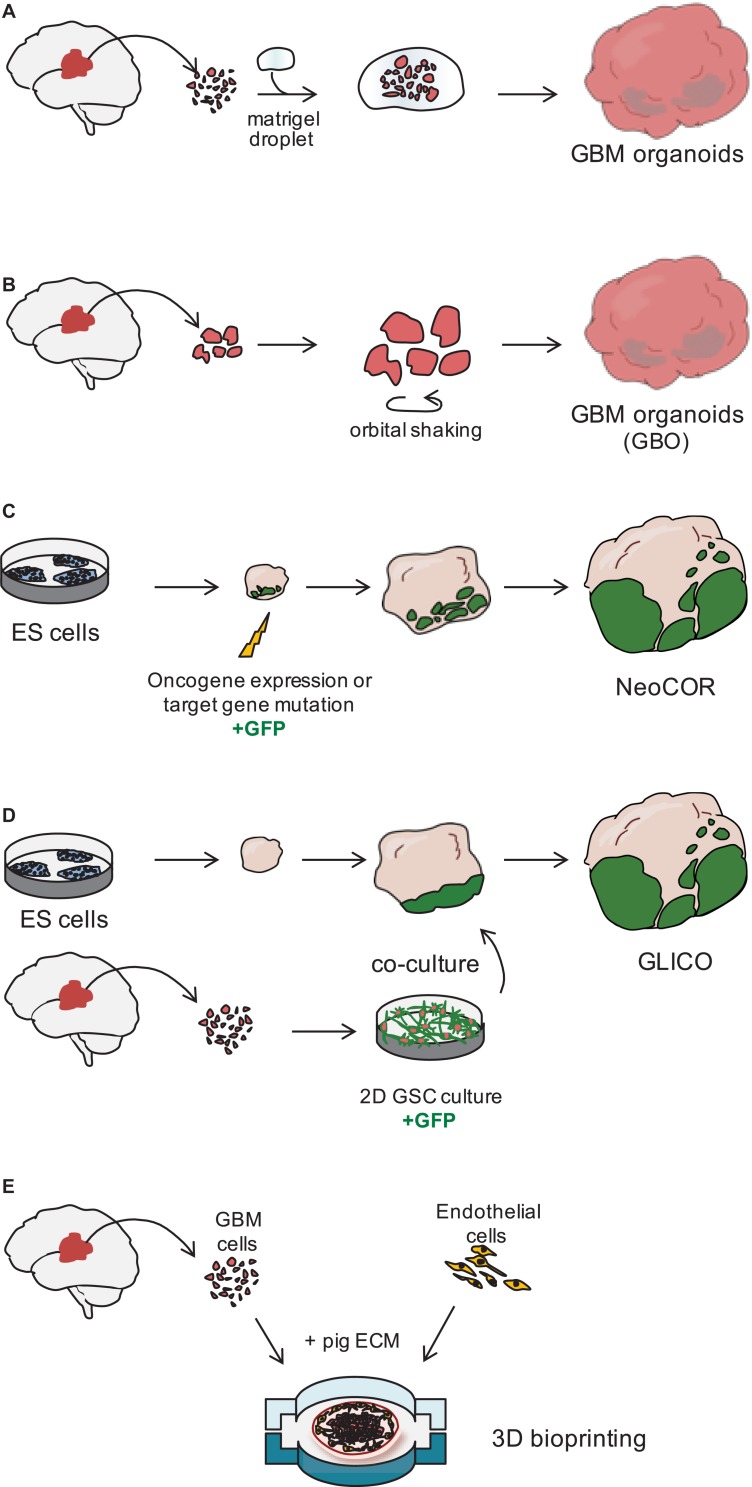
Glioblastoma represents an aggressive form of brain cancer characterized by poor prognosis and a 5-year survival rate of only 3-7%. Despite remarkable advances in brain tumor research in the past decades, very little has changed for patients, due in part to the recurrent nature of the disease and to the lack of suitable models to perform genotype-phenotype association studies and personalized drug screening. culture of cancer cells derived from patient biopsies has been fundamental in understanding tumor biology and for testing the effect of various drugs. These cultures emphasize the role of cancer stem cells (CSCs), which fuel tumor growth and are thought to be the cause of relapse after treatment. However, it has become clear over the years that a 2D monolayer culture of these CSCs has certain disadvantages, including the lack of heterogeneous cell-cell and cell-environment interactions, which can now be partially overcome by the introduction of 3D organoid cultures. This is a novel and expanding field of research and in this review, I describe the emerging 3D models of glioblastoma. I also discuss their potential to advance our knowledge of tumor biology and CSC heterogeneity, while debating their current limitations.
胶质母细胞瘤是一种侵袭性脑癌,预后较差,5年生存率仅为3%-7%。尽管在过去几十年里脑肿瘤研究取得了显著进展,但患者的情况变化甚微,部分原因在于该疾病的复发性以及缺乏用于进行基因型-表型关联研究和个性化药物筛选的合适模型。源自患者活检的癌细胞培养对于理解肿瘤生物学以及测试各种药物的效果至关重要。这些培养物强调了癌症干细胞(CSCs)的作用,它们推动肿瘤生长,并被认为是治疗后复发的原因。然而,多年来已经清楚的是,这些癌症干细胞的二维单层培养存在某些缺点,包括缺乏异质性的细胞-细胞和细胞-环境相互作用,而现在通过引入三维类器官培养可以部分克服这些缺点。这是一个新颖且不断扩展的研究领域,在本综述中,我描述了胶质母细胞瘤新兴的三维模型。我还讨论了它们在推进我们对肿瘤生物学和癌症干细胞异质性认识方面的潜力,同时也探讨了它们目前的局限性。