Department of Neurology, Tongji Hospital, Tongji Medical College, Huazhong University of Science and Technology, 1095 Jiefang Avenue, Wuhan, Hubei, 430030, China.
J Transl Med. 2020 May 6;18(1):187. doi: 10.1186/s12967-020-02353-5.
The prognosis of patients with advanced schistosomiasis is poor. Pre-existing prognosis studies did not differentiate the causes of the deaths. The objectives were to evaluate the 2-year overall survival (OS) and advanced schistosomiasis-specific survival (ASS) in patients with advanced schistosomiasis after discharge through competing risk analysis and to build predictive nomograms.
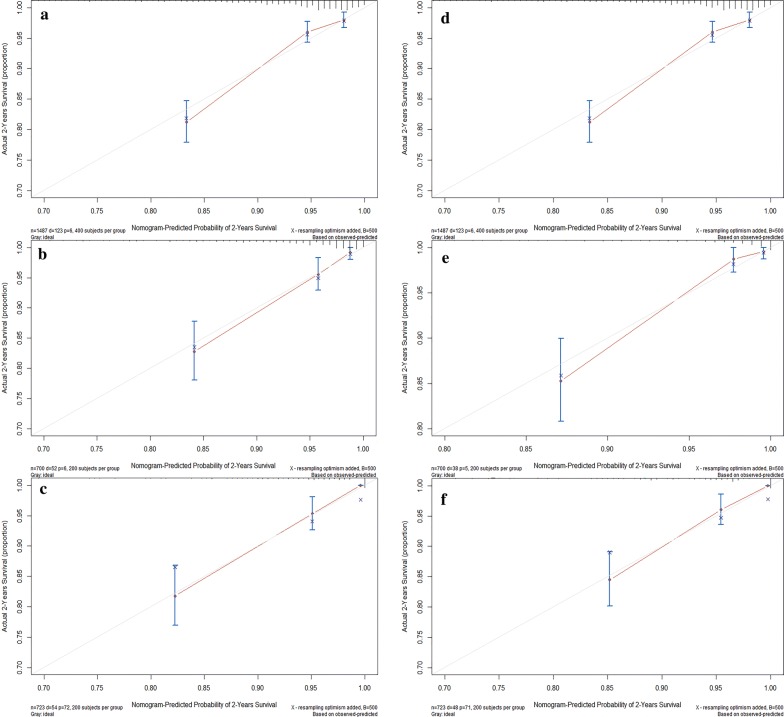
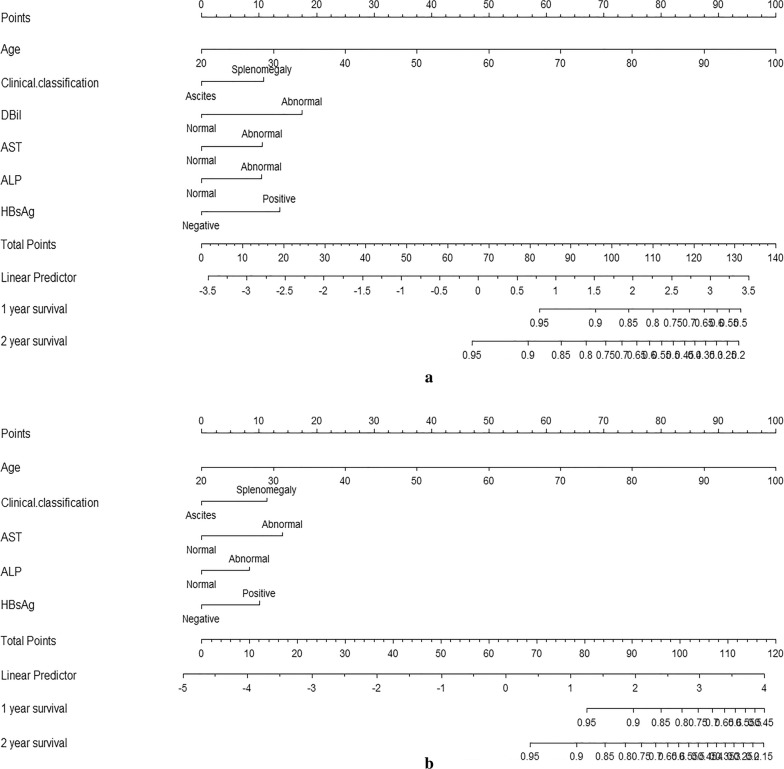
Data was extracted from a previously constructed database from Hubei province. Patients were enrolled from September 2014 to January 2015, with follow up to January 2017. OS and ASS were primary outcome measures. Nomograms for estimating 2-year OS and ASS rates after discharge were established based on univariate and multivariate Cox regression model and Fine and Gray's model. Their predictive performances were evaluated using C-index and validated in both internal and external validation cohorts.
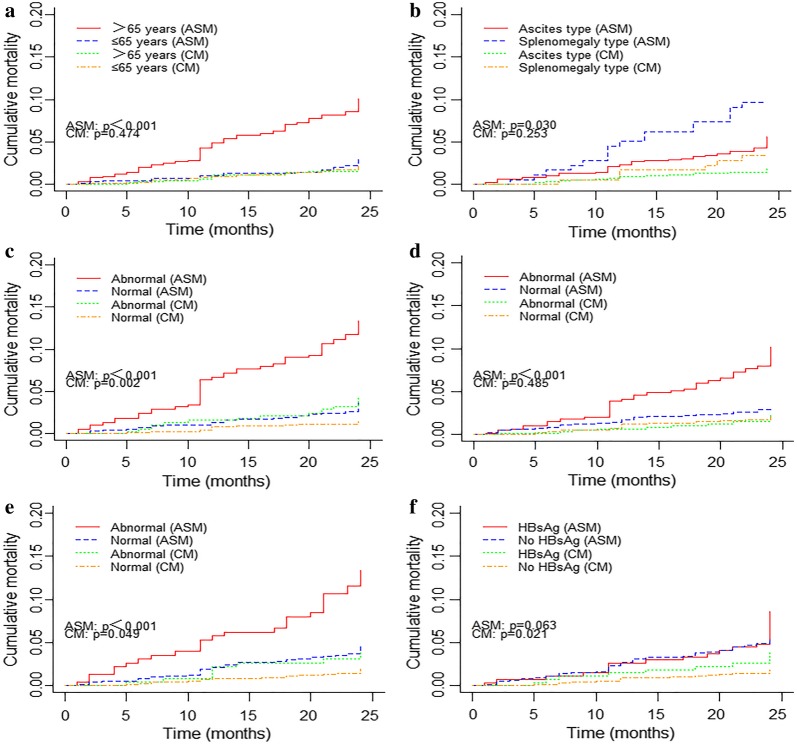
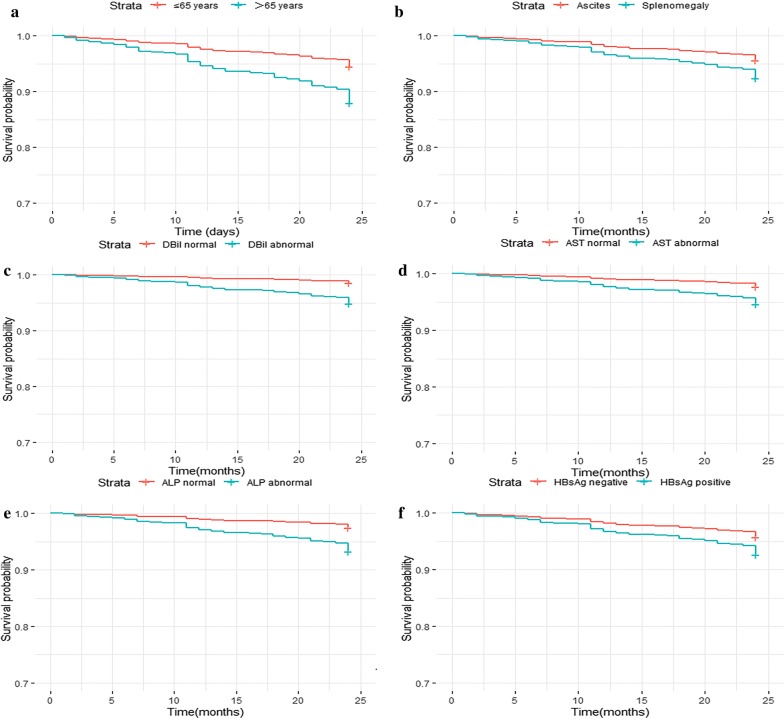
The training cohort included 1487 patients with advanced schistosomiasis. Two-year mortality rate of the training cohort was 8.27% (123/1487). Competing events accounted for 26.83% (33/123). Older age, splemomegaly clinical classification, abnormal serum DBil, AST, ALP and positive HBsAg were significantly associated with 2-year OS. Older age, splemomegaly clinical classification, abnormal serum AST, ALP and positive HBsAg were significantly associated with 2-year ASS. The established nomograms were well calibrated, and had good discriminative ability, with a C-index of 0.813 (95% CI 0.803-0.823) for 2-year OS prediction and 0.834 (95% CI 0.824-0.844) for 2-year ASS prediction. Their predictive performances were well validated in both internal and external validation cohorts.
The effective predictors of 2-year OS and ASS were discovered through competing risk analysis. The nomograms could be used as convenient predictive tools in clinical practice to guide follow-up and aid accurate prognostic assessment.
晚期血吸虫病患者的预后较差。既往的预后研究并未区分死亡原因。本研究旨在通过竞争风险分析评估出院后晚期血吸虫病患者的 2 年总生存(OS)和晚期血吸虫病特异性生存(ASS),并构建预测列线图。
数据来自湖北省先前构建的数据库。患者于 2014 年 9 月至 2015 年 1 月入院,随访至 2017 年 1 月。OS 和 ASS 是主要的观察终点。基于单变量和多变量 Cox 回归模型及 Fine 和 Gray 模型,建立了用于估计出院后 2 年 OS 和 ASS 率的列线图。采用 C 指数评估其预测性能,并在内部和外部验证队列中进行验证。
本研究纳入了 1487 例晚期血吸虫病患者。训练队列的 2 年死亡率为 8.27%(123/1487)。竞争事件占 26.83%(33/123)。年龄较大、脾肿大临床分级、血清 DBil、AST、ALP 异常和 HBsAg 阳性与 2 年 OS 显著相关。年龄较大、脾肿大临床分级、血清 AST、ALP 异常和 HBsAg 阳性与 2 年 ASS 显著相关。建立的列线图具有良好的校准度和区分度,2 年 OS 预测的 C 指数为 0.813(95%CI:0.803-0.823),2 年 ASS 预测的 C 指数为 0.834(95%CI:0.824-0.844)。在内部和外部验证队列中,其预测性能均得到了良好的验证。
通过竞争风险分析发现了 2 年 OS 和 ASS 的有效预测因素。该列线图可作为临床实践中便捷的预测工具,用于指导随访并帮助准确评估预后。