Park Seongmin, Park Hyuk, Seong Suwon, Chung Yoonyoung
Department of Electrical Engineering, Pohang University of Science and Technology, Pohang, 37673, Republic of Korea.
Sci Rep. 2020 May 6;10(1):7660. doi: 10.1038/s41598-020-64057-6.
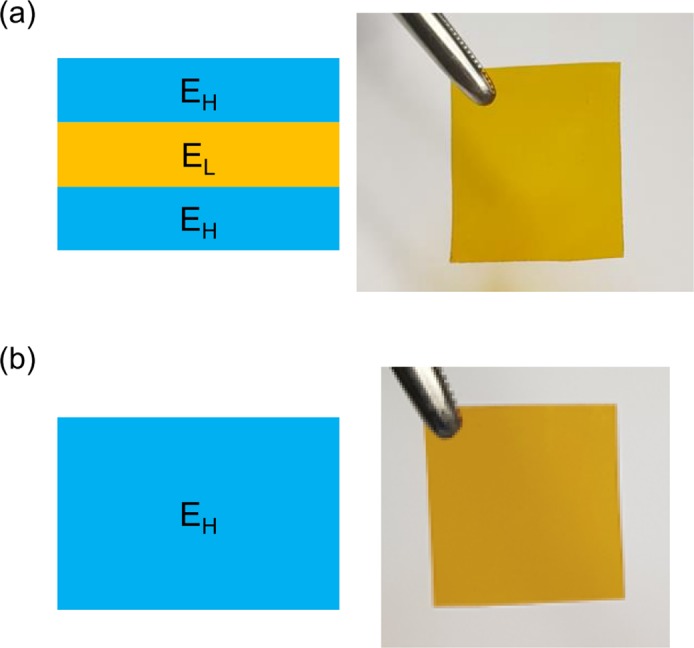
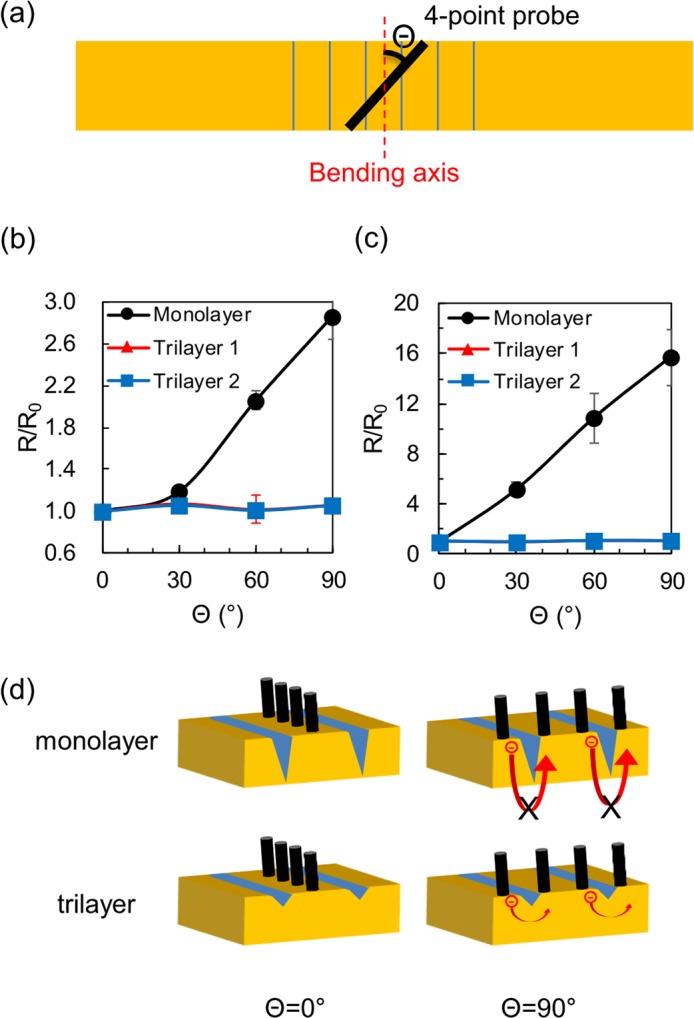
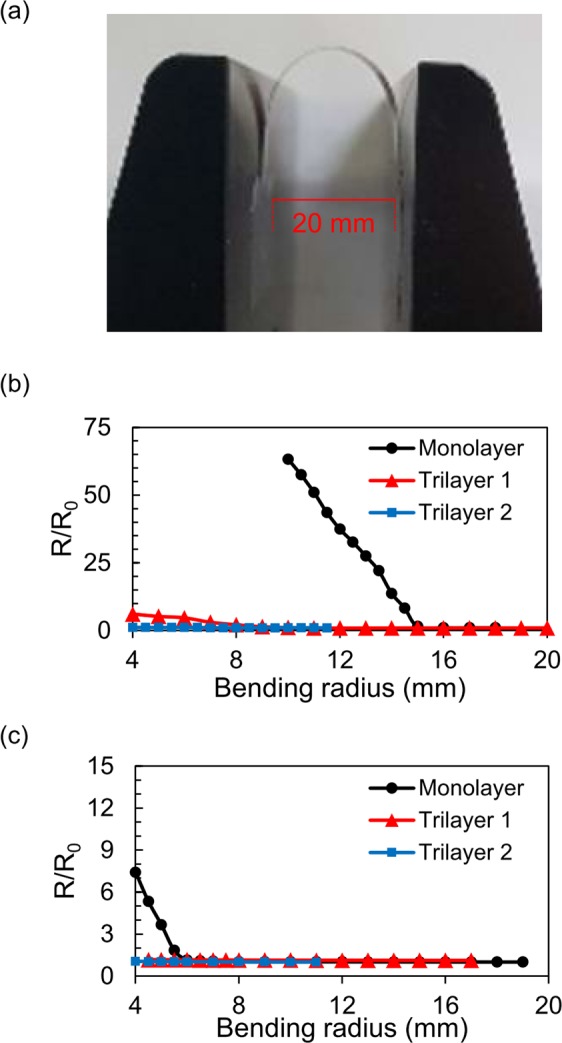
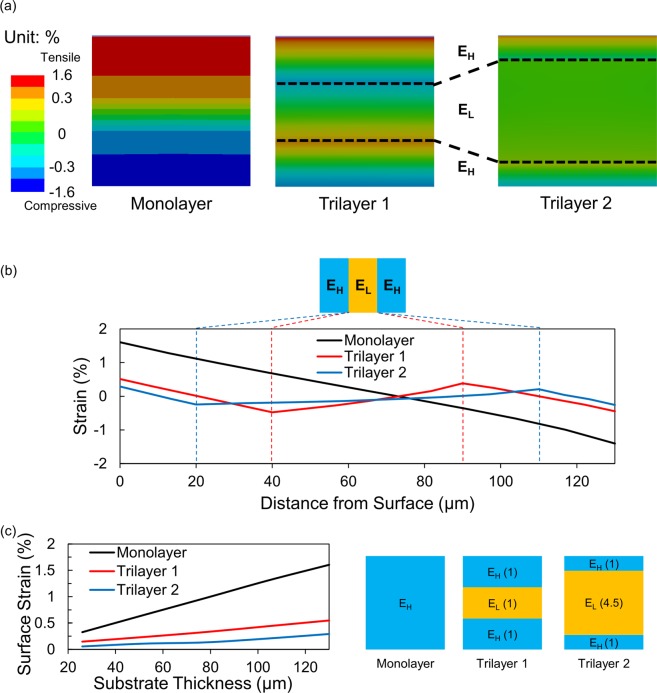
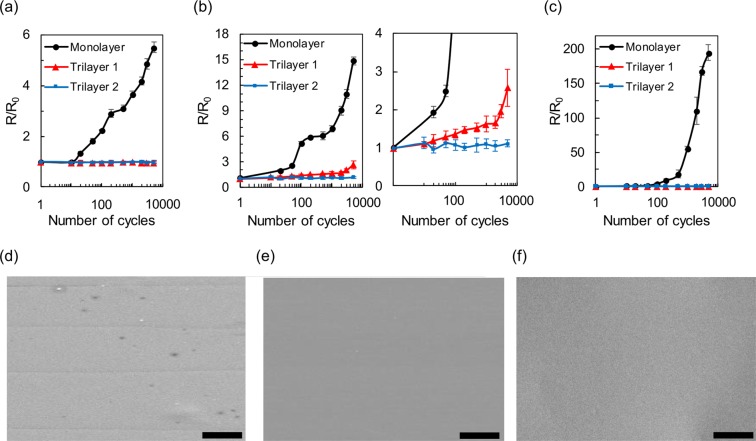
Flexible materials with sufficient mechanical endurance under bending or folding is essential for flexible electronic devices. Conventional rigid materials such as metals and ceramics are mostly brittle so that their properties can deteriorate under a certain amount of strain. In order to utilize high-performance, but brittle conventional materials in flexible electronics, we propose a novel flexible substrate structure with a low-modulus interlayer. The low-modulus interlayer reduces the surface strain, where active electronic components are placed. The bending results with indium tin oxide (ITO) show that a critical bending radius, where the conductivity starts to deteriorate, can be reduced by more than 80% by utilizing the low-modulus layer. We demonstrate that even rigid electrodes can be used in flexible devices by manipulating the structure of flexible substrate.
对于柔性电子设备而言,具备在弯曲或折叠时足够机械耐久性的柔性材料至关重要。诸如金属和陶瓷等传统刚性材料大多易碎,以至于在一定量应变下其性能会变差。为了在柔性电子学中利用高性能但易碎的传统材料,我们提出了一种具有低模量中间层的新型柔性衬底结构。低模量中间层降低了放置有源电子元件处的表面应变。氧化铟锡(ITO)的弯曲结果表明,通过使用低模量层,电导率开始变差的临界弯曲半径可降低80%以上。我们证明,通过操控柔性衬底的结构,即使是刚性电极也可用于柔性设备。