Department of Biotechnology, Yeditepe University, Istanbul, 34755, Turkey.
Gottfried Schatz Research Center for Cell Signaling, Metabolism and Aging, Department of Biophysics, Medical University of Graz, Neue Stiftingtalstrasse, 6/4 8010, Graz, Austria.
Sci Rep. 2020 May 6;10(1):7668. doi: 10.1038/s41598-020-64790-y.
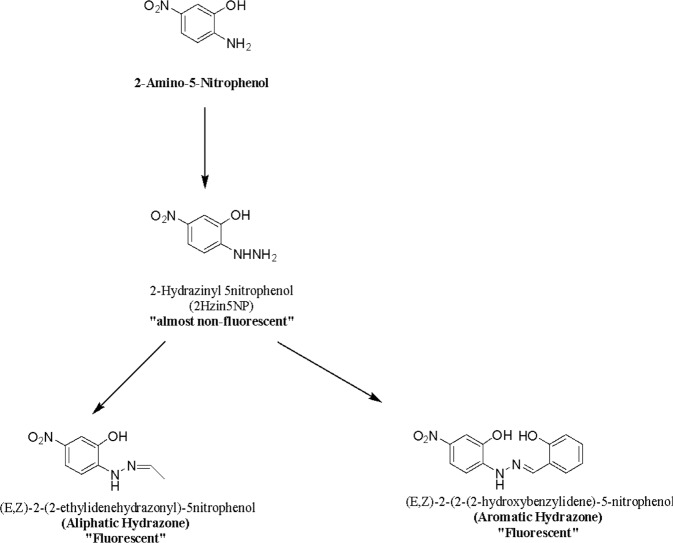
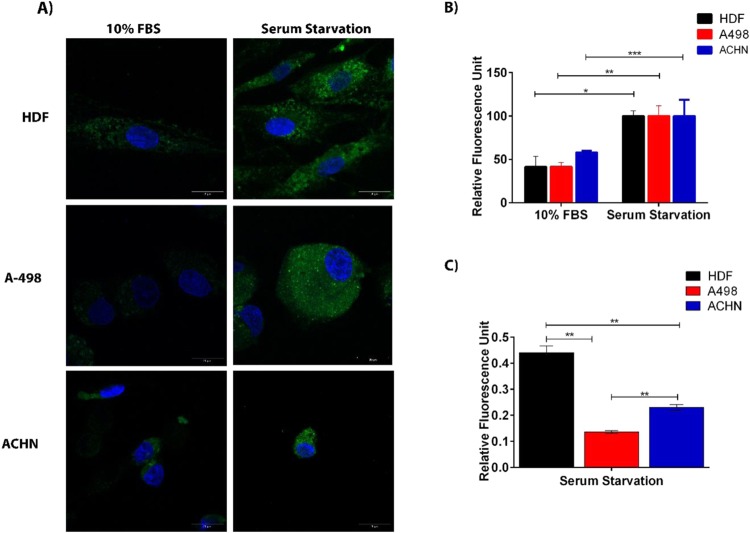
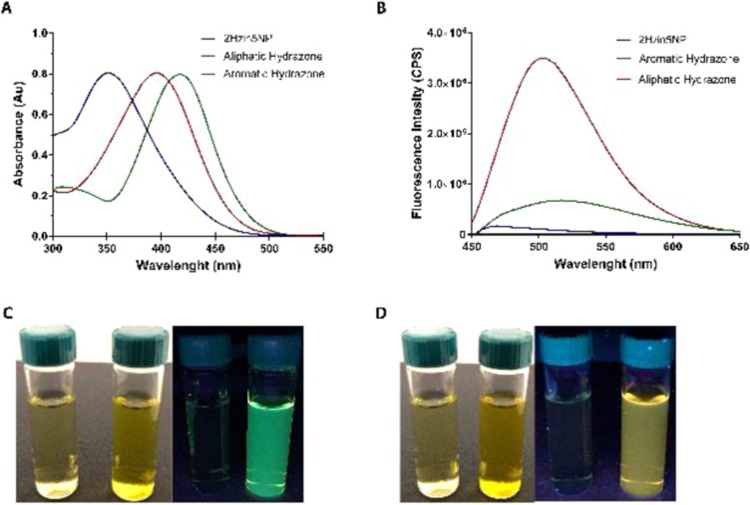
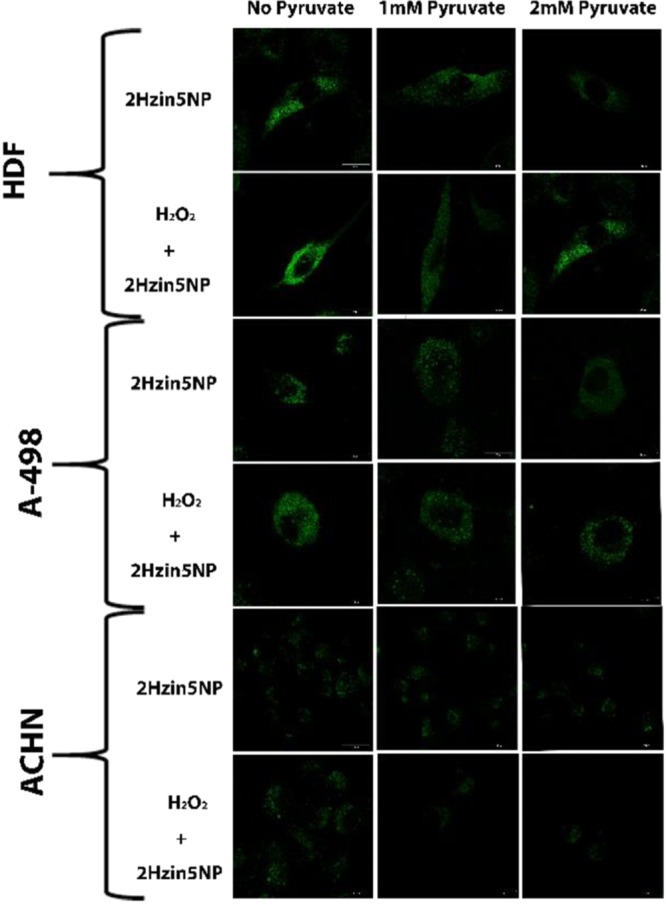
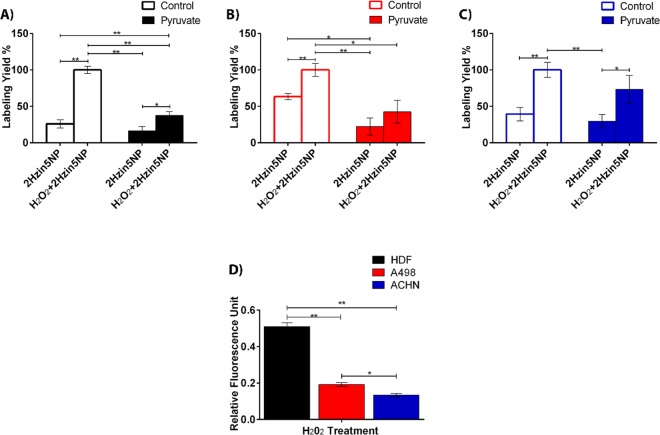
With the rapid development of chemical biology, many diagnostic fluorophore-based tools were introduced to specific biomolecules by covalent binding. Bioorthogonal reactions have been widely utilized to manage challenges faced in clinical practice for early diagnosis and treatment of several tumor samples. Herein, we designed a small molecule fluorescent-based biosensor, 2Hydrazine-5nitrophenol (2Hzin5NP), which reacts with the carbonyl moiety of biomolecules through bioorthogonal reaction, therefore can be utilized for the detection of biomolecule carbonylation in various cancer cell lines. Our almost non-fluorescent chemical probe has a fast covalent binding with carbonyl moieties at neutral pH to form a stable fluorescent hydrazone product leading to a spectroscopic alteration in live cells. Microscopic and fluorometric analyses were used to distinguish the exogenous and endogenous ROS induced carbonylation profile in human dermal fibroblasts along with A498 primary site and ACHN metastatic site renal cell carcinoma (RRC) cell lines. Our results showed that carbonylation level that differs in response to exogenous and endogenous stress in healthy and cancer cells can be detected by the newly synthesized bioorthogonal fluorescent probe. Our results provide new insights into the development of novel bioorthogonal probes that can be utilized in site-specific carbonylation labeling to enhance new diagnostic approaches in cancer.
随着化学生物学的快速发展,许多基于诊断荧光团的工具通过共价结合被引入到特定的生物分子中。生物正交反应已被广泛应用于管理临床实践中面临的挑战,以实现对几种肿瘤样本的早期诊断和治疗。在此,我们设计了一种小分子荧光基生物传感器,2-肼基-5-硝基苯酚(2Hzin5NP),它通过生物正交反应与生物分子的羰基部分反应,因此可用于检测各种癌细胞系中的生物分子羰基化。我们的几乎无荧光化学探针在中性 pH 值下与羰基部分快速共价结合,形成稳定的荧光腙产物,导致活细胞中的光谱发生变化。通过显微镜和荧光分析,我们可以区分人皮肤成纤维细胞中由外源性和内源性 ROS 诱导的羰基化谱,以及 A498 原发性和 ACHN 转移性肾细胞癌(RRC)细胞系。我们的结果表明,通过新合成的生物正交荧光探针可以检测健康细胞和癌细胞中外源性和内源性应激反应中不同的羰基化水平。我们的结果为开发新型生物正交探针提供了新的思路,这些探针可用于特异性羰基化标记,以增强癌症的新诊断方法。