Cancer Biology and Inflammatory Disorder Division, CSIR-Indian Institute of Chemical Biology, 4, Raja S.C., Mullick Road, Jadavpur, Kolkata 700032, West Bengal, India.
Department of Biochemistry, North Bengal Medical College and Hospital, Sushrutanagar, Siliguri 734012, West Bengal, India.
Biosci Rep. 2020 May 29;40(5). doi: 10.1042/BSR20201312.
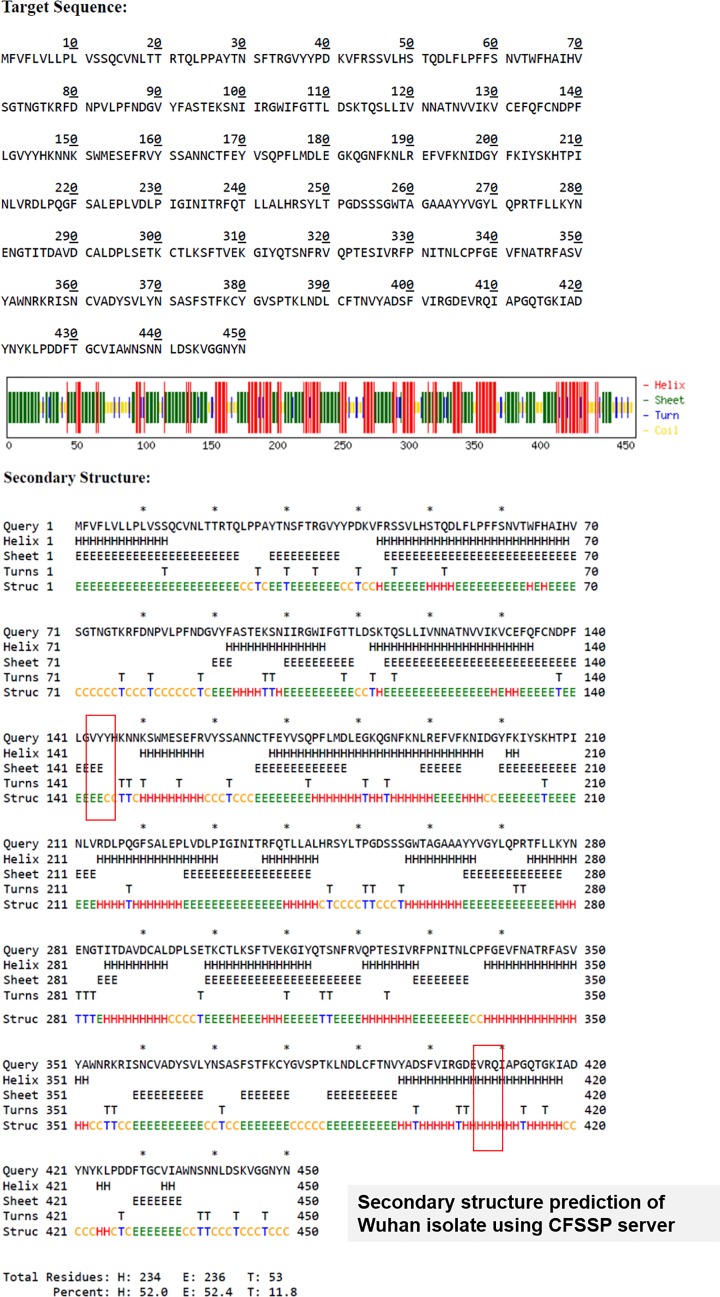
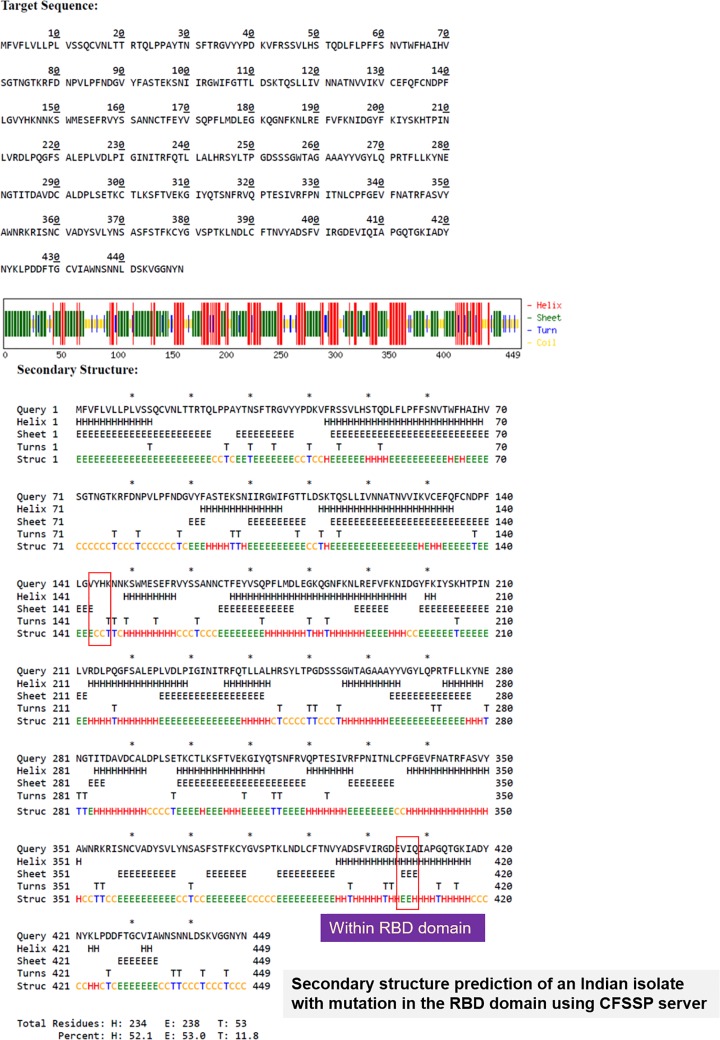
Since 2002, β coronaviruses (CoVs) have caused three zoonotic outbreaks, SARS-CoV in 2002, MERS-CoV in 2012, and the recent outbreak of SARS-CoV-2 late in 2019 (also named as COVID-19 or novel coronavirus 2019 or nCoV2019). Spike (S) protein, one of the structural proteins of this virus plays key role in receptor (ACE2) binding and thus virus entry. Thus, this protein has attracted scientists for detailed study and therapeutic targeting. As the nCoV2019 takes its course throughout the world, more and more sequence analyses are being done and genome sequences are being deposited in various databases. From India, two clinical isolates have been sequenced and the full genome has been deposited in GenBank. We have performed sequence analyses of the Spike protein of the Indian isolates and compared with that of the Wuhan, China (where the outbreak was first reported). While all the sequences of Wuhan isolates are identical, we found point mutations in the Indian isolates. Out of the two isolates, one was found to harbor a mutation in its receptor-binding domain (RBD) at position 407. At this site, arginine (a positively charged amino acid) was replaced by isoleucine (a hydrophobic amino acid that is also a C-β branched amino acid). This mutation has been seen to change the secondary structure of the protein at that region and this can potentially alter receptor binding of the virus. Although this finding needs further validation and more sequencing, the information might be useful in rational drug designing and vaccine engineering.
自 2002 年以来,β 冠状病毒(CoV)已经引发了三次人畜共患疫情,分别是 2002 年的 SARS-CoV、2012 年的 MERS-CoV 以及最近 2019 年末爆发的 SARS-CoV-2(也称为 COVID-19 或新型冠状病毒 2019 或 nCoV2019)。该病毒的结构蛋白之一刺突(S)蛋白在受体(ACE2)结合和病毒进入中起关键作用。因此,该蛋白引起了科学家的深入研究和治疗靶向。随着 nCoV2019 在全球范围内的传播,越来越多的序列分析正在进行,基因组序列被存入各种数据库。从印度,已经对两个临床分离株进行了测序,并将全长基因组存入 GenBank。我们对印度分离株的刺突蛋白进行了序列分析,并与中国武汉(首次报告疫情的地方)的序列进行了比较。虽然武汉分离株的所有序列都是相同的,但我们发现印度分离株有一些点突变。在这两个分离株中,一个分离株在其受体结合域(RBD)的 407 位发现了突变。在该位置,精氨酸(带正电荷的氨基酸)被异亮氨酸(带负电荷的疏水性氨基酸,也是 C-β 支链氨基酸)取代。这种突变改变了该区域蛋白质的二级结构,这可能改变病毒的受体结合。尽管这一发现需要进一步验证和更多的测序,但这些信息可能有助于合理药物设计和疫苗工程。