Institute for Advanced Study, Shenzhen University, Shenzhen, Guangdong 518060, China.
Department of Physiology, Health Science Center, Shenzhen University, Guangdong 518055, China.
Peptides. 2020 Aug;130:170328. doi: 10.1016/j.peptides.2020.170328. Epub 2020 May 5.
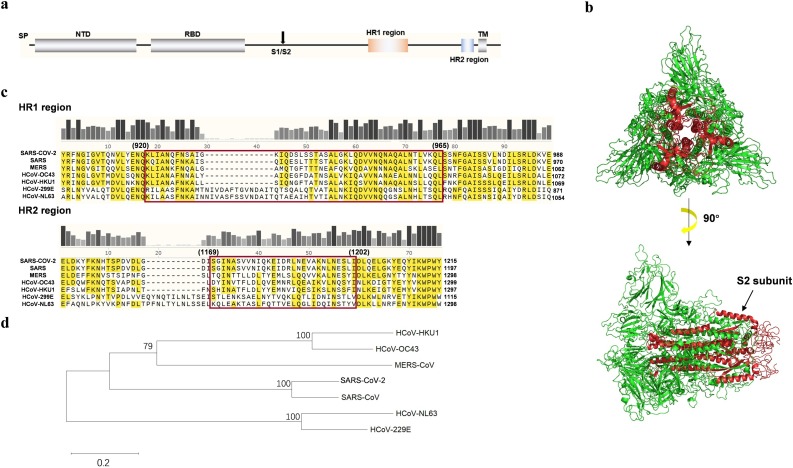
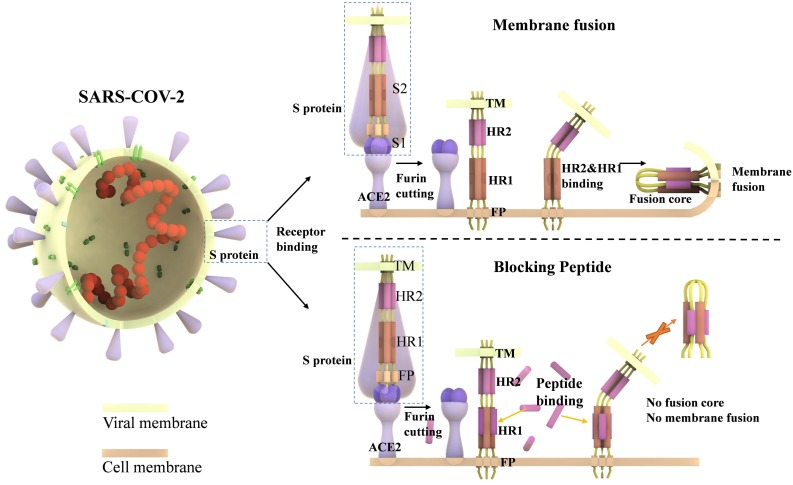
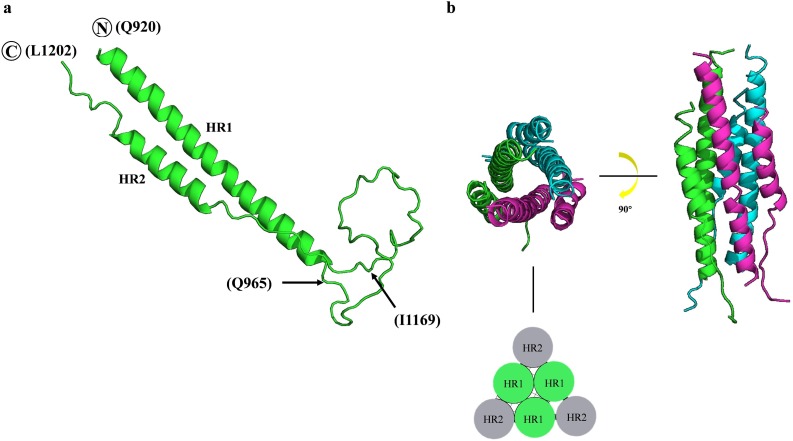
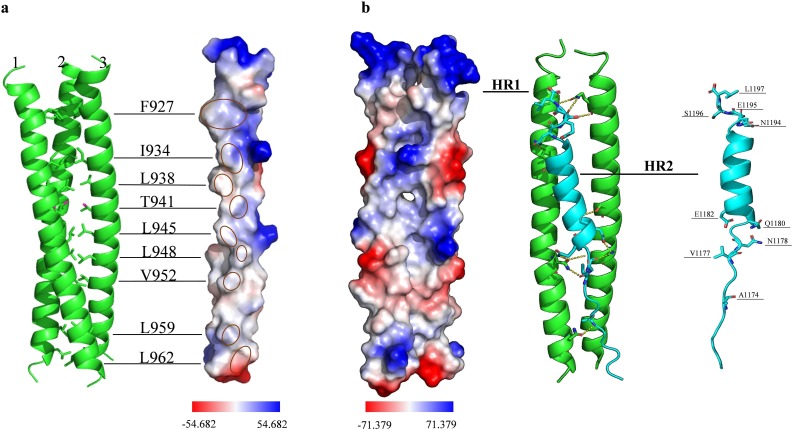
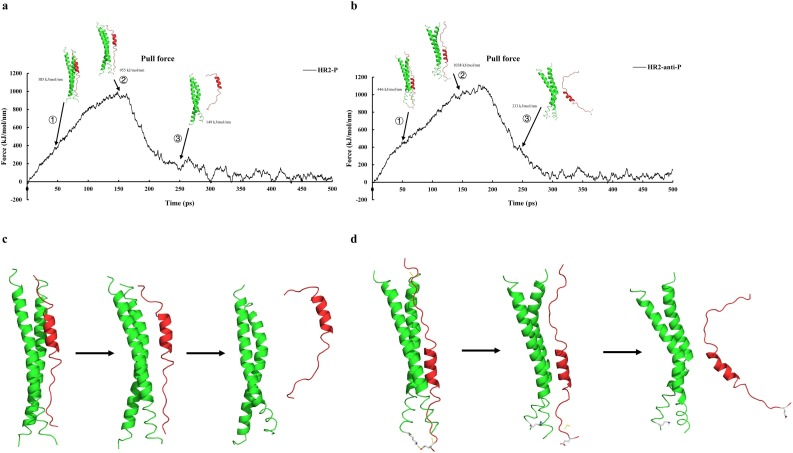
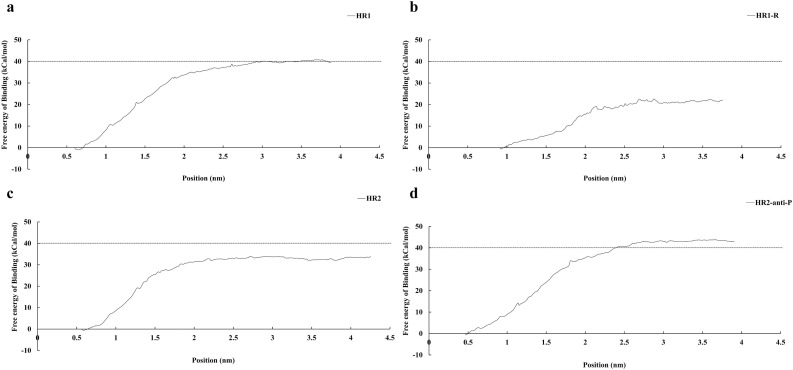
An outbreak caused by 2019 novel coronavirus (2019-nCoV) was first identified in Wuhan City, Hubei Province, China. The new virus was later named SARS-CoV-2. The virus has affected tens of thousands of patients in the world. The infection of SARS-CoV-2 causes severe pneumonia and even death. It is urgently needed to find a therapeutic method to treat patients with SARS-CoV-2 infection. Studies showed that the surface spike (S) protein is essential for the coronavirus binding and entry of host cells. The heptad repeats 1 and 2 (HR1 and HR2) in the S protein play a decisive role in the fusion of the viral membrane with the host cell membrane. We predicted the HR1 and HR2 regions in S protein by sequence alignment. We simulated a computational model of HR1/2 regions and the fusion core. The binding energy of HR1 and HR2 of the fusion core was -33.4 kcal/mol. We then designed antivirus peptides by molecular dynamics simulation of the fusion core. The binding energy of HR2-based antiviral peptide to HR1 was -43.0 kcal/mol, which was stronger than the natural stage of the fusion core, suggesting that the predicted antiviral peptide can competitively bind with HR1 to prevent forming of the fusion core. The antiviral peptides can prevent SARS-CoV-2 membrane fusion and can potentially be used for the prevention and treatment of infections.
一种由 2019 年新型冠状病毒(2019-nCoV)引起的疫情最初在中国湖北省武汉市被发现。这种新病毒后来被命名为 SARS-CoV-2。该病毒已在全球感染了成千上万的患者。SARS-CoV-2 的感染会导致严重的肺炎甚至死亡。因此,迫切需要找到一种治疗方法来治疗 SARS-CoV-2 感染的患者。研究表明,冠状病毒表面的刺突(S)蛋白对于冠状病毒结合和进入宿主细胞是必不可少的。S 蛋白中的七肽重复 1 和 2(HR1 和 HR2)在病毒膜与宿主细胞膜融合中起决定性作用。我们通过序列比对预测了 S 蛋白中的 HR1 和 HR2 区域。我们模拟了 HR1/2 区域和融合核心的计算模型。融合核心中 HR1 和 HR2 的结合能为-33.4 kcal/mol。然后,我们通过融合核心的分子动力学模拟设计了抗病毒肽。基于 HR2 的抗病毒肽与 HR1 的结合能为-43.0 kcal/mol,比融合核心的天然状态更强,这表明预测的抗病毒肽可以与 HR1 竞争结合,从而阻止融合核心的形成。这些抗病毒肽可以阻止 SARS-CoV-2 膜融合,有可能用于预防和治疗感染。