Department of Experimental Biochemistry, Institute of Biology, Faculty of Natural Sciences and Mathematics, University Ss Cyril and Methodius, Arhimedova 6, P.O. Box 162, 1000 Skopje, Macedonia.
Israel Institute of Technology, Faculty of Medicine, Rappaport Institute of Medical Research, 1 Efron Street, P.O. Box 9697, Haifa 31096, Israel.
Mar Drugs. 2020 May 5;18(5):242. doi: 10.3390/md18050242.
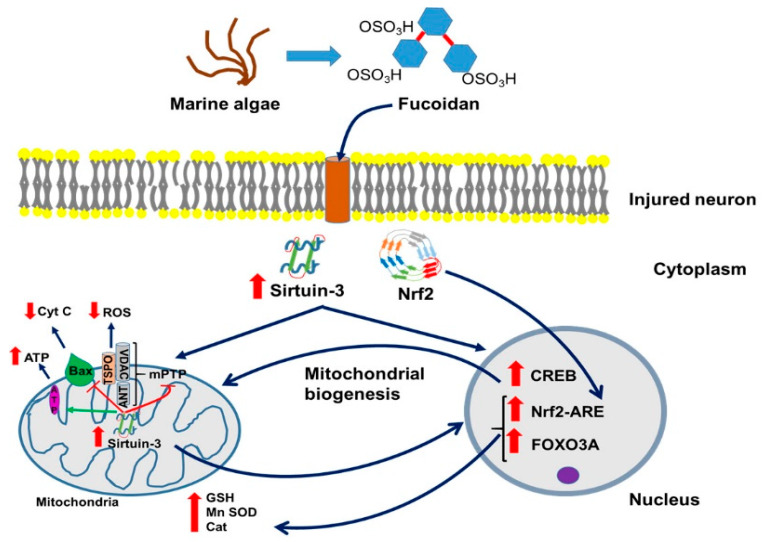
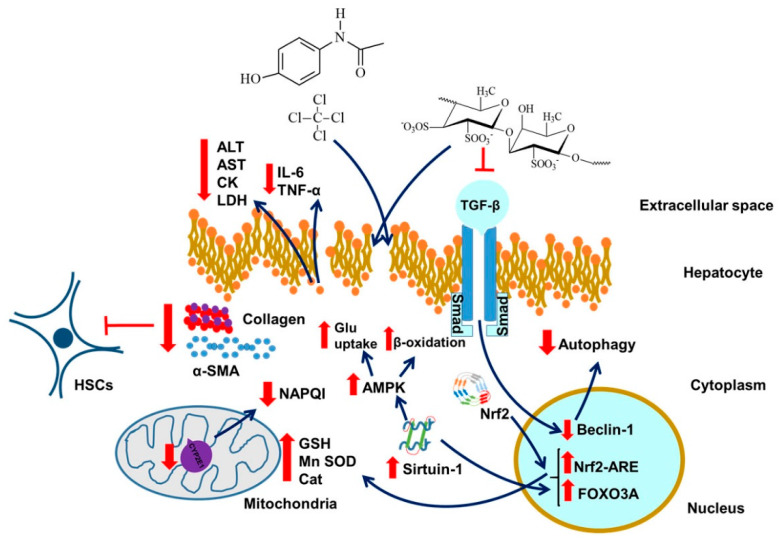
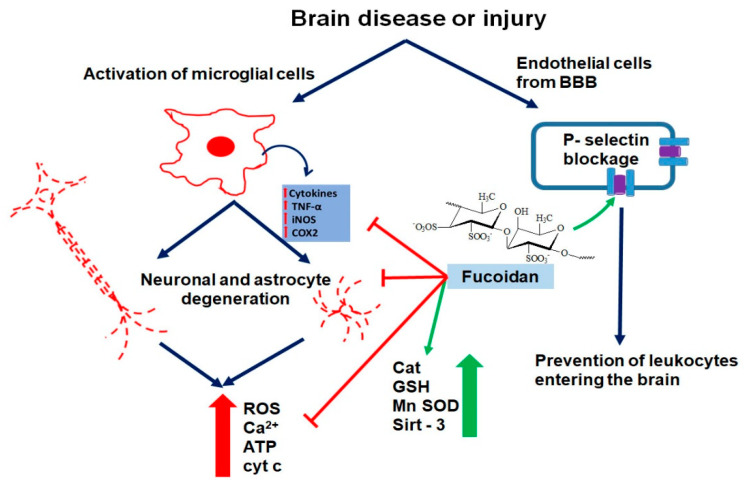
Increased interest in natural antioxidants has brought to light the fucoidans (sulfated polysaccharides present in brown marine algae) as highly valued nutrients as well as effective and safe therapeutics against several diseases. Based on their satisfactory in vitro antioxidant potency, researchers have identified this molecule as an efficient remedy for neuropathological as well as metabolic disorders. Some of this therapeutic activity is accomplished by upregulation of cytoprotective molecular pathways capable of restoring the enzymatic antioxidant activity and normal mitochondrial functions. Sirtuin-3 has been discovered as a key player for achieving the neuroprotective role of fucoidan by managing these pathways, whose ultimate goal is retrieving the entirety of the antioxidant response and preventing apoptosis of neurons, thereby averting neurodegeneration and brain injuries. Another pathway whereby fucoidan exerts neuroprotective capabilities is by interactions with P-selectin on endothelial cells, thereby preventing macrophages from entering the brain proper. Furthermore, beneficial influences of fucoidan have been established in hepatocytes after xenobiotic induced liver injury by decreasing transaminase leakage and autophagy as well as obtaining optimal levels of intracellular fiber, which ultimately prevents fibrosis. The hepatoprotective role of this marine polysaccharide also includes a sirtuin, namely sirtuin-1 overexpression, which alleviates obesity and insulin resistance through suppression of hyperglycemia, reducing inflammation and stimulation of enzymatic antioxidant response. While fucoidan is very effective in animal models for brain injury and neuronal degeneration, in general, it is accepted that fucoidan shows somewhat limited potency in liver. Thus far, it has been used in large doses for treatment of acute liver injuries. Thus, it appears that further optimization of fucoidan derivatives may establish enhanced versatility for treatments of various disorders, in addition to brain injury and disease.
对天然抗氧化剂的兴趣日益浓厚,使褐藻中的岩藻聚糖(硫酸化多糖)作为一种极具价值的营养物质以及针对多种疾病的有效且安全的治疗方法而受到关注。基于其令人满意的体外抗氧化能力,研究人员已经将这种分子鉴定为治疗神经病理和代谢紊乱的有效方法。这种治疗活性的一部分是通过上调细胞保护分子途径来实现的,这些途径能够恢复酶抗氧化活性和正常的线粒体功能。Sirtuin-3 已被发现是岩藻聚糖发挥神经保护作用的关键因素,它可以通过管理这些途径来实现,其最终目标是恢复抗氧化反应的完整性并防止神经元凋亡,从而避免神经退行性变和脑损伤。岩藻聚糖发挥神经保护作用的另一种途径是与内皮细胞上的 P-选择素相互作用,从而阻止巨噬细胞进入大脑。此外,岩藻聚糖在异生物诱导的肝损伤后对肝细胞也有有益的影响,通过减少转氨酶漏出和自噬以及获得最佳的细胞内纤维水平,从而防止纤维化。这种海洋多糖的肝保护作用还包括 Sirtuin-1 的过表达,它通过抑制高血糖、减轻炎症和刺激酶抗氧化反应来减轻肥胖和胰岛素抵抗。虽然岩藻聚糖在脑损伤和神经元变性的动物模型中非常有效,但总的来说,它在肝脏中的效力有些有限。迄今为止,它已被用于治疗急性肝损伤的大剂量治疗。因此,似乎进一步优化岩藻聚糖衍生物可以为各种疾病的治疗提供更高的多功能性,除了脑损伤和疾病。