Institute of Crop Sciences, National Key Facility of Crop Gene Resources and Genetic Improvement, Chinese Academy of Agricultural Sciences, Beijing, 100081, China.
BMC Plant Biol. 2020 May 7;20(1):196. doi: 10.1186/s12870-020-2270-4.
Maize is one of the most important staple crops and is widely grown throughout the world. Stalk lodging can cause enormous yield losses in maize production. However, rind penetrometer resistance (RPR), which is recognized as a reliable measurement to evaluate stalk strength, has been shown to be efficient and useful for improving stalk lodging-resistance. Linkage mapping is an acknowledged approach for exploring the genetic architecture of target traits. In addition, genomic selection (GS) using whole genome markers enhances selection efficiency for genetically complex traits. In the present study, two recombinant inbred line (RIL) populations were utilized to dissect the genetic basis of RPR, which was evaluated in seven growth stages.
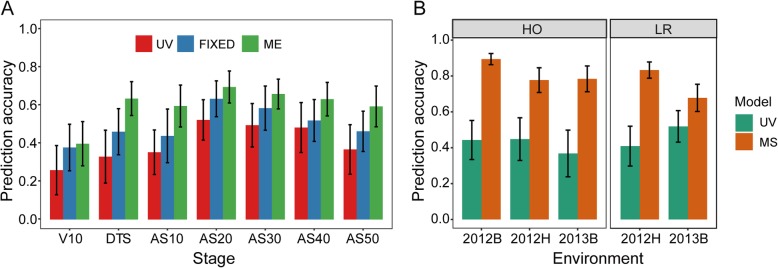
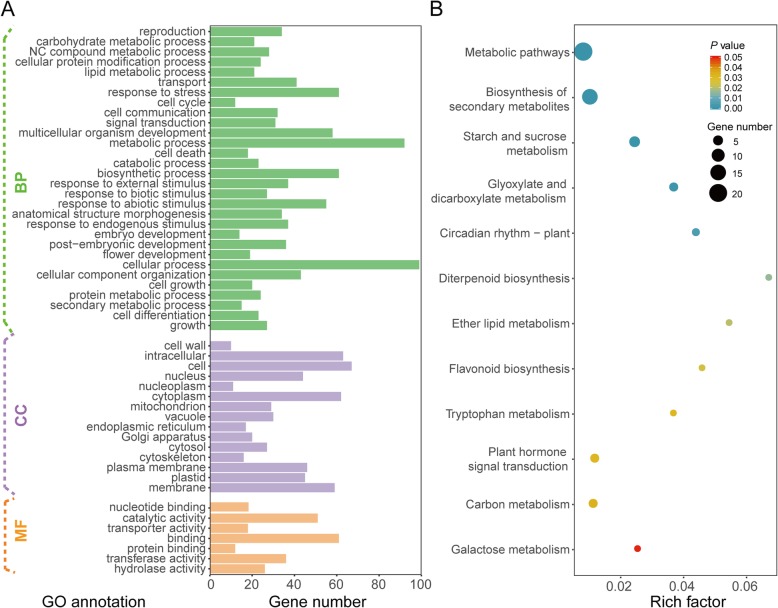
The optimal stages to measure stalk strength are the silking phase and stages after silking. A total of 66 and 45 quantitative trait loci (QTL) were identified in each RIL population. Several potential candidate genes were predicted according to the maize gene annotation database and were closely associated with the biosynthesis of cell wall components. Moreover, analysis of gene ontology (GO) enrichment and Kyoto Encyclopedia of Genes and Genomes (KEGG) pathway further indicated that genes related to cell wall formation were involved in the determination of RPR. In addition, a multivariate model of genomic selection efficiently improved the prediction accuracy relative to a univariate model and a model considering RPR-relevant loci as fixed effects.
The genetic architecture of RPR is highly genetically complex. Multiple minor effect QTL are jointly involved in controlling phenotypic variation in RPR. Several pleiotropic QTL identified in multiple stages may contain reliable genes and can be used to develop functional markers for improving the selection efficiency of stalk strength. The application of genomic selection to RPR may be a promising approach to accelerate breeding process for improving stalk strength and enhancing lodging-resistance.
玉米是最重要的主食作物之一,在世界各地广泛种植。茎秆倒伏会导致玉米产量的巨大损失。然而,果皮穿刺阻力(RPR)被认为是一种可靠的测量方法,可用于评估茎秆强度,已被证明对提高茎秆抗倒伏能力有效且有用。连锁图谱是探索目标性状遗传结构的一种公认方法。此外,利用全基因组标记进行基因组选择(GS)可以提高对遗传复杂性状的选择效率。在本研究中,利用两个重组自交系(RIL)群体来剖析 RPR 的遗传基础,在七个生长阶段评估 RPR。
测量茎秆强度的最佳阶段是抽丝期和抽丝后的阶段。在每个 RIL 群体中总共鉴定出 66 和 45 个数量性状位点(QTL)。根据玉米基因注释数据库,预测了几个潜在的候选基因,这些基因与细胞壁成分的生物合成密切相关。此外,基因本体论(GO)富集和京都基因与基因组百科全书(KEGG)通路分析进一步表明,与细胞壁形成相关的基因参与了 RPR 的决定。此外,与单变量模型和考虑与 RPR 相关的基因座作为固定效应的模型相比,基因组选择的多元模型有效地提高了预测准确性。
RPR 的遗传结构高度复杂。多个微效 QTL 共同参与控制 RPR 的表型变异。在多个阶段鉴定出的多个多效 QTL 可能包含可靠的基因,可用于开发功能标记,以提高茎秆强度的选择效率。将基因组选择应用于 RPR 可能是加速提高茎秆强度和增强抗倒伏能力的一种很有前途的方法。